
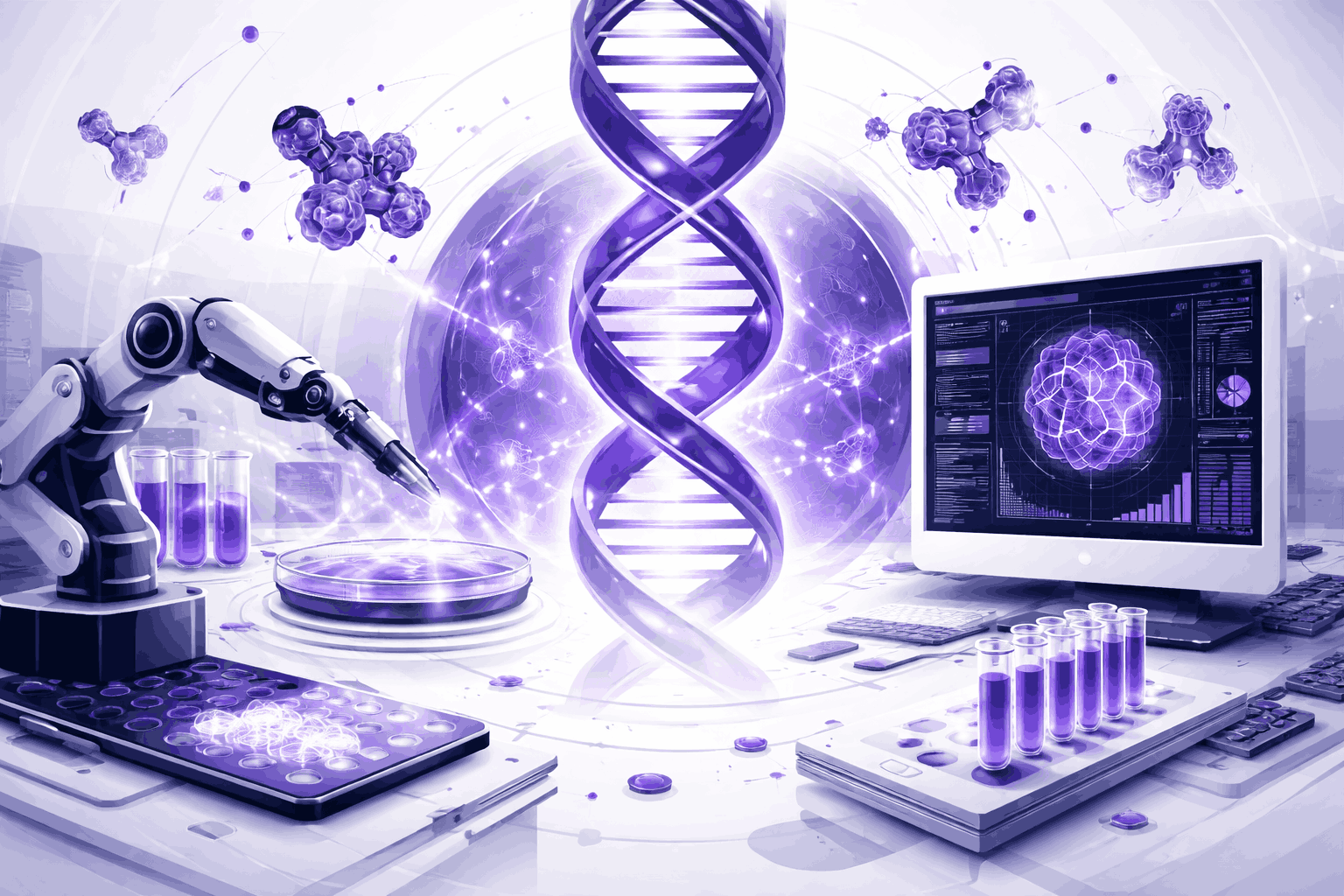
10x Science: Accelerating AI Drug Development
In the rapidly evolving world of biotechnology, breakthroughs in artificial intelligence have dramatically accelerated the discovery of new drug candidates. Yet, as innovation surges forward on one front, another critical stage of the pipeline struggles to keep up. 10x Science, a San Francisco–based startup founded in 2025 and part of Y Combinator’s Winter 2026 batch, was created to resolve precisely this imbalance. Positioned as an AI-native platform for next-generation protein characterization, the company aims to modernize one of the most complex and time-consuming phases of biopharmaceutical development.
The startup’s core mission is clear: enable drug development to keep pace with AI-powered drug discovery. While machine learning models now generate unprecedented numbers of promising therapeutic candidates, existing laboratory tools and workflows remain rooted in methodologies developed decades ago. This mismatch has created a bottleneck that threatens to slow the translation of scientific breakthroughs into real treatments for patients.
10x Science seeks to become the “unlock” for this bottleneck. By applying modern AI to protein characterization and quality assessment—the stage that determines whether a candidate drug is viable for clinical trials—the platform promises to dramatically accelerate the journey from discovery to the clinic. In an industry where time equates not only to money but also to lives saved, the implications are profound.
Why Has Protein Characterization Become the Bottleneck in Drug Development?
Over the past decade, protein-based therapeutics—such as antibodies, engineered proteins, and cell therapies—have come to dominate pharmaceutical innovation. These biologics are complex, highly sensitive molecules that must be carefully analyzed at the molecular level before they can be considered safe and effective.
Historically, this characterization process has been slow, expensive, and dependent on specialized expertise. Each candidate requires detailed analysis of structure, purity, stability, and function. Modern discovery pipelines can produce thousands of candidates, yet laboratories lack scalable tools to process them efficiently. As a result, promising therapies accumulate in queues, waiting weeks or months for analysis.
The costs are staggering. Delays in clinical trials can amount to more than one million dollars per day, not including lost opportunities to bring lifesaving treatments to market sooner. Furthermore, the manual nature of data analysis introduces reproducibility challenges. Scientists must interpret vast datasets generated by techniques such as mass spectrometry, often relying on custom scripts and labor-intensive workflows.
The founders of 10x Science argue that the problem is not candidate generation but candidate evaluation. AI has solved the “front end” of discovery, but the “development stage” remains constrained by outdated infrastructure. Without modernization, the promise of AI-driven medicine risks stalling before reaching patients.
How Does 10x Science’s Platform Transform the Development Stage?
At the heart of 10x Science’s approach is the automation of protein characterization through AI-native infrastructure. The platform is designed to convert raw experimental data into comprehensive, output-ready reports in minutes rather than weeks. By integrating machine learning models directly into the analysis pipeline, it eliminates many of the manual steps that traditionally consume scientists’ time.
The platform delivers three primary advantages.
First, it dramatically reduces analysis time. Tasks that once required extensive data processing and interpretation can now be completed almost instantaneously. This acceleration translates into significant financial savings—estimated at over $150,000 per team each month—while also enabling faster progression toward clinical trials.
Second, it enhances reproducibility. By standardizing analysis workflows, the system produces consistent, enterprise-grade results without requiring deep specialization. Scientists can trust the outputs and focus on experimental design and discovery rather than troubleshooting data pipelines.
Third, it enables true scalability. Laboratories can process exponentially more candidates without proportionally expanding their teams. Instead of hiring additional experts to handle data, organizations can rely on automated systems that grow alongside their discovery efforts.
In essence, 10x Science aims to bring the efficiency gains of modern software engineering to the life sciences, transforming drug development into a more streamlined, data-driven process.
Who Are the Founders Behind 10x Science?
The credibility of a biotechnology startup often depends on the depth of expertise within its founding team. In this regard, 10x Science presents a uniquely interdisciplinary trio whose backgrounds span chemistry, biology, proteomics, and artificial intelligence.
Chief Executive Officer David Roberts is a chemistry postdoctoral researcher and Damon Runyon Cancer Research Fellow from Stanford University, where he worked in the laboratory of Nobel Prize–winning chemist Carolyn Bertozzi. His work in chemical biology and glycobiology has earned more than 1,400 citations and a strong reputation as an emerging leader in the field.
Chief Operating Officer Andrew Reiter brings extensive experience in proteomics and mass spectrometry. After studying biology at the University of North Carolina at Chapel Hill, he joined the Broad Institute’s Proteomics Platform, developing novel analytical methods. He later pursued doctoral research at Stanford under the guidance of leading scientists in chemical biology and epigenetics.
Chief Technology Officer Vishnu Tejus contributes the AI expertise necessary to build a truly software-driven platform. A two-time Y Combinator founder, he previously developed artificial intelligence systems for commercial applications before embedding himself in research laboratories to understand scientific workflows firsthand. Within a year, he produced multiple academic publications and earned national recognition for his work.
Together, the trio combines more than 18 years of collective domain experience and dozens of scientific publications. Their shared background at the intersection of experimental science and computational innovation positions them to address a problem that neither discipline could solve alone.
What Inspired the Creation of the Company?
The origin story of 10x Science is rooted in firsthand frustration. As researchers working at the cutting edge of chemistry, biology, and machine learning, the founders repeatedly encountered the limitations of existing characterization tools. Experiments generated enormous datasets—often gigabytes from a single sample—yet extracting meaningful insights required painstaking manual effort.
They discovered that this challenge was universal. Conversations with fellow scientists revealed widespread dissatisfaction with the status quo. Laboratories were drowning in data but starving for actionable insights. Without modernization, progress in drug development risked slowing despite advances in discovery technologies.
This realization led to a pivotal insight: the future of medicine would depend not only on designing new molecules but also on understanding them quickly and accurately. By focusing on the development stage, the founders believed they could unlock the full potential of AI-driven discovery.
Thus, 10x Science was born—not merely as a software company but as a response to a systemic problem affecting the entire biopharmaceutical ecosystem.
How Does the Platform Change the Role of Scientists?
One of the most significant implications of 10x Science’s technology is the shift it enables in how scientists spend their time. Traditionally, researchers have devoted substantial effort to data processing, troubleshooting analytical pipelines, and preparing reports. While necessary, these tasks divert attention from creative exploration and hypothesis generation.
By automating routine analysis, the platform allows scientists to focus on discovery rather than computation. This reallocation of effort could accelerate innovation by freeing experts to pursue more ambitious experiments and explore novel therapeutic approaches.
Moreover, the system lowers barriers to entry for smaller teams and emerging biotech firms. Organizations without large analytical departments can access sophisticated characterization capabilities, democratizing a process once reserved for well-funded institutions.
What Is the Broader Vision for AI-Driven Drug Development?
Beyond immediate efficiency gains, 10x Science envisions a broader transformation of the pharmaceutical landscape. The founders argue that the tools used to analyze proteins have not fundamentally changed in more than two decades. Meanwhile, the complexity of therapeutic candidates has increased dramatically.
By introducing an AI-forward paradigm, the company aims to modernize the entire development pipeline. Automated analysis could enable continuous feedback loops between discovery and development, allowing researchers to refine candidates more rapidly. Over time, this integration could shorten the overall timeline for bringing new treatments to market.
The platform also aligns with a larger trend toward data-centric medicine. As biological research generates ever-larger datasets, the ability to process and interpret information at scale will become a defining factor in scientific progress. 10x Science positions itself as a foundational infrastructure provider for this new era.
Why Could 10x Science Shape the Future of Therapeutics?
If successful, 10x Science could play a pivotal role in accelerating the transition from laboratory discovery to clinical application. By removing a major bottleneck, it enables pharmaceutical companies to fully leverage advances in AI-based drug design. Faster characterization means faster trials, quicker regulatory approvals, and ultimately earlier access for patients.
The stakes extend beyond commercial success. Many diseases, from cancer to neurological disorders, urgently require new treatments. Reducing delays in development could have a direct impact on global health outcomes.
Furthermore, the startup exemplifies a broader shift toward interdisciplinary innovation. By combining expertise in proteomics, chemistry, and artificial intelligence, it reflects a new model for scientific entrepreneurship—one in which software and biology converge to solve complex problems.
What Lies Ahead for the Company?
As an early-stage company, 10x Science faces the challenges typical of deep-tech startups: validating its technology, building partnerships with pharmaceutical organizations, and scaling its platform to meet industry demands. Yet its strong academic roots and participation in Y Combinator provide momentum and visibility.
The founders remain focused on their central objective: making drug development ten times faster. If they succeed, the ripple effects could extend across the entire life sciences sector, reshaping how therapies are evaluated and delivered.
In a world where artificial intelligence is transforming discovery at unprecedented speed, the ability to keep development in sync may determine the pace of medical progress. 10x Science is betting that the future of therapeutics will belong to those who can bridge that gap—and it intends to lead the way.