
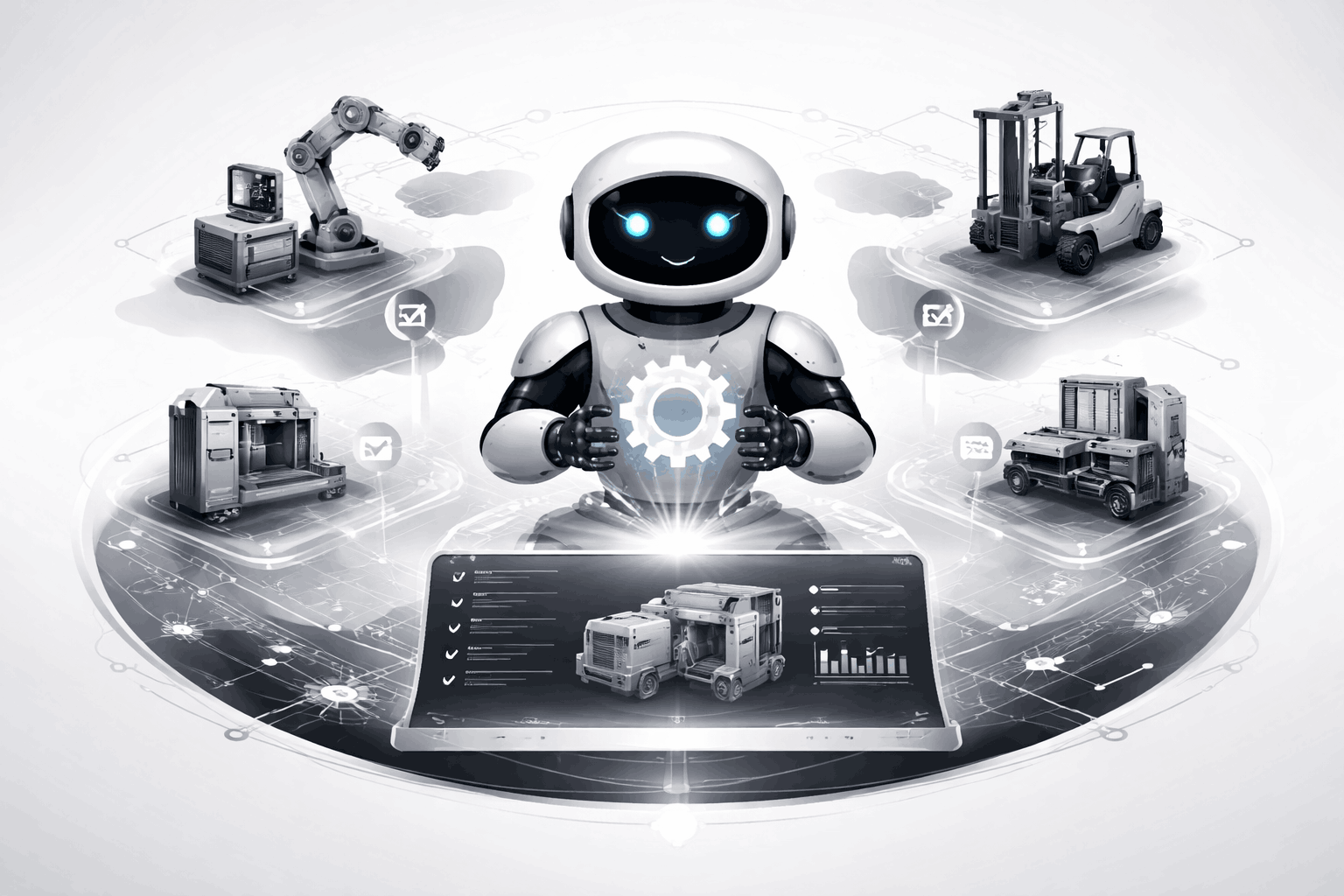
Andustry: AI Reinventing Industrial Sourcing
In 2026, a new startup entered the industrial commerce space with a bold claim: sourcing industrial products shouldn’t feel like chasing ghosts. Andustry positions itself as a next-generation platform designed to transform how businesses buy and sell machinery and industrial equipment. Backed by the Y Combinator Spring 2026 batch and supported by partner Tom Blomfield, the company is tackling a deeply entrenched inefficiency in global trade.
At its core, Andustry builds AI agents that automate the discovery and sourcing of industrial products—particularly mid-sized machinery. Instead of relying on outdated processes such as cold outreach, trade fairs, and endless email chains, Andustry introduces a system where buyers express their needs once, and intelligent agents handle the rest.
The importance of this innovation lies in its target audience: small and medium-sized enterprises (SMEs). These companies often lack the resources, networks, and time to navigate complex supplier ecosystems. By simplifying sourcing, Andustry is not just improving efficiency—it is potentially reshaping how industrial supply chains operate.
Why is sourcing industrial machinery still so difficult?
Despite advances in technology, sourcing industrial equipment remains surprisingly manual and fragmented. For decades, the process has relied on human-driven discovery—finding suppliers through directories, referrals, or physical events.
The challenges are numerous:
- Buyers must contact hundreds of suppliers individually
- Response rates are inconsistent and often slow
- Quotes can take weeks to arrive
- Verification of suppliers is time-consuming
- Negotiations are manual and repetitive
For SMEs, this creates a significant operational burden. A company needing to replace a machine or expand production capacity might spend weeks—if not months—simply identifying viable suppliers. Even then, there is no guarantee that the responses will be relevant or competitively priced.
This inefficiency is compounded by the global nature of industrial trade. Language barriers, time zones, and regulatory differences add layers of complexity. The result is a system that is not only slow but also prone to errors and missed opportunities.
How does Andustry solve the sourcing problem?
Andustry approaches this problem with a fundamentally different philosophy: automation through AI agents. Instead of requiring buyers to actively search, compare, and negotiate, the platform delegates these tasks to intelligent systems.
The process begins with a simple input. A buyer specifies their requirements—such as machine type, specifications, budget, and timeline. From there, Andustry’s AI agents take over.
These agents perform several key functions:
- Discovery: Identifying relevant suppliers within the platform
- Matching: Evaluating which suppliers can meet the buyer’s needs
- Negotiation: Engaging with suppliers to secure the best terms
- Aggregation: Presenting finalized offers to the buyer
What makes this approach powerful is its autonomy. The agents do not just assist—they act on behalf of the user. This reduces the need for back-and-forth communication and accelerates the entire process from weeks to days.
For buyers, the experience becomes dramatically simpler: define the need, review curated offers, and confirm the order.
What benefits do suppliers gain from this system?
While Andustry currently focuses on solving the buyer’s pain points, suppliers also stand to gain significantly from the platform.
Traditionally, suppliers face their own set of challenges:
- Managing inbound inquiries manually
- Repeating the same information to multiple buyers
- Spending time on leads that do not convert
Andustry addresses these inefficiencies by allowing suppliers to input their offerings once. This structured data becomes accessible to AI agents, which can then match and negotiate on their behalf.
The result is a more efficient sales process:
- Suppliers receive qualified, ready-to-convert leads
- Responses are automated and standardized
- Orders are presented in a ready-to-fulfill format
This not only saves time but also increases the likelihood of successful transactions. By reducing friction on both sides, Andustry creates a more balanced and efficient marketplace.
Who are the founders behind Andustry?
Andustry is led by two founders with complementary perspectives on industrial trade: Johann Stürken and Het Dave.
Johann Stürken brings a deeply personal understanding of the problem. Coming from a family involved in trading goods, he has witnessed firsthand the complexities and frustrations of sourcing suppliers. This background provides valuable insight into the real-world challenges faced by businesses in the sector.
Het Dave, on the other hand, contributes a strong focus on product development and execution. Together, the founders share a clear vision: to simplify sourcing and fulfillment for manufacturers through intelligent automation.
Their combined experience allows them to approach the problem not just as technologists, but as individuals who understand the nuances of industrial commerce.
What makes Andustry different from traditional marketplaces?
At first glance, Andustry might seem similar to established platforms like Alibaba. However, the underlying approach is fundamentally different.
Traditional marketplaces operate as directories. They connect buyers and suppliers but leave the heavy lifting—searching, comparing, negotiating—to the users.
Andustry, by contrast, is built on automation. It does not just facilitate connections; it actively manages the transaction process through AI agents.
Key differentiators include:
- Agent-driven discovery instead of manual search
- Automated negotiation rather than email-based discussions
- Curated offers instead of overwhelming listings
- End-to-end workflow support (planned expansion)
This shift from passive platform to active participant represents a significant evolution in how marketplaces function.
Why start with machinery as the first vertical?
Andustry’s initial focus on machinery is a strategic choice. Among industrial products, machinery represents one of the most complex and high-stakes categories.
Purchasing machinery involves:
- Detailed technical specifications
- High financial investment
- Long-term operational impact
Because of these factors, the sourcing process is particularly painful—and therefore ripe for disruption.
By solving discovery in this vertical, Andustry can demonstrate the effectiveness of its approach in a challenging environment. Success here could pave the way for expansion into other categories, such as components, raw materials, and specialized equipment.
How could Andustry reshape global supply chains?
If successful, Andustry has the potential to influence not just individual transactions but entire supply chains.
By reducing the time and effort required to find suppliers, the platform could:
- Enable faster decision-making for manufacturers
- Increase competition among suppliers
- Improve pricing transparency
- Reduce dependency on intermediaries
In a broader sense, Andustry could contribute to a more dynamic and responsive industrial ecosystem. Companies would be able to adapt more quickly to changes in demand, supply disruptions, or technological advancements.
This is particularly relevant in a world where supply chain resilience has become a top priority for businesses.
What is Andustry’s long-term vision?
While the current focus is on discovery, Andustry’s ambitions extend far beyond this initial phase.
The company plans to expand into other parts of the transaction lifecycle, including:
- Fulfillment: Managing logistics and delivery
- Imports: Handling cross-border complexities
- Payments: Streamlining financial transactions
By integrating these elements, Andustry aims to create a comprehensive platform for industrial commerce—one that handles every step from initial inquiry to final delivery.
This vision aligns with a broader trend toward end-to-end automation in business processes. Rather than relying on multiple tools and intermediaries, companies increasingly seek unified solutions that can manage entire workflows.
Can AI truly transform industrial sourcing?
The question at the heart of Andustry’s mission is whether AI can fundamentally change how industrial sourcing works. Early signs suggest that it can.
AI agents are particularly well-suited to tasks that involve:
- Processing large amounts of structured and unstructured data
- Identifying patterns and matches
- Automating repetitive interactions
In the context of sourcing, these capabilities translate into faster, more accurate, and more efficient processes.
However, the success of such systems depends on several factors:
- Quality and completeness of supplier data
- Trust in automated negotiations
- Adoption by both buyers and suppliers
Andustry’s challenge will be to build not just a powerful technology, but also a trusted ecosystem where users feel confident delegating critical decisions to AI.
What does the future hold for Andustry?
As a young startup with a small team of just two founders, Andustry is still in its early stages. Yet its vision is ambitious, and its timing is notable.
The convergence of AI capabilities and long-standing inefficiencies in industrial sourcing creates a unique opportunity. If Andustry can execute on its vision, it could become a key player in the evolution of industrial commerce.
For now, the company is focused on proving its value in the machinery vertical and refining its agent-driven approach. But the broader implications are clear: a world where sourcing is no longer a bottleneck, but a seamless, automated process.
In that world, Andustry would not just be a tool—it would be an essential layer in the infrastructure of global trade.