
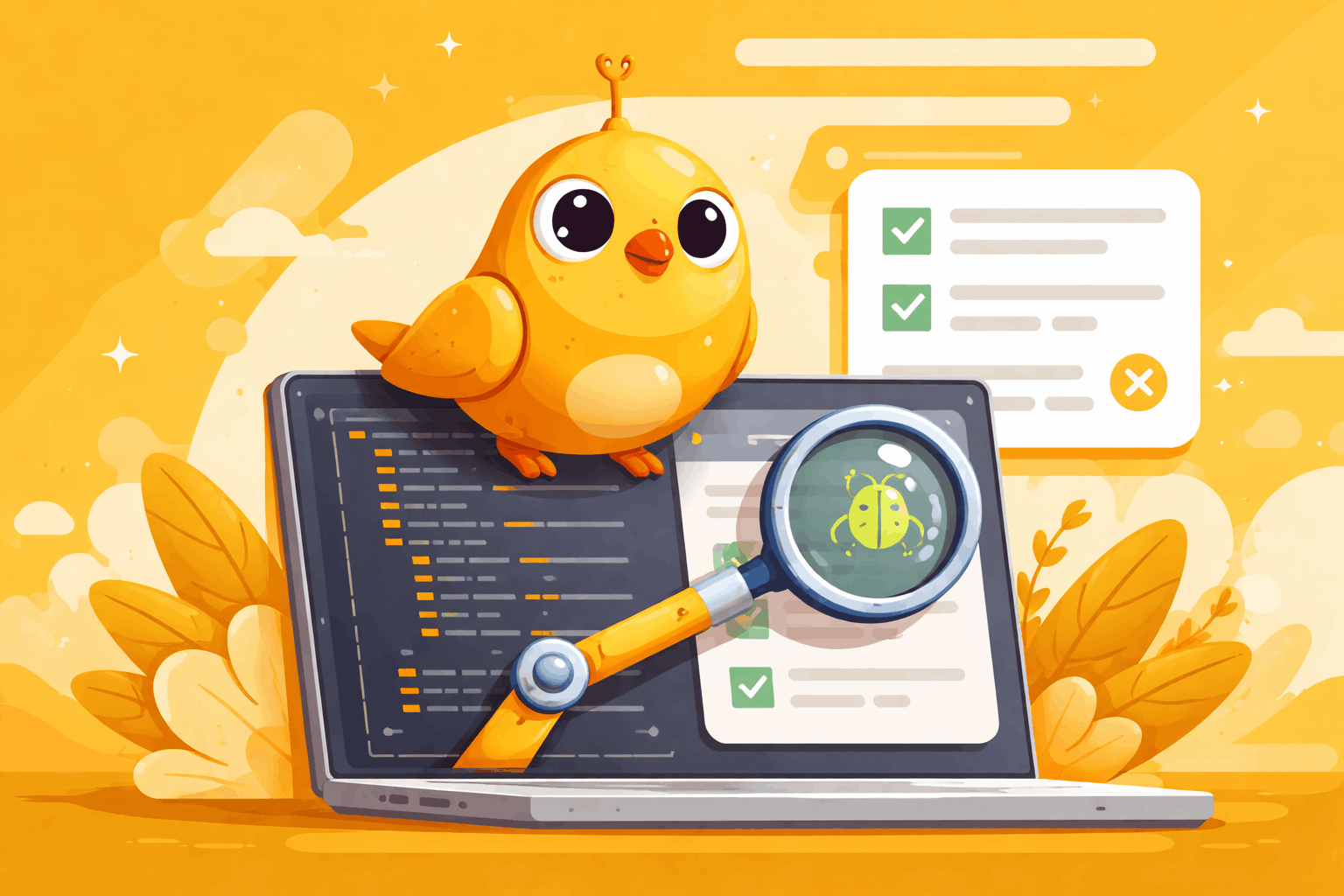
Canary: The AI QA Engineer for Modern Codebases
In the rapidly evolving landscape of software development, speed has become both a competitive advantage and a hidden liability. Canary, a Winter 2026 Y Combinator startup based in San Francisco, emerges precisely at this intersection of acceleration and risk. Positioned as the first AI QA engineer that truly understands a company’s codebase, Canary represents a new category of tooling designed for an era where software is increasingly written by machines as much as by humans.
Founded in 2026 by a team of engineers with backgrounds at Windsurf, Cognition, and Google, the four-person startup is tackling a paradox that has quietly intensified across the industry. AI coding assistants have dramatically increased developer productivity—by some estimates up to 5–10 times faster, and in certain workflows even more. Yet while code generation has surged forward, quality assurance practices have not evolved at the same pace. The result is a widening validation gap: software ships faster, but breaks more often.
Canary positions itself as the missing validation layer for AI-generated code. Rather than functioning as a traditional testing tool, it acts as an autonomous QA engineer embedded directly into the development lifecycle. By reading source code to understand intent—not just outputs—it promises to catch issues before they reach customers, fundamentally changing how teams approach software reliability in an AI-first world.
Why Has QA Fallen Behind in the Age of AI Coding?
The rise of AI-assisted development has reshaped how software is produced. Pull requests have grown larger, iteration cycles shorter, and the volume of code changes significantly higher. According to Canary’s founding narrative, customer-facing incidents have increased by 43% year over year—a striking signal that quality processes have not kept pace with generation capabilities.
Traditional QA methods struggle under this new reality. Manual testing cannot scale with the velocity of AI-generated code. End-to-end testing suites, once considered the gold standard, often become brittle, slow, and difficult to maintain. Meanwhile, many organizations have reduced dedicated QA teams, expecting developers and automation to fill the gap.
Code reviews, another cornerstone of software quality, are also showing limitations. Reviewing file diffs can confirm syntactic correctness or architectural consistency, but it rarely captures how changes affect real user journeys. A checkout flow might fail even if every individual file appears correct. Authentication systems, billing logic, and integrations are particularly vulnerable to subtle regressions.
Canary’s founders argue that the industry has solved the problem of writing code, but not the problem of validating it. As AI systems generate increasingly complex changes, the need for an intelligent testing layer that understands the application holistically becomes critical.
How Does Canary’s AI QA Engineer Actually Work?
At the core of Canary’s innovation is its approach to understanding software. Unlike many testing tools that rely on surface-level signals—such as DOM scraping, screenshot comparisons, or vision models—Canary reads the source code itself. By analyzing routes, controllers, validation logic, and API schemas, it builds a structural understanding of how an application is designed to function.
This code-aware approach allows Canary to infer developer intent. Instead of guessing how users might interact with the interface, it knows how the system is supposed to behave internally. When running tests, it uses the codebase as the reference point, enabling more accurate simulations of real user behavior.
The platform integrates directly into development workflows. When a pull request is opened, Canary analyzes the changes, identifies affected areas of the application, and generates relevant tests automatically. It then executes those tests against a preview environment, reporting results directly within the pull request interface.
If a failure occurs, developers can drill down to see exactly which user flow broke and why. The system can also accept natural-language instructions—for example, requesting that a specific scenario be tested—and generate corresponding test cases. Over time, successful tests can be promoted into regression suites that run continuously, ensuring future changes do not reintroduce past issues.
By embedding itself into the PR process, Canary shifts testing left, catching problems before code is merged rather than after deployment.
What Makes Canary Different from Existing Testing Tools?
The testing ecosystem is crowded with solutions promising automation and reliability. However, Canary’s differentiation lies in its ability to operate at the semantic level of the application rather than the visual or structural level.
Traditional end-to-end tools often depend on UI selectors that break when interfaces change. Visual testing tools compare screenshots, which can produce false positives or miss logic errors. Even advanced AI-based testing platforms frequently rely on observing the application from the outside.
Canary, by contrast, tests from the inside out. Because it understands the codebase directly, it can detect issues that surface-level tools might miss—such as logical inconsistencies, unintended side effects, or mismatches between API contracts and frontend expectations.
This approach also reduces flakiness, a persistent problem in automated testing. Tests generated with knowledge of the application’s structure are less likely to fail due to timing issues, rendering differences, or environmental variability.
Another distinguishing factor is speed. Engineering teams using Canary reportedly achieve over 90% test coverage in days rather than weeks. In an environment where deployment frequency is increasing, the ability to establish comprehensive testing rapidly becomes a strategic advantage.
How Does Canary Transform the Developer Workflow?
Beyond its technical capabilities, Canary’s impact lies in how it reshapes the culture and workflow of engineering teams. By acting as an autonomous QA engineer, it reduces reliance on manual testing cycles and frees developers to focus on building features rather than verifying them.
The PR-centric testing model encourages continuous validation. Every change is automatically assessed in the context of the entire application, making quality assurance an integrated part of development rather than a separate phase.
For teams without dedicated QA personnel—a growing trend in startups and lean organizations—Canary fills a critical gap. It provides enterprise-level testing discipline without requiring additional headcount.
Even in organizations with established QA teams, the tool can augment human testers by handling repetitive checks and surfacing edge cases. Human experts can then concentrate on exploratory testing, usability analysis, and strategic quality improvements.
What Role Does Canary Play in the Future of AI-Generated Code?
As AI continues to assume a larger role in software creation, the need for intelligent oversight will intensify. Code produced by language models can be syntactically correct yet semantically flawed. Without rigorous validation, organizations risk shipping defects at unprecedented scale.
Canary positions itself as the safeguard for this new paradigm. By acting as a validation layer specifically designed for AI-generated code, it ensures that speed does not come at the expense of reliability.
The founders’ experience building AI coding tools and enterprise infrastructure informs this vision. Having worked on systems that accelerate development, they recognized the necessity of a complementary system that ensures correctness. Canary sits at the intersection of these two forces—generation and validation.
Who Is Behind Canary and What Is Their Vision?
The startup’s founding team consists of engineers from Windsurf and Google with deep expertise in AI systems, developer tools, and large-scale infrastructure. Their backgrounds span both the creation of coding agents and the deployment of enterprise software, giving them a unique perspective on the challenges faced by modern engineering teams.
Founder Viswesh N G and his colleagues describe Canary as more than a product; they see it as a new category of engineering companion. Their vision is a future where every team has an AI QA engineer continuously monitoring quality, much like code editors now include AI assistants for writing code.
The company’s participation in Y Combinator’s Winter 2026 batch signals strong investor interest in solutions addressing the unintended consequences of AI-driven productivity.
Could Canary Redefine Quality Assurance as a Discipline?
Quality assurance has historically been reactive—testing after development to catch issues before release. Canary suggests a shift toward proactive validation embedded throughout the development process.
If widely adopted, this model could redefine QA from a role to a capability. Instead of dedicated teams responsible for testing, quality would become an always-on function powered by intelligent systems.
Such a transformation aligns with broader trends in software engineering, including continuous integration, continuous deployment, and DevOps practices. Canary extends these principles into the AI era, where code generation itself is automated.
Why Does Canary Matter for the Future of Software?
The significance of Canary lies not only in its technology but in what it represents: the maturation of the AI-driven development ecosystem. As tools for writing code become increasingly powerful, complementary tools for verifying that code must evolve accordingly.
By enabling teams to move from weeks of manual testing to near-complete coverage in days, Canary addresses one of the most pressing bottlenecks in modern software delivery. More importantly, it offers a path toward maintaining trust in software systems even as development accelerates beyond human limits.
In an industry where reliability can determine success or failure, the emergence of AI QA engineers may prove as transformative as the rise of AI coding assistants themselves. Canary’s ambition is to ensure that the future of software is not only faster, but safer—and that the speed of innovation does not outpace the safeguards needed to sustain it.