
Enterprise Security for the Age of AI Agents
As artificial intelligence rapidly evolves from passive tools into active agents capable of executing tasks, accessing accounts, and making decisions, a new category of risk has emerged alongside unprecedented opportunity. Broad-access AI agents — systems designed to interact with emails, financial tools, developer environments, databases, and enterprise software — promise enormous productivity gains. Yet they also introduce a critical vulnerability: unrestricted access to sensitive data without adequate safeguards.
Clam, a San Francisco-based startup founded in 2025 and part of Y Combinator’s Winter 2026 batch, positions itself at the center of this emerging security crisis. The company argues that frameworks enabling powerful agents, such as OpenClaw, have exposed a fundamental weakness in the AI ecosystem — security architectures built for humans are not designed for autonomous systems operating at machine speed.
Enterprises experimenting with AI agents face an uncomfortable dilemma. To unlock value, they must grant agents deep access to systems and information. But doing so without robust protections risks leaks of proprietary data, credentials, or personal information. Individuals exploring agent tools face similar concerns when granting permissions to email, cloud storage, or financial platforms.
Clam’s founders believe that without a new security layer specifically tailored for agentic AI, adoption will stall. Organizations will hesitate to deploy agents broadly, regulators will increase scrutiny, and high-profile incidents could erode public trust. Their mission is to remove that barrier by building security infrastructure designed from the ground up for autonomous AI environments.
Why Are Traditional Security Models Failing AI Agents?
Conventional cybersecurity approaches rely heavily on perimeter defenses, identity verification, and endpoint protection. These models assume that threats originate outside the system and that users are human actors following predictable patterns. Autonomous agents break those assumptions.
AI agents can generate network requests, access data stores, execute code, and communicate externally without continuous human supervision. They can also be manipulated through subtle input changes — a vulnerability known as prompt injection — which can override instructions or extract confidential data.
Traditional monitoring tools struggle to interpret the semantic meaning of agent behavior. A request that appears normal at the network level could be malicious in context. For example, an agent might be tricked into retrieving sensitive files or exposing API keys simply by following altered instructions embedded in a prompt.
Clam identifies three primary threat categories unique to agent systems:
- Data leakage risks, including exposure of personal identifiers, financial details, or proprietary information
- Instruction manipulation, where attackers hijack agent behavior through crafted inputs
- Autonomous code execution threats, including hidden malicious scripts
These vulnerabilities have already surfaced in early deployments of agent frameworks. Reports of unintended data exposure and unpredictable behavior have raised alarms across the industry. Clam’s founders argue that security must evolve from static defenses to dynamic oversight capable of understanding AI communications in real time.
What Is the “Semantic Firewall” and How Does It Work?
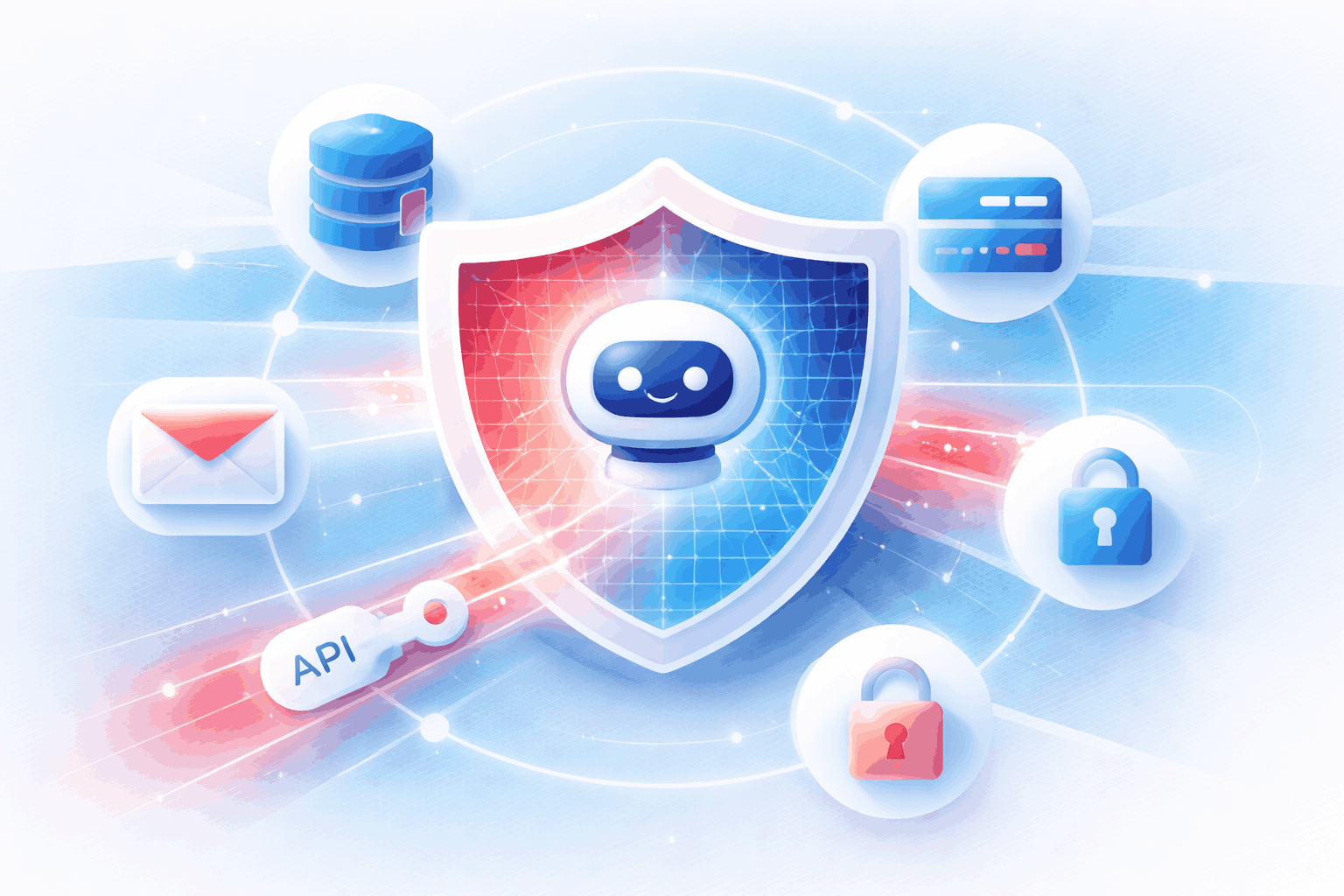
At the core of Clam’s technology lies a concept the company calls the “Semantic Firewall.” Unlike traditional firewalls that inspect packets or block suspicious IP addresses, this system analyzes the meaning and intent of communications flowing into and out of an AI agent’s environment.
Positioned at the network level around the agent’s operating context, the Semantic Firewall functions as a checkpoint that scrutinizes every interaction. Rather than trusting the agent’s internal safeguards alone, Clam introduces an independent layer that continuously evaluates behavior.
The system performs multiple scans on incoming and outgoing data streams, searching for anomalies before they escalate into incidents. It examines whether information being transmitted contains sensitive content, whether instructions appear manipulated, and whether code execution attempts show signs of malicious intent.
By focusing on semantics rather than raw data patterns, the firewall aims to detect threats that would bypass conventional defenses. For example, it can identify when an agent is being subtly instructed to reveal confidential information or when a sequence of commands deviates from expected behavior.
This approach reflects a broader shift in cybersecurity toward context-aware protection — recognizing that understanding meaning is essential when defending systems powered by language models.
How Does Clam Prevent Data Leaks and Credential Exposure?
One of the most significant risks associated with AI agents is accidental disclosure of secrets. Agents often require access to APIs, databases, and third-party services, which involves handling credentials such as API keys, tokens, and private keys.
Clam addresses this vulnerability by ensuring that sensitive credentials never enter the agent’s memory or storage in the first place. Instead, API keys and secrets are injected at the network level only when required for a specific operation. The agent can use them without ever “seeing” or retaining them.
This architecture mirrors techniques used in high-security environments where secrets are isolated from application logic. By decoupling credentials from the agent’s knowledge base, Clam reduces the risk of leakage through prompts, logs, or unintended outputs.
In addition, the Semantic Firewall scans outgoing communications for signs of personal data exposure. Messages are checked for patterns resembling Social Security numbers, credit card details, cryptographic keys, or other confidential identifiers. If detected, the system can block transmission or trigger alerts.
Such proactive measures aim to transform security from reactive incident response into preventative control — stopping leaks before they occur rather than mitigating damage afterward.
Can Clam Defend Against Prompt Injection and Jailbreak Attacks?
Prompt injection represents one of the most insidious threats facing AI systems. Attackers craft inputs designed to override safeguards, instruct agents to ignore previous rules, or extract sensitive data. Because language models are inherently responsive to input, distinguishing legitimate instructions from malicious manipulation can be challenging.
Clam’s solution involves continuous analysis of instructions entering the agent’s environment. The Semantic Firewall evaluates whether new inputs attempt to alter operational boundaries or introduce conflicting directives. Suspicious patterns — such as commands encouraging the agent to bypass restrictions — can be flagged or blocked.
The system also monitors for attempts to execute hidden code or encoded payloads, which could enable unauthorized actions like reverse shells or remote access. By intercepting these attempts at the network level, Clam prevents compromised instructions from reaching the agent.
Importantly, the company emphasizes that security must operate independently of the agent itself. If an agent is manipulated internally, relying on its own safeguards is insufficient. External oversight ensures that even compromised agents remain contained.
Who Are the Founders Behind Clam?
Clam was founded by Vaibhav Agrawal and Anshul Paul, two engineers whose backgrounds converge at the intersection of AI infrastructure and security. Their partnership dates back to their time studying computer security at the University of California, Berkeley — an experience that laid the groundwork for their shared interest in protecting complex systems.
Agrawal previously worked on data ingestion infrastructure at Sigma Computing and contributed to remote agent orchestration and containerization at Augment Code, a Series B AI company. His experience scaling virtual agents provided firsthand exposure to the operational challenges of managing autonomous systems.
Paul served as the first full-time employee and founding engineer at HappyRobot, where he focused on AI communications, evaluation systems, and enterprise integrations. He helped scale the company from early stages to a workforce exceeding 100 employees and participated in its journey from seed funding to Series B.
Together, the founders combine expertise in agent orchestration, observability, and enterprise deployments — capabilities essential for building security solutions that integrate seamlessly into real-world workflows.
Why Does Clam Believe Security Will Determine the Future of AI Agents?
The founders argue that the trajectory of agent adoption hinges not only on capability but on trust. Organizations will deploy agents broadly only if they are confident that sensitive data remains protected and that autonomous actions can be controlled.
In this sense, Clam sees itself as enabling infrastructure rather than merely a defensive tool. By making security a default feature rather than an afterthought, the company aims to accelerate adoption of agent technologies across industries.
They envision a future where enterprises deploy broad-access agents to manage operations, customer interactions, development processes, and analytics — all under the oversight of systems like the Semantic Firewall. Without such safeguards, they warn, the risk of catastrophic incidents could slow progress dramatically.
How Could Clam Reshape Enterprise AI Deployment?
If Clam’s approach proves effective, it could redefine how organizations integrate AI agents into critical workflows. Instead of limiting agents to narrow tasks, companies could grant broader permissions with confidence that safeguards are in place.
This shift could unlock new use cases:
- Autonomous IT operations
- AI-driven customer service platforms
- Financial automation systems
- Secure developer assistants
By addressing the security bottleneck, Clam positions itself as a catalyst for the next wave of enterprise AI transformation.
What Lies Ahead for Clam and the Agent Security Market?
As AI agents become more capable and widespread, demand for specialized security solutions is expected to grow rapidly. Regulators, enterprises, and consumers alike will seek assurances that autonomous systems operate safely and responsibly.
Clam’s early entry into this niche gives it an opportunity to shape standards and best practices. Participation in Y Combinator’s Winter 2026 batch provides visibility and access to a network of advisors and partners, including primary partner Gustaf Alstromer.
The startup’s long-term success will depend on its ability to integrate with diverse agent frameworks, adapt to evolving threat landscapes, and demonstrate reliability at scale. If it succeeds, Clam could become a foundational layer in the emerging ecosystem of agentic computing.
Could Security Become the Missing Piece of the AI Revolution?
The rise of autonomous agents marks a turning point in computing — one that shifts responsibility from human operators to intelligent systems capable of acting independently. Yet with that shift comes a profound need for oversight mechanisms that ensure safety without stifling innovation.
Clam’s vision suggests that the future of AI will not be defined solely by smarter models or faster hardware, but by the infrastructure that makes autonomy trustworthy. By embedding security directly into the operational fabric of agent environments, the company seeks to transform fear into confidence.
In doing so, Clam is not merely building a product; it is attempting to establish a new paradigm for how society interacts with intelligent machines. Whether this Semantic Firewall becomes a standard feature of AI deployments remains to be seen, but the problem it addresses is unlikely to disappear.
As organizations continue exploring the potential of broad-access AI agents, one question looms large: can innovation move forward without compromising security? Clam is betting that the answer depends on solutions like theirs — systems designed to guard the gateways of the autonomous future.