
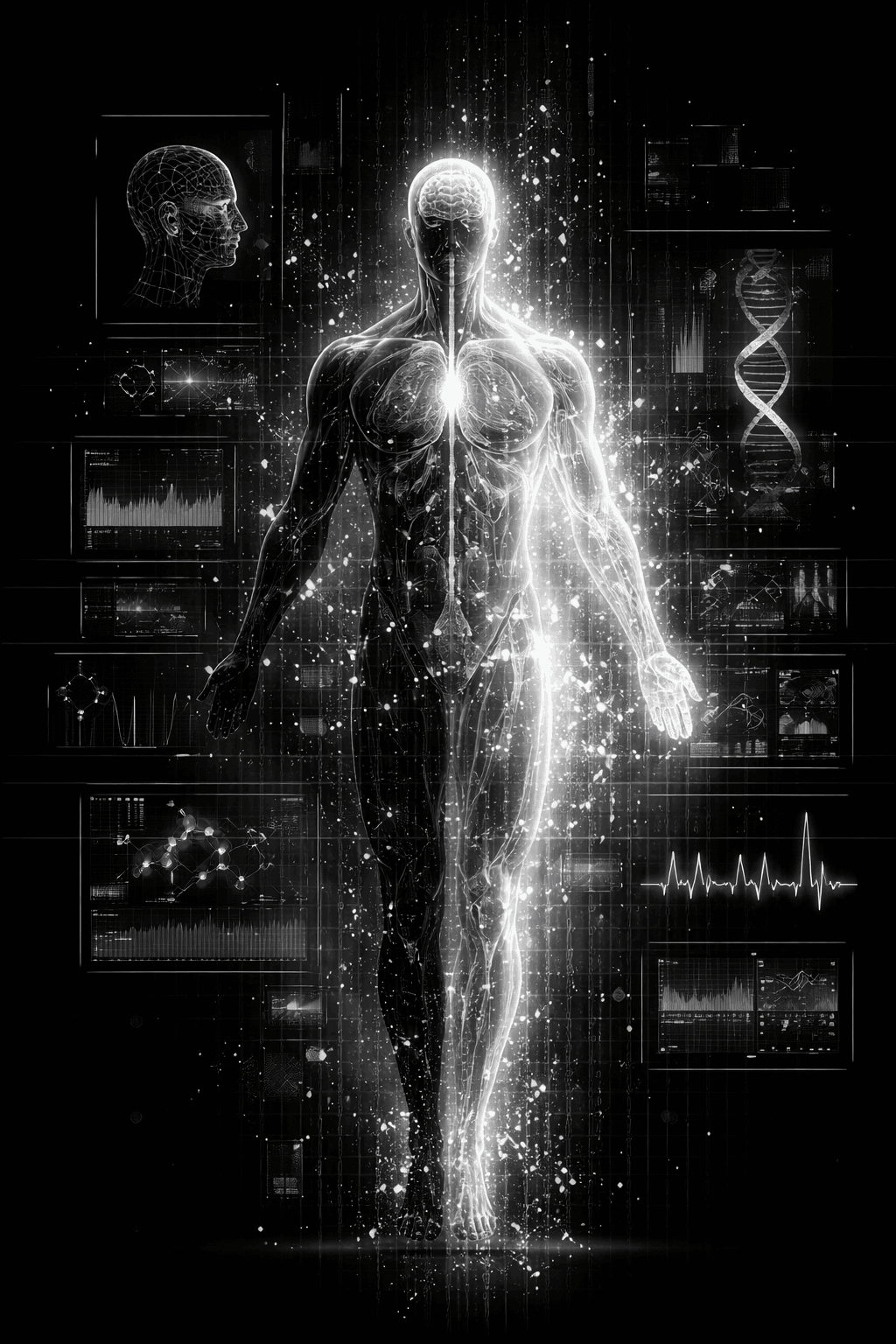
Mantis Biotech and Human-in-Computer Models
Mantis Biotechnology is positioning itself as the foundational infrastructure behind a new class of computational systems known as human-in-computer models. Founded in 2025 and based in New York, the startup aims to solve one of the most persistent challenges in life sciences and biomedical research: fragmented, unreliable, and difficult-to-interpret data. By unifying diverse datasets and embedding biological meaning directly into them, Mantis seeks to enable researchers, clinicians, and companies to simulate human biology digitally with unprecedented fidelity.
At its core, the company is building what could be described as the “invisible layer” powering digital twins of the human body. These twins are not simple visual models but data-rich computational representations that mirror anatomy, physiology, and behavior. Such models could transform fields ranging from drug development and clinical trials to sports science and rehabilitation.
Mantis’ platform ingests inputs from motion capture systems, biometric sensors, medical imaging technologies, and training logs, converting them into structured, validated datasets ready for production applications. Instead of forcing teams to manually reconcile incompatible formats and definitions, the system standardizes information so it can be reused across projects. The result is a shift from ad-hoc data wrangling toward a persistent, domain-aware data infrastructure for human biology.
The company describes its mission as enabling organizations to build human-in-computer models at scale. If successful, this infrastructure could become as essential to biomedical innovation as cloud computing has been to software development.
Why Is Fragmented Biomedical Data Such a Critical Problem?
The life sciences industry generates enormous volumes of data, yet much of it remains siloed, inconsistent, or poorly validated. Clinical trials, for example, rely on information collected across numerous systems: electronic data capture platforms, laboratory databases, imaging repositories, wearable devices, and more. Each system often uses different formats and definitions, making integration slow and error-prone.
According to Mantis, data inaccuracies contribute to delays in approximately 80 percent of clinical trials. Manual entry errors, inconsistent practices across research sites, and weak validation processes compound the problem. The financial consequences are severe: each delayed trial can cost millions of dollars, while redundant data projects consume vast internal resources.
The discontinuation of a late-stage Alzheimer’s drug program due to data traceability concerns illustrates the stakes involved. Years of research and hundreds of millions of dollars can be lost if datasets cannot be trusted or verified. More importantly, patients waiting for treatments pay the ultimate price when promising therapies fail to reach the market.
Even routine analytical questions can become expensive undertakings. Cross-system analyses often require teams of data engineers, statisticians, and clinical specialists working for weeks. Because pipelines are typically built for one-off questions, organizations repeatedly spend time and money reconstructing the same logic for future analyses.
Mantis argues that the underlying issue is not merely technological but conceptual: biomedical data lacks a shared semantic layer that captures its biological and clinical meaning. Without that layer, raw tables remain difficult to interpret, compare, and reuse.
How Does Mantis Turn Raw Data into Human Digital Twins?
The company’s solution centers on transforming fragmented inputs into canonical datasets that reflect how biological systems actually function. Instead of storing information as isolated records, the platform encodes relationships between variables—such as how biomarkers relate to disease progression or how physiological signals correspond to performance outcomes.
This approach enables the creation of validated digital twins: computational models representing real individuals or populations. These twins can simulate how a patient might respond to a treatment, how an athlete’s body adapts to training, or how a disease progresses over time.
Mantis integrates data from a wide range of sources, including wearable sensors, imaging scans, laboratory results, and behavioral metrics. By preserving lineage back to the original systems, the platform ensures traceability and compliance—crucial requirements in regulated industries like healthcare.
The company also emphasizes continuous maintenance. Datasets are versioned and updated as new information becomes available, allowing teams to build applications on a stable foundation without losing historical context. This transforms data from a disposable byproduct of research into a reusable asset.
In practical terms, scientists could query complex relationships directly—such as correlations between biomarker changes and cognitive outcomes—without coordinating manual data pulls across departments. What once required weeks of preparation could be accomplished in minutes.
What Makes the Platform Domain-Aware Rather Than Generic?
Many data platforms treat information as abstract numbers and text, leaving interpretation to downstream users. Mantis takes a different approach by embedding domain knowledge into the data itself. Biological, clinical, and human-performance concepts are encoded so that datasets inherently reflect the realities of life sciences.
This domain awareness allows the platform to answer nuanced questions that generic tools cannot easily address. For example, it can account for differences in assay batches, research sites, or measurement techniques—factors that often confound analyses if not handled carefully.
The company describes its offering as a “Databricks for biomedical and clinical data,” highlighting its ambition to become the central hub where life sciences teams manage and analyze information. By integrating with existing systems rather than replacing them, Mantis aims to fit into established workflows while eliminating redundancy.
Key capabilities include integration across electronic data capture systems, clinical trial management platforms, laboratories, and omics databases; canonical datasets with stable definitions; traceability back to source systems; and reuse across analytics, machine learning, and operational processes.
Who Is Behind Mantis Biotechnology’s Vision?
The startup’s founder, Georgia Witchel, brings an unconventional background that blends elite athletics, computer science, and bioengineering. A former world-record ice climber who helped elevate the sport to international prominence, she later transitioned into technology and biomedical entrepreneurship.
After earning a degree in computer science and pursuing advanced studies in bioengineering, Witchel became a founding engineer at a sports technology company before launching her own ventures. Her previous startup developed physics engines for digital twins used in autonomous robotic surgery and simulated regulatory trials—experience that directly informs Mantis’ current work.
Her trajectory reflects the interdisciplinary nature of the company’s mission. Building infrastructure for human-in-computer models requires expertise spanning software engineering, biology, medicine, and data science. Witchel’s background in human performance and biomechanics may also influence the platform’s ability to incorporate athletic and behavioral data alongside clinical information.
The small founding team operates with the intensity typical of early-stage startups, focusing on solving a narrowly defined but high-impact problem. Their participation in a major accelerator program underscores investor interest in the convergence of AI, data infrastructure, and healthcare.
How Could Human-in-Computer Models Transform Industries Beyond Healthcare?
While the immediate applications lie in clinical trials and drug development, the implications extend far beyond medicine. Accurate digital representations of human systems could reshape industries such as sports performance, occupational safety, defense, and personalized wellness.
In athletics, digital twins could simulate training regimens to optimize performance while minimizing injury risk. In rehabilitation, therapists could model recovery trajectories and adjust treatment plans accordingly. Insurance companies might use simulations to assess risk more precisely, while consumer health platforms could deliver deeply personalized recommendations.
Even fields like robotics and human-computer interaction stand to benefit. Understanding human movement and physiology at a granular level could enable machines to collaborate with people more safely and effectively.
Mantis positions itself not as an application provider but as the infrastructure layer enabling these possibilities. By focusing on data foundations rather than end-user products, the company aims to become indispensable across multiple sectors.
What Challenges Must Mantis Overcome to Achieve Its Vision?
Despite its promise, the path forward is complex. Integrating sensitive biomedical data raises privacy, regulatory, and ethical concerns. Convincing large organizations to adopt a new infrastructure layer can also be difficult, particularly in conservative industries where legacy systems dominate.
Technical challenges abound as well. Modeling human biology accurately requires handling immense variability across individuals and populations. Ensuring that digital twins remain valid as new data emerges demands rigorous validation processes.
Competition is another factor. Major technology companies, research institutions, and specialized startups are all exploring ways to leverage AI and data platforms in healthcare. Mantis must differentiate itself through domain expertise and demonstrable results.
Nevertheless, the urgency of the problems it addresses—rising clinical trial costs, delayed treatments, and inefficiencies in biomedical research—creates a strong incentive for adoption.
Could Mantis Become the Backbone of Next-Generation Biomedical Innovation?
If the company succeeds, it could fundamentally change how human data is used in science and industry. Instead of isolated datasets scattered across systems, organizations would operate on shared, validated representations of human biology. Questions that once required months of analysis could be answered instantly, accelerating discovery and decision-making.
Such infrastructure could also enable new forms of collaboration. Researchers, clinicians, and engineers could build on common datasets, reducing duplication of effort and increasing reproducibility. Regulatory agencies might gain clearer visibility into trial data, improving oversight and trust.
Mantis Biotechnology’s ambition is to make human-in-computer models practical, scalable, and reliable. By doing so, it seeks to usher in an era where digital simulations complement real-world experimentation, shortening the path from hypothesis to impact.
Whether the startup ultimately becomes a cornerstone of biomedical infrastructure remains to be seen. Yet its approach highlights a broader shift in technology: the recognition that solving humanity’s most complex challenges may depend not just on smarter algorithms, but on better foundations for the data that fuels them.
In a world increasingly defined by the convergence of biology and computation, Mantis is betting that the future will belong to those who can faithfully represent the human body in code—and make that representation usable across every domain where understanding people matters.