
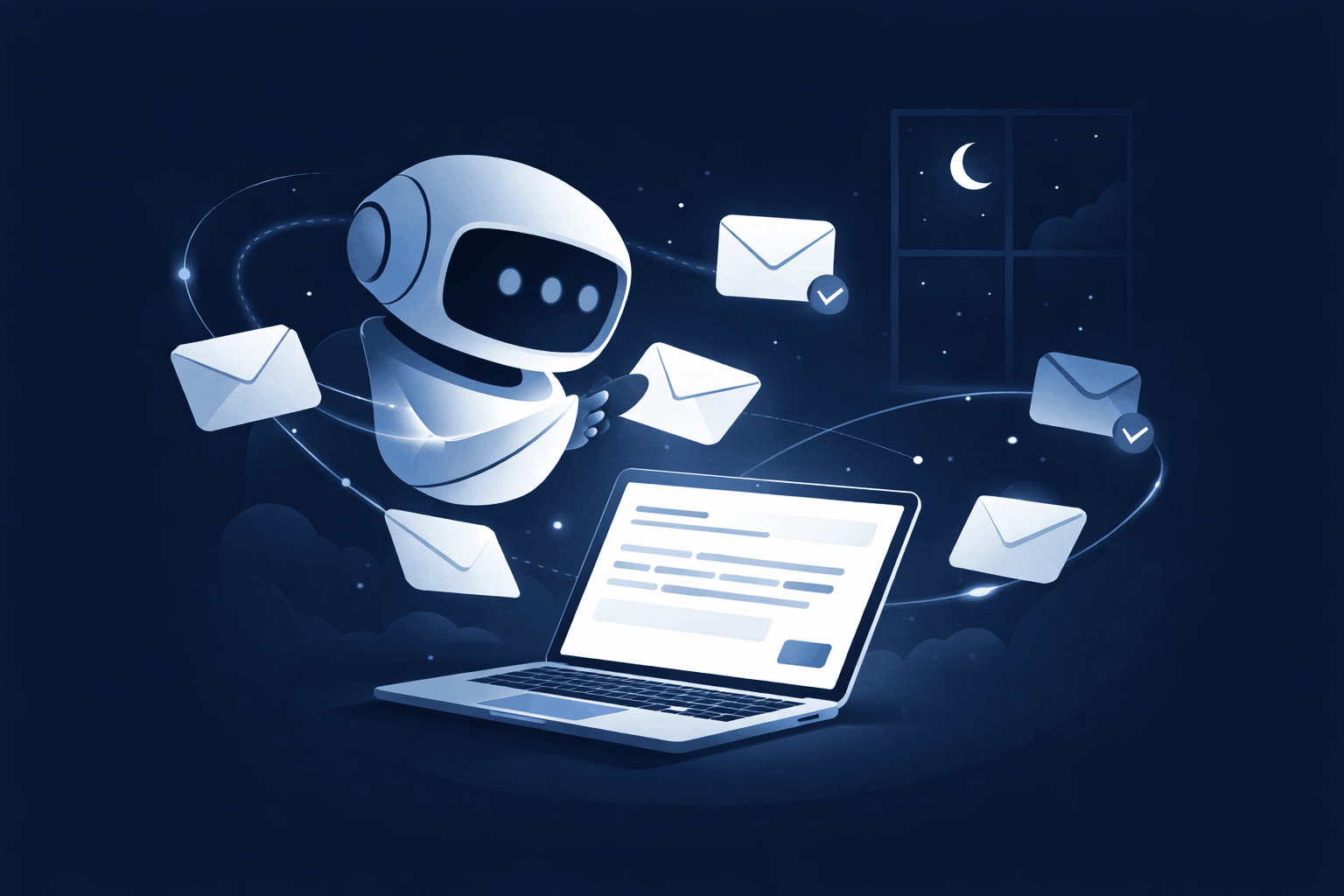
Odo: The AI Assistant Transforming Your Inbox
In a world where digital communication never truly pauses, email remains one of the most essential yet frustrating tools in professional life. Every day begins the same way for millions of people: opening an inbox filled with dozens—if not hundreds—of messages, most of which are irrelevant, repetitive, or distracting. Somewhere in that flood lies the few emails that actually matter.
It is precisely this daily struggle that led to the creation of Odo, an AI-powered email assistant designed to give people back control over their communication. Founded in 2023 and based in San Francisco, Odo emerged from a simple but powerful idea: people shouldn’t have to start their mornings overwhelmed.
Built by a small but highly experienced founding team, Odo aims to transform email from a chaotic, reactive process into a structured, proactive experience. By monitoring inbox activity, highlighting what matters, and drafting replies automatically, the platform reframes email as something that works for the user—not the other way around.
Why Has Email Become So Overwhelming?
Email overload is not a new problem, but it has reached a point where it actively impacts productivity, focus, and even well-being. The issue is not just the number of messages people receive, but the mental effort required to process them.
Professionals often spend hours each day scanning emails, trying to separate meaningful communication from noise. Notifications, newsletters, cold outreach, and automated updates all compete for attention, making it difficult to identify what truly requires action.
At the same time, writing responses remains a repetitive task. Many emails follow familiar patterns—status updates, meeting follow-ups, introductions—yet users continue to draft them manually. This creates a cycle of inefficiency, where time is spent not on decision-making or strategic work, but on routine communication.
Perhaps the most stressful aspect is the fear of missing something important. A single overlooked email can have real consequences, from missed opportunities to damaged professional relationships. This constant pressure often extends beyond working hours, leading people to check their inbox late at night or even wake up worrying about unanswered messages.
Odo was designed to eliminate this tension by ensuring that nothing important slips through the cracks.
How Does Odo Transform the Inbox Experience?
Odo introduces a fundamentally different approach to email management. Instead of acting as a passive tool that users must navigate, it becomes an active assistant that organizes, prioritizes, and prepares communication in advance.
The platform continuously scans incoming emails and categorizes them intelligently. By the time the user checks their inbox, the system has already identified which messages require attention and which can be safely ignored or postponed.
This transformation is subtle but powerful. The inbox is no longer a cluttered list of messages—it becomes a curated workspace where priorities are clear and actionable.
One of Odo’s key innovations lies in its ability to draft replies automatically. Rather than forcing users to start from scratch, it generates responses based on context, previous conversations, and the user’s communication style. This significantly reduces the time and effort required to respond, while maintaining a natural and authentic tone.
What Does a “Better Morning” Actually Look Like?
The concept of a “better morning” is at the heart of Odo’s value proposition. Instead of beginning the day by diving into an overwhelming inbox, users are presented with a concise and structured overview of what matters.
Overnight, Odo processes incoming emails and prepares a daily brief. This brief includes:
- A clear list of emails that require attention
- Suggested replies ready for review and approval
- Follow-up reminders based on ongoing conversations
This approach changes the entire rhythm of the workday. Instead of reacting to incoming information, users start their day with clarity and direction. They know what needs to be done, and in many cases, much of the work is already prepared.
The impact is not only practical but also psychological. Removing the uncertainty of “what did I miss?” allows users to begin their day with confidence rather than stress.
How Does Odo Help With Writing Emails More Efficiently?
Writing emails is one of the most time-consuming aspects of professional communication. Even experienced professionals spend significant time crafting responses, ensuring the tone is appropriate, and repeating similar messages across different conversations.
Odo addresses this challenge through intelligent drafting capabilities. By learning from the user’s past communication, it generates responses that match their tone, structure, and intent. This ensures that emails feel personal and consistent, rather than generic or automated.
Users remain in control of the final message. They can review, edit, and adjust drafts before sending, but the initial effort is dramatically reduced. What once required several minutes of thought and typing can now be completed in seconds.
In addition to passive drafting, Odo offers a more interactive experience through its chat-like interface. Users can simply ask the assistant to perform tasks such as drafting follow-ups, sending updates, or reaching out to multiple recipients. This conversational approach makes email management feel less like administrative work and more like collaboration.
For professionals who regularly communicate with large groups—such as sales teams, founders, or investors—this functionality can be a significant advantage.
How Does Odo Organize and Prioritize Emails?
Traditional email platforms rely on filters, folders, and manual rules to organize messages. While these tools can be helpful, they often require ongoing maintenance and still fail to fully eliminate clutter.
Odo takes a more intelligent and dynamic approach. It automatically categorizes emails into meaningful groups such as conversations, notifications, news, and cold outreach. This ensures that important messages are always visible, while less relevant content is pushed to the background.
By structuring the inbox in this way, Odo reduces the cognitive load associated with email management. Users no longer need to scan through irrelevant messages to find what matters—they can focus directly on high-priority communication.
This prioritization also improves responsiveness. When critical emails are surfaced immediately, users can act quickly and confidently, reducing delays and improving overall communication quality.
Who Are the Founders Behind Odo?
Odo was founded by Yooni Ahn and Andrew Wagner, two professionals with complementary backgrounds and a shared understanding of the challenges surrounding email.
Before launching Odo, both founders worked at Robinhood, where they gained firsthand experience building and scaling products used by millions of people.
Yooni Ahn, the CEO, spent five years at Robinhood working across product and business operations. She was involved in initiatives such as Robinhood Gold and customer care during high-pressure moments like the GameStop trading surge. Earlier in her career, she worked at Oliver Wyman, where she developed strong skills in structured communication and documentation.
Her experience with email overload was deeply personal. While managing multiple projects and sales efforts, she found herself constantly worried about missing important messages—an anxiety that ultimately inspired the creation of Odo.
Andrew Wagner, the CTO, brings a strong engineering background. As a staff engineer at Robinhood, he worked on complex systems and developed expertise in building scalable products. He also spent years freelancing, where he observed how communication challenges impacted businesses directly.
Notably, Andrew ran his own email server for over a decade, giving him a unique technical perspective on how email systems function. This experience plays a key role in shaping Odo’s underlying technology.
Together, the founders combine product insight, technical expertise, and real-world experience, creating a strong foundation for the company.
What Makes Odo Different From Other Email Assistants?
The market for email productivity tools is crowded, with many solutions offering incremental improvements such as better filtering, templates, or automation. However, most of these tools still require users to actively manage their inbox.
Odo stands apart by shifting the paradigm entirely. Instead of helping users manage email more efficiently, it aims to manage email on their behalf.
Several key factors differentiate Odo:
- It operates proactively, preparing work before the user even opens their inbox
- It generates personalized responses that reflect the user’s voice
- It prioritizes emails based on real importance, not just predefined rules
- It integrates drafting, organization, and follow-ups into a single workflow
This holistic approach allows Odo to deliver a more seamless and impactful experience compared to traditional tools.
What Is the Long-Term Vision for Odo?
While Odo currently focuses on improving email workflows, its broader vision extends beyond the inbox. The company is building a system that understands communication at a deeper level—what matters, what requires action, and how users prefer to respond.
In the future, this could evolve into a more comprehensive communication assistant that operates across multiple channels, including messaging platforms, collaboration tools, and even voice interactions.
The ultimate goal is to reduce the time and mental energy people spend on routine communication, allowing them to focus on higher-value work. By automating repetitive tasks and providing intelligent support, Odo aims to redefine how professionals interact with information.
Why Does Odo Matter in Today’s Work Environment?
As work becomes increasingly digital and distributed, the volume of communication continues to grow. Email remains a central part of this ecosystem, but it is no longer sufficient to rely on traditional tools and workflows.
Odo represents a shift toward a more intelligent and human-centered approach to productivity. Instead of asking users to adapt to technology, it adapts technology to the user.
By addressing one of the most persistent pain points in modern work, Odo has the potential to make a meaningful impact on how people manage their time, attention, and energy.
In a world where every minute counts, starting the day with clarity instead of chaos is not just a convenience—it is a competitive advantage.