
Replicas: Background Coding Agents for Teams
In 2026, a new generation of developer tools began to redefine how engineering teams approach productivity, automation, and collaboration. Among these emerging solutions is Replicas, a startup building background coding agents designed to operate autonomously within engineering workflows. Founded in 2026 as part of the Spring batch and led by founder Connor Loi, Replicas is positioning itself at the intersection of AI, developer tooling, and workflow automation.
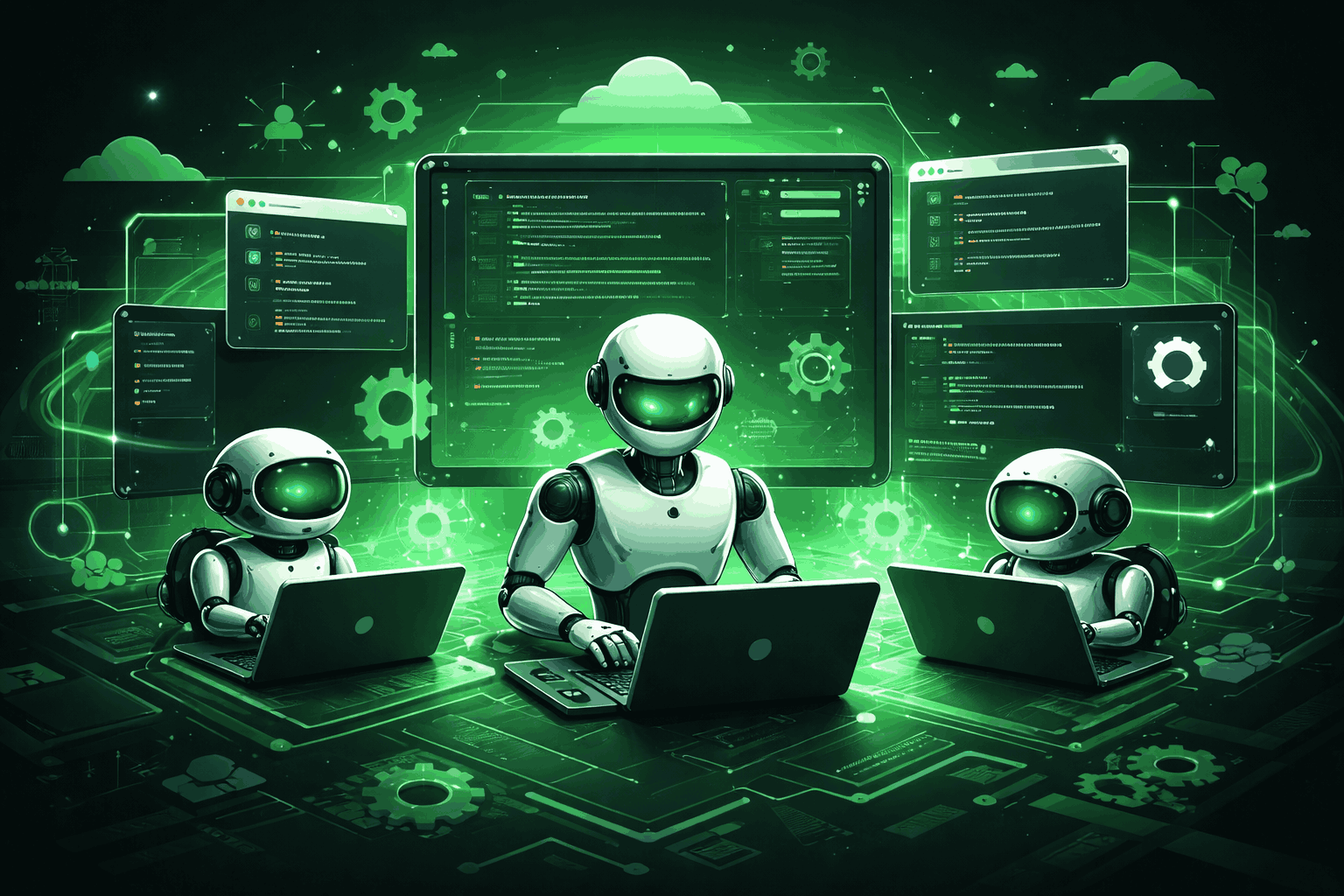
At its core, Replicas introduces a concept that goes beyond traditional AI coding assistants. Instead of simply helping developers write code interactively, Replicas enables engineers to delegate entire tasks to autonomous agents that run in the background. These agents can execute tasks, test their outputs, respond to feedback, and ultimately deliver production-ready pull requests—all without constant human intervention.
The idea is simple yet powerful: if AI agents can operate independently and reliably, they can fundamentally change how software is built.
What Problem Is Replicas Trying to Solve?
Modern engineering teams face a paradox. On one hand, they have access to increasingly powerful AI tools such as coding assistants and copilots. On the other hand, these tools often remain limited in scope—they assist, but they do not truly execute.
Developers still spend a significant portion of their time handling repetitive tasks: fixing CI failures, addressing minor bugs, responding to code review comments, or completing routine tickets. While these tasks are essential, they rarely require deep creative thinking, making them ideal candidates for automation.
Existing solutions attempt to address this issue, but they come with critical limitations. Many AI coding tools operate within restricted environments, locking teams into specific ecosystems or “harnesses.” This lack of flexibility reduces their effectiveness, especially for teams working with complex, custom-built systems.
Replicas identifies a key gap in the market:
background coding agents should not just assist—they should independently execute, validate, and iterate within real environments.
Without this capability, the promise of autonomous development remains incomplete.
How Does Replicas Work in Practice?
Replicas introduces a system where developers can delegate tasks to AI agents that function much like independent engineers. These agents are not confined to simple prompts or isolated code snippets—they operate within full development environments.
The workflow begins when a developer assigns a task through familiar tools such as Slack, Linear, or GitHub. Instead of manually handling the task, Replicas spins up a dedicated agent to take over.
Each agent is provisioned with its own sandboxed virtual machine, where it clones the relevant codebase and begins working. Within this environment, the agent installs dependencies, initializes services, and runs the application locally—replicating the behavior of a real developer setting up a project.
This approach is crucial. By working locally, the agent can:
- Fully understand the system it is modifying
- Test changes in a realistic environment
- Validate outputs before submission
Once the task is completed, the agent creates a pull request, ready for human review.
The process does not stop there. Replicas agents are designed to iterate continuously. If a CI/CD pipeline fails or code review feedback is provided, the agent automatically responds, making adjustments until the task meets the required standards.
This feedback loop transforms agents from static tools into adaptive collaborators.
What Makes Replicas Different from Other AI Coding Tools?
While AI-powered coding tools are not new, Replicas introduces several key innovations that distinguish it from existing solutions.
First, it embraces the concept of true background execution. Instead of requiring developers to actively guide every step, Replicas agents work independently, allowing teams to parallelize their workload.
Second, the platform is built around flexibility. Teams are not locked into a single AI provider. Instead, Replicas allows users to bring their own credentials for models such as Claude or Codex, ensuring compatibility with different workflows and preferences.
Third, the introduction of customizable environments sets Replicas apart. Through its “Environments” feature, teams can configure how agents operate by defining:
- Files and dependencies
- Environment variables
- Startup and warm-up processes
- Skills and integrations
This level of customization enables Replicas to adapt to virtually any codebase, regardless of complexity.
Finally, Replicas focuses heavily on quality assurance. By running code locally, validating outputs, and responding to feedback automatically, agents produce higher-quality pull requests compared to tools that rely solely on static generation.
In essence, Replicas shifts the paradigm from “AI-assisted coding” to AI-driven execution.
Who Is Using Replicas Today?
Despite being an early-stage startup with a small team, Replicas has already gained traction among startups, particularly within the Y Combinator ecosystem. More than 20 YC-backed companies are reportedly using the platform across teams of varying sizes.
This early adoption highlights a growing demand for tools that go beyond incremental productivity improvements. Startups, in particular, benefit from the ability to ship faster with limited engineering resources.
For these teams, Replicas acts as a force multiplier. Instead of hiring additional developers to handle routine work, they can delegate tasks to agents and focus their human effort on strategic and high-impact initiatives.
The appeal is especially strong for fast-moving teams where speed and efficiency directly impact competitive advantage.
How Does Replicas Improve Engineering Productivity?
The productivity gains offered by Replicas stem from its ability to parallelize work at scale. Traditional development workflows are inherently sequential—developers pick up tasks one by one, creating bottlenecks in delivery.
Replicas breaks this limitation by enabling multiple agents to work simultaneously on different tasks. This means that:
- Bug fixes can be handled in parallel
- Feature development can proceed without waiting for smaller tasks
- CI/CD issues can be resolved automatically
Additionally, the automation of feedback loops reduces the back-and-forth typically associated with code reviews. Instead of waiting for developers to address comments, agents can respond instantly, shortening the overall development cycle.
Another key benefit is consistency. Human developers may overlook minor issues or introduce inconsistencies, especially under time pressure. Replicas agents, on the other hand, follow defined processes and continuously validate their outputs.
This results in cleaner, more reliable code and fewer production issues.
What Role Do Environments Play in Replicas?
One of the most innovative aspects of Replicas is its Environments feature, which serves as the foundation for agent execution.
Environments allow teams to define exactly how agents should operate within their codebase. This includes everything from file structures and dependencies to environment variables and startup scripts.
By configuring these elements, teams can ensure that agents behave predictably and align with existing development practices.
The inclusion of warm hooks and start hooks further enhances performance. These mechanisms allow agents to initialize quickly and maintain readiness, reducing latency when tasks are assigned.
Moreover, Environments enable agents to verify their work locally, ensuring that changes function correctly before being submitted. This significantly reduces the risk of broken builds or failed deployments.
In many ways, Environments bridge the gap between AI capabilities and real-world engineering requirements.
What Is the Future Vision for Replicas?
Replicas is not stopping at its current capabilities. The company has outlined several ambitious directions for future development.
One key focus is the expansion of its API and automation capabilities. By enabling teams to schedule tasks—such as nightly runs or automated maintenance—Replicas aims to further integrate into continuous development workflows.
Another major area of innovation is recursive task execution. This concept allows agents to break down complex tasks into smaller subtasks, spawning additional agents to handle each component. If successfully implemented, this could dramatically increase the scope of what autonomous systems can achieve.
The company is also working on reducing latency through improvements in infrastructure, including warm pools and snapshotting. The goal is to make agent execution feel nearly instantaneous, even for large teams.
Long-term memory is another planned feature, which would allow agents to retain knowledge across tasks. This could enable more context-aware decision-making and further reduce the need for human intervention.
Ultimately, Replicas envisions a future where engineering teams can rely on autonomous agents not just for support, but as integral members of the development process.
Can Background Coding Agents Redefine Software Development?
The emergence of tools like Replicas raises an important question: are background coding agents the next evolution of software development?
If agents can reliably execute tasks, validate their work, and adapt to feedback, they have the potential to transform how teams operate. Developers may shift from writing code directly to orchestrating systems of intelligent agents, focusing on architecture, strategy, and innovation.
However, challenges remain. Trust, reliability, and security are critical factors that will determine adoption. Engineering teams must be confident that agents can handle production-level tasks without introducing risks.
Replicas addresses these concerns through its emphasis on local execution, validation, and feedback loops. By aligning agent behavior with real-world development practices, it builds a foundation for trust.
While it is still early, the trajectory is clear. Background coding agents are moving from experimental tools to practical solutions, and Replicas is at the forefront of this transition.
Why Is Replicas a Startup to Watch?
Replicas represents a broader shift in how technology is evolving. As AI systems become more capable, the focus is moving from assistance to autonomy.
By enabling developers to delegate work to intelligent agents, Replicas is redefining productivity in engineering teams. Its combination of flexibility, automation, and real-world execution positions it as a compelling solution in a rapidly growing market.
Despite its small team and early-stage status, the startup has already demonstrated strong potential through early adoption and a clear vision for the future.
For companies looking to scale efficiently and innovate faster, tools like Replicas may soon become essential.
And as the boundaries between human and machine collaboration continue to blur, startups like Replicas offer a glimpse into what the future of software development might look like—a world where engineers no longer work alone, but alongside a network of autonomous, intelligent agents.