
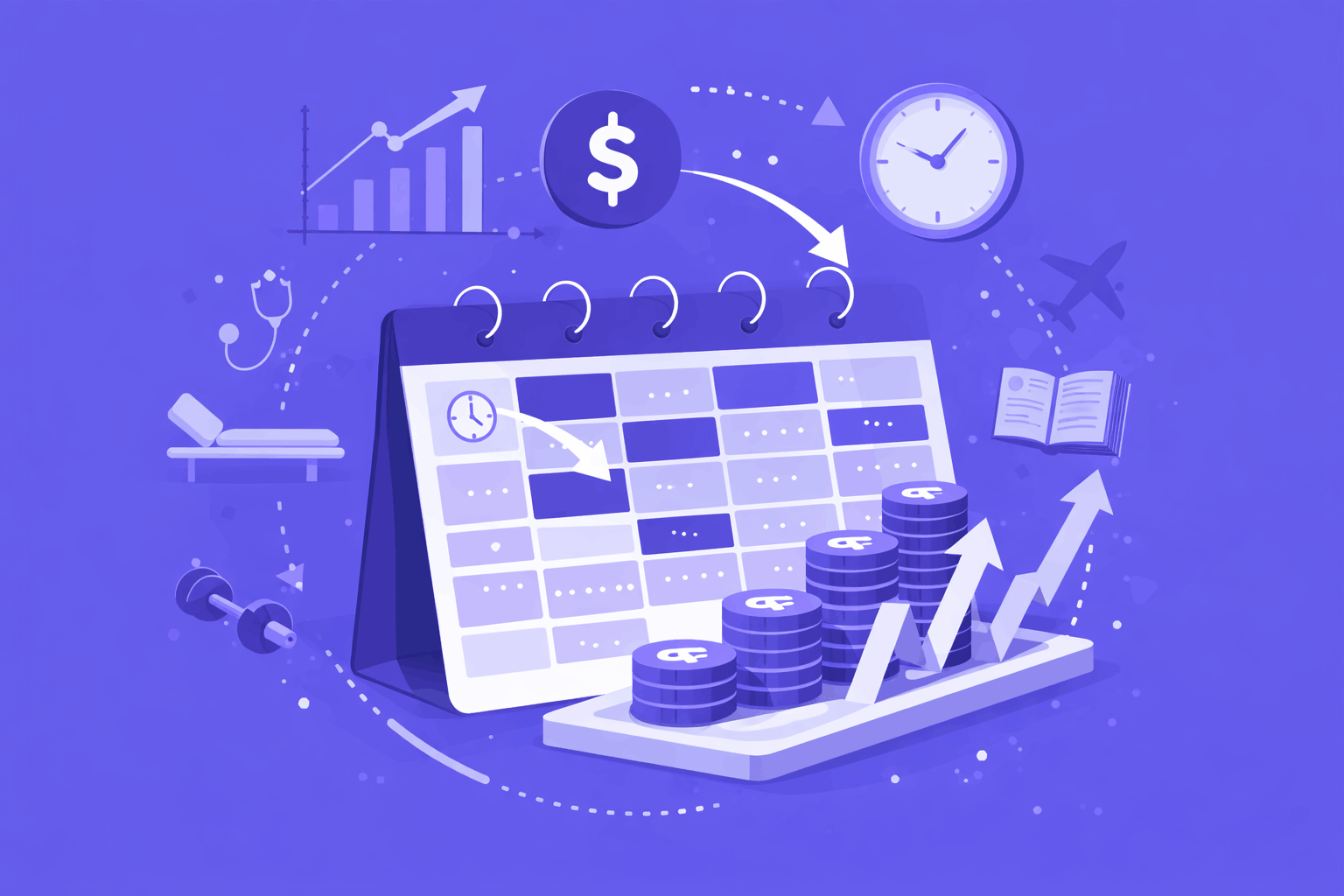
Booko: Dynamic Pricing for Businesses That Sell Time
Booko is a San Francisco–based startup founded in 2025 that is tackling a problem most service businesses quietly accept as inevitable: lost time equals lost money. For companies that sell bookable time slots—fitness studios, medical spas, tutors, consultants, and countless other service providers—time is the product. And unlike physical inventory, time cannot be stored, discounted later, or sold tomorrow. Once a slot goes unused, its value drops instantly to zero.
Despite this reality, most time-based businesses still rely on static pricing models. A Tuesday morning appointment costs the same as a fully booked Saturday afternoon, even though demand and utilization vary wildly. Booko was created to challenge this outdated approach by introducing dynamic pricing to time itself.
At its core, Booko is a pricing engine that helps businesses sell more of their available time by adjusting prices and incentives based on real demand. Much like airlines optimize seat pricing or ride-sharing platforms manage driver availability, Booko treats unused time as perishable inventory that can—and should—be priced dynamically.
Why Is Static Pricing Failing Time-Slot Businesses?
The problem Booko addresses is deceptively simple but enormously expensive. Time-slot-based businesses face uneven demand across days, hours, and seasons. Peak periods sell out quickly, while off-peak hours remain chronically underutilized. Yet most booking systems offer little flexibility beyond basic availability management.
Static pricing assumes that every hour of time holds equal value, regardless of demand. In practice, this leads to predictable inefficiencies. Businesses experience overbooking pressure during peak hours and empty calendars during slower periods, even though many customers would be willing to shift their schedules in exchange for a better price or incentive.
Existing tools typically give customers only one decision point: book or don’t book. There is no built-in motivation to choose a less popular time slot. As a result, businesses leave significant revenue on the table—not because demand doesn’t exist, but because pricing doesn’t reflect reality.
Booko’s founders recognized that this mismatch between supply, demand, and pricing is not a niche issue but a structural flaw shared by nearly every business that sells time.
How Does Booko Apply Dynamic Pricing to Time?
Booko brings proven dynamic pricing principles into a space that has long lacked them. Instead of forcing businesses to overhaul their workflows, Booko integrates directly with existing booking systems, working behind the scenes to optimize prices automatically.
The platform analyzes historical utilization data, real-time availability, and demand patterns to adjust pricing and incentives for specific time slots. Slower periods can be priced more attractively to encourage bookings, while high-demand slots retain their premium value. The goal is not to discount indiscriminately, but to align pricing with actual demand.
This approach mirrors models that consumers already understand. Airlines adjust fares based on seat availability and travel dates. Ride-sharing platforms increase or decrease prices depending on local demand. Booko applies the same logic to appointments, classes, and sessions—areas where dynamic pricing has been surprisingly absent.
By staying within existing booking workflows, Booko removes friction for both businesses and customers. Service providers don’t need to manually tweak prices, and customers simply see better options at times when availability would otherwise go unused.
What Results Are Early Customers Seeing from Booko?
The impact of Booko’s approach is measurable and immediate. Early customers report approximately a 20% uplift in revenue, largely driven by selling time that would have otherwise gone unused. This increase does not come from raising prices across the board, but from filling empty slots that previously generated no revenue at all.
For many businesses, this represents “found money.” Fixed costs such as rent, equipment, and staffing already exist whether or not a time slot is booked. When Booko helps convert idle hours into paid appointments, nearly all of that additional revenue flows directly to the bottom line.
Beyond revenue growth, businesses also benefit from smoother utilization patterns. Instead of extreme peaks and valleys, calendars become more balanced, reducing stress on staff during high-demand periods and improving overall operational efficiency.
These early results validate Booko’s core thesis: dynamic pricing doesn’t just work for physical inventory or transportation—it works exceptionally well for time.
Who Are the Founders Behind Booko and What Shaped Their Vision?
Booko was founded by Will Hall and Arjun Saluja, a duo whose combined backgrounds in economics, computer science, and real-world pricing systems strongly inform the company’s direction.
Will Hall brings an entrepreneurial and commercial perspective to the company. With a background in economics and computer science from Dartmouth, he previously served as CEO and founder of Hall & Partners Digital Marketing, where he secured $200K in revenue and projected $500K in trailing twelve months. His experience running a services business gave him firsthand exposure to the inefficiencies of selling time at static prices.
Arjun Saluja complements this with deep technical and systems expertise. Also educated in engineering and computer science at Dartmouth, he previously built dynamic pricing systems with the Uber Elevate team at Joby Aviation. That experience exposed him to sophisticated pricing models designed to manage scarce, high-value capacity in real time.
Together, the founders combine practical business insight with advanced pricing engineering—a pairing that allows Booko to be both commercially grounded and technically robust.
Why Is the Market for Time-Based Pricing So Large?
The scope of Booko’s opportunity is enormous because time-based businesses exist everywhere. From fitness studios and medical spas to tutors, consultants, and professional services, countless industries rely on selling appointments or sessions by the hour.
In aggregate, these businesses lose billions of dollars annually to unsold time. Every empty class spot, unused consultation hour, or missed appointment represents revenue that can never be recovered. Unlike retail or manufacturing, there is no warehouse for excess capacity.
What makes this market especially compelling is its universality. Booko is not tied to a single vertical or niche use case. Anywhere people sell their time, the same economic principles apply. Demand fluctuates, capacity is fixed, and pricing often fails to adapt.
By positioning itself as a horizontal pricing engine rather than a vertical-specific tool, Booko can scale across industries while solving a common, deeply rooted problem.
How Does Booko Fit into Existing Booking Workflows?
One of Booko’s key design principles is minimal disruption. Rather than asking businesses to switch booking platforms or retrain staff, Booko integrates with existing systems and enhances them from within.
This integration-first approach is critical to adoption. Many service providers rely on established booking software that handles scheduling, payments, and customer communication. Replacing these systems would introduce friction and risk. Booko avoids this by acting as a pricing layer that adjusts values dynamically without changing how bookings are made.
From the customer’s perspective, the experience remains familiar. They browse available time slots and see prices that reflect demand. From the business’s perspective, pricing optimization happens automatically, freeing owners and managers from manual experimentation or guesswork.
By embedding itself seamlessly into existing workflows, Booko lowers the barrier to entry while maximizing its impact.
Why Is Dynamic Pricing for Time Still So Rare?
Given its effectiveness, the absence of dynamic pricing in time-based businesses may seem surprising. The reason lies partly in historical inertia and partly in technical complexity.
Many service industries evolved around simple, flat pricing because tools to support more sophisticated models were either unavailable or too complex to implement. Unlike airlines or ride-sharing platforms, small and mid-sized service providers rarely had access to advanced pricing infrastructure.
Booko changes this equation by packaging complex pricing logic into an accessible, plug-and-play solution. It abstracts away the math and data science, allowing businesses to benefit from dynamic pricing without needing in-house expertise.
In doing so, Booko is not just introducing a new tool—it is redefining how time itself is valued in the service economy.
What Is Booko Ultimately Trying to Change?
At a deeper level, Booko is challenging a long-standing assumption: that unsold time is an unavoidable cost of doing business. By reframing time as perishable inventory that can be actively managed, Booko empowers businesses to take control of their capacity.
The startup’s mission is not simply to increase revenue, but to help recover billions in unsold value that currently disappears every day. By aligning pricing with real demand, Booko creates a win-win scenario where businesses earn more and customers gain greater flexibility and choice.
As dynamic pricing becomes normalized beyond airlines and ride-sharing, Booko positions itself at the forefront of a broader shift—one where time is priced intelligently, not statically.
What Does the Future Look Like for Booko?
As an active Winter 2026 startup with a small, focused team, Booko is still early in its journey. Yet its early traction and clear value proposition suggest significant growth potential.
With demand-driven pricing becoming increasingly accepted across industries, Booko is well positioned to become the default pricing engine for time-based businesses. Its horizontal applicability, integration-friendly design, and proven revenue impact make it a compelling solution in a vast, underserved market.
If successful, Booko will not only help individual businesses earn more—it will fundamentally change how the service economy thinks about time, value, and pricing.