
CambioML: AI Teammates for Knowledge Workers
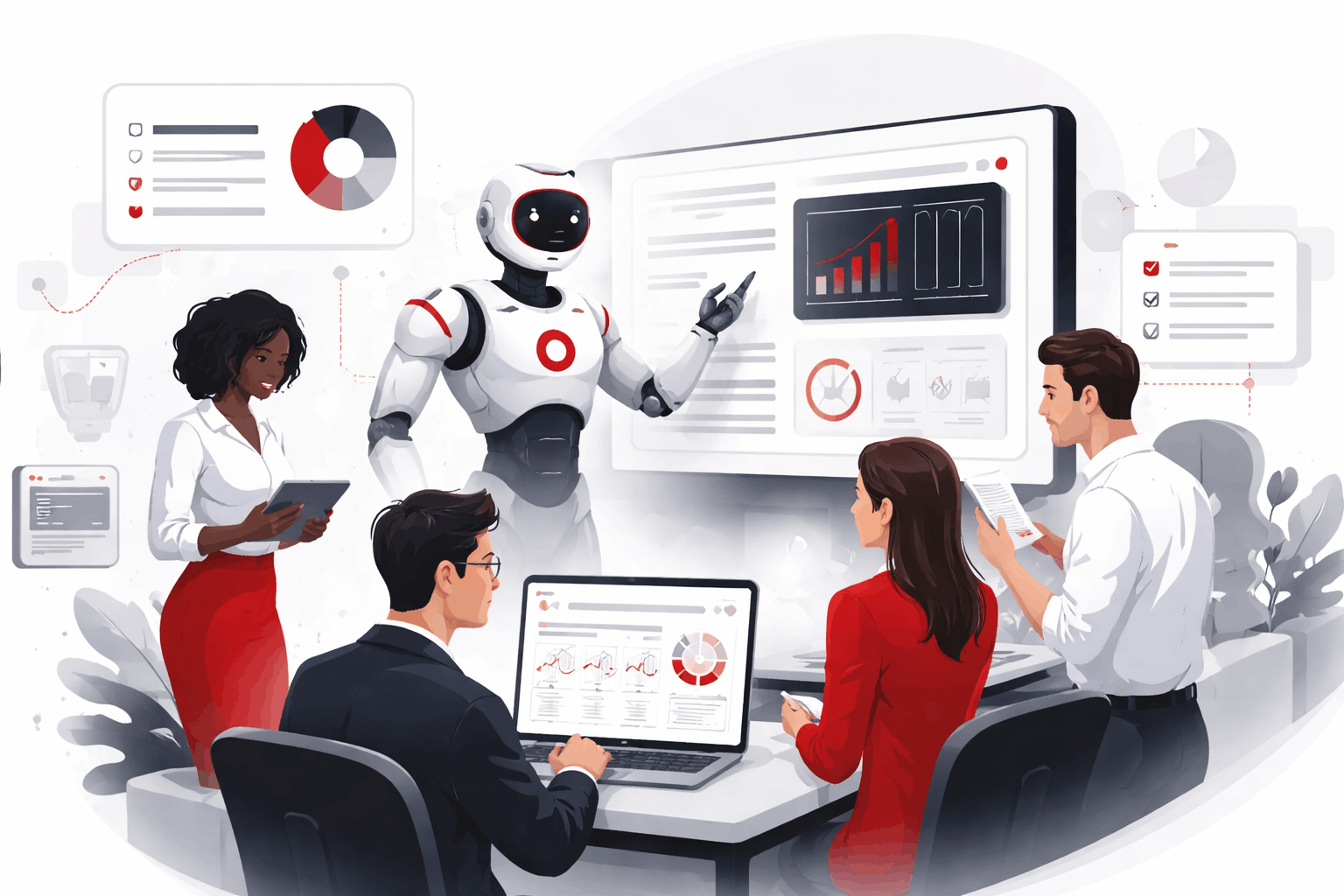
In a world where artificial intelligence is rapidly reshaping how businesses operate, CambioML emerges as a compelling new player with a focused mission: to transform every knowledge worker into a top performer. Founded in 2023 as part of the Summer 2023 batch, the startup is still small in size—with a team of just three—but ambitious in scope. Its core vision is simple yet powerful: pair every professional with an AI teammate capable of executing tasks, analyzing data, and delivering real outcomes.
CambioML builds on the foundation of its earlier product, Energent.ai, which was designed to streamline manual workflows and democratize automation without requiring technical expertise. Instead of relying on traditional integrations or complex engineering setups, the platform allows users to automate processes and extract value from data in a zero-code environment. This approach is particularly appealing for enterprises where technical bottlenecks often slow down innovation.
At its core, CambioML is not trying to build just another chatbot. It aims to move beyond passive AI interactions and instead deliver tangible, visible outputs—insights, actions, and recommendations that directly impact business performance. This shift from conversation to execution is what sets the company apart in an increasingly crowded AI landscape.
Who Are the Founders Behind CambioML?
CambioML is led by a highly accomplished founding team with deep expertise in machine learning, enterprise systems, and large-scale AI deployment. At the helm is Rachel Hu, the co-founder and CEO, whose background includes working as an Applied Scientist at Amazon Web Services. During her time there, she contributed to the development of large language models and led open-source machine learning initiatives.
One of her notable contributions includes work associated with D2L.ai, an open-source deep learning resource adopted by over 500 universities worldwide. Beyond her technical achievements, Rachel has also been a prominent speaker at major industry events such as AWS re:Invent, Nvidia GTC, and KDD, positioning her as a thought leader in the AI space.
Alongside her is Kimi Kong, the CTO, whose experience spans some of the most prestigious organizations in AI research, including Google DeepMind, Microsoft, and AWS. With academic roots at Stanford, Kimi brings a strong research-driven approach to product development, ensuring that CambioML’s technology is both cutting-edge and practical.
Together, the founders combine deep technical knowledge with a clear understanding of enterprise challenges—an essential combination for building impactful AI solutions.
What Problem Is CambioML Trying to Solve?
Despite the increasing availability of data, many organizations still struggle to derive meaningful insights from it. This is especially true in operational domains like supply chain management, where data is abundant but often fragmented, inconsistent, and difficult to interpret.
Traditional enterprise systems such as ERP platforms are powerful but inherently static. They generate reports, dashboards, and forecasts, but these outputs are often delayed, rigid, and reactive. By the time a problem appears in a dashboard—such as a stockout or supplier delay—it is usually too late to prevent the impact.
As a result, teams spend an overwhelming amount of time answering retrospective questions like “What happened?” and “Why did it happen?” instead of focusing on forward-looking decisions like “What should we do next?”
CambioML identifies this gap as a fundamental inefficiency in modern enterprises. Knowledge workers are not lacking tools—they are lacking intelligent, proactive assistance that can turn raw data into actionable decisions in real time.
How Does ERPNow Transform Supply Chain Intelligence?
To address these challenges, CambioML introduced ERPNow, an AI-powered analyst designed specifically for supply chain and operations teams. ERPNow acts as an intelligent layer on top of existing systems such as SAP, Oracle, and NetSuite, as well as warehouse management systems and spreadsheets.
Unlike traditional analytics tools, ERPNow does not simply visualize data—it interprets it. The system continuously monitors operational data streams, identifying anomalies and risks as they emerge. For example, if a supplier’s lead time suddenly increases or demand spikes unexpectedly, ERPNow can detect these changes immediately.
One of its most distinctive features is its ability to provide root cause analysis in plain language. Instead of presenting users with abstract charts or unexplained metrics, the platform answers questions like “Why is this SKU at risk?” with clear, evidence-backed explanations. This transparency is crucial for building trust in AI-driven decision-making.
Furthermore, ERPNow goes beyond analysis by offering actionable recommendations. It suggests concrete steps—such as redistributing inventory between warehouses or expediting purchase orders—to mitigate risks before they escalate. This proactive approach transforms supply chain management from reactive firefighting into strategic planning.
Why Is “Explainable AI” Critical for Enterprise Adoption?
A key differentiator for CambioML lies in its emphasis on explainable AI. In enterprise environments, decisions often carry significant financial and operational consequences. As a result, stakeholders need to understand not only what the AI recommends but also why.
CambioML addresses this need by embedding explainability into its core functionality. Every insight and recommendation generated by ERPNow is accompanied by a clear explanation, grounded in data. This allows users to validate the system’s reasoning and make informed decisions with confidence.
Explainable AI also plays a crucial role in bridging the gap between technical and non-technical teams. By translating complex data patterns into natural language, ERPNow makes advanced analytics accessible to a broader audience, democratizing decision-making across the organization.
How Does CambioML Ensure Seamless Integration?
One of the biggest barriers to adopting new enterprise software is the complexity of implementation. Many solutions require extensive integrations, system overhauls, or long deployment timelines, which can deter organizations from adopting them.
CambioML takes a different approach. ERPNow is designed to sit on top of existing systems as a read-only layer, meaning it does not require companies to replace or modify their current infrastructure. This significantly reduces the risk and effort associated with deployment.
The platform can be implemented in a matter of weeks rather than months or quarters, enabling organizations to realize value quickly. Additionally, its zero-code interface ensures that users can start leveraging the system without needing specialized technical skills.
This focus on simplicity and speed is a strategic advantage, particularly for large enterprises where IT resources are often constrained.
How Does CambioML Redefine the Role of Knowledge Workers?
At its core, CambioML is not just about improving tools—it is about redefining how people work. By introducing AI teammates, the company envisions a future where knowledge workers are augmented rather than replaced by technology.
In this model, the AI handles repetitive, data-intensive tasks such as monitoring, analysis, and reporting. Meanwhile, human workers focus on higher-level responsibilities like strategy, decision-making, and collaboration.
This shift has profound implications for productivity. Instead of being overwhelmed by data and manual processes, employees can operate at a higher level of effectiveness, making better decisions faster.
CambioML’s approach also aligns with broader trends in the workplace, where the emphasis is increasingly on augmentation rather than automation. By empowering individuals rather than replacing them, the company positions itself as a partner in human performance.
What Makes CambioML Different from Other AI Tools?
The AI market is saturated with tools promising automation and efficiency. However, many of these solutions fall into one of two categories: either they are passive chatbots that require constant prompting, or they are complex systems that demand significant technical expertise.
CambioML differentiates itself by combining the best of both worlds. Its AI is proactive, continuously monitoring data and surfacing insights without being asked. At the same time, it is accessible, requiring no coding or advanced technical knowledge to use.
Another key distinction is its focus on delivering outcomes rather than outputs. Instead of simply generating information, the platform drives actions—helping organizations solve problems and achieve tangible results.
This outcome-oriented approach is particularly valuable in operational domains, where the cost of inaction can be significant.
What Is the Future Vision for CambioML?
Looking ahead, CambioML aims to expand its capabilities beyond supply chain management to other areas of enterprise operations. The underlying concept of an AI teammate is broadly applicable, with potential use cases in finance, marketing, customer support, and more.
As the company continues to develop its technology, it is likely to focus on enhancing the intelligence, adaptability, and scalability of its platform. This includes improving its ability to handle diverse data sources, generate more sophisticated insights, and integrate seamlessly into various business workflows.
The broader vision is clear: to create a world where every professional has access to a powerful AI assistant that enhances their capabilities and enables them to perform at their best.
Why Should Businesses Pay Attention to CambioML?
CambioML represents a shift in how organizations think about AI—not as a tool, but as a teammate. By focusing on real-world outcomes, explainability, and ease of use, the company addresses many of the barriers that have historically limited AI adoption in enterprises.
For businesses struggling with data overload, inefficient workflows, or reactive decision-making, CambioML offers a compelling solution. Its ability to turn complex data into actionable insights in real time has the potential to unlock significant value.
As AI continues to evolve, companies like CambioML are redefining what is possible. By bridging the gap between data and decision-making, they are not just improving processes—they are transforming how work gets done.