
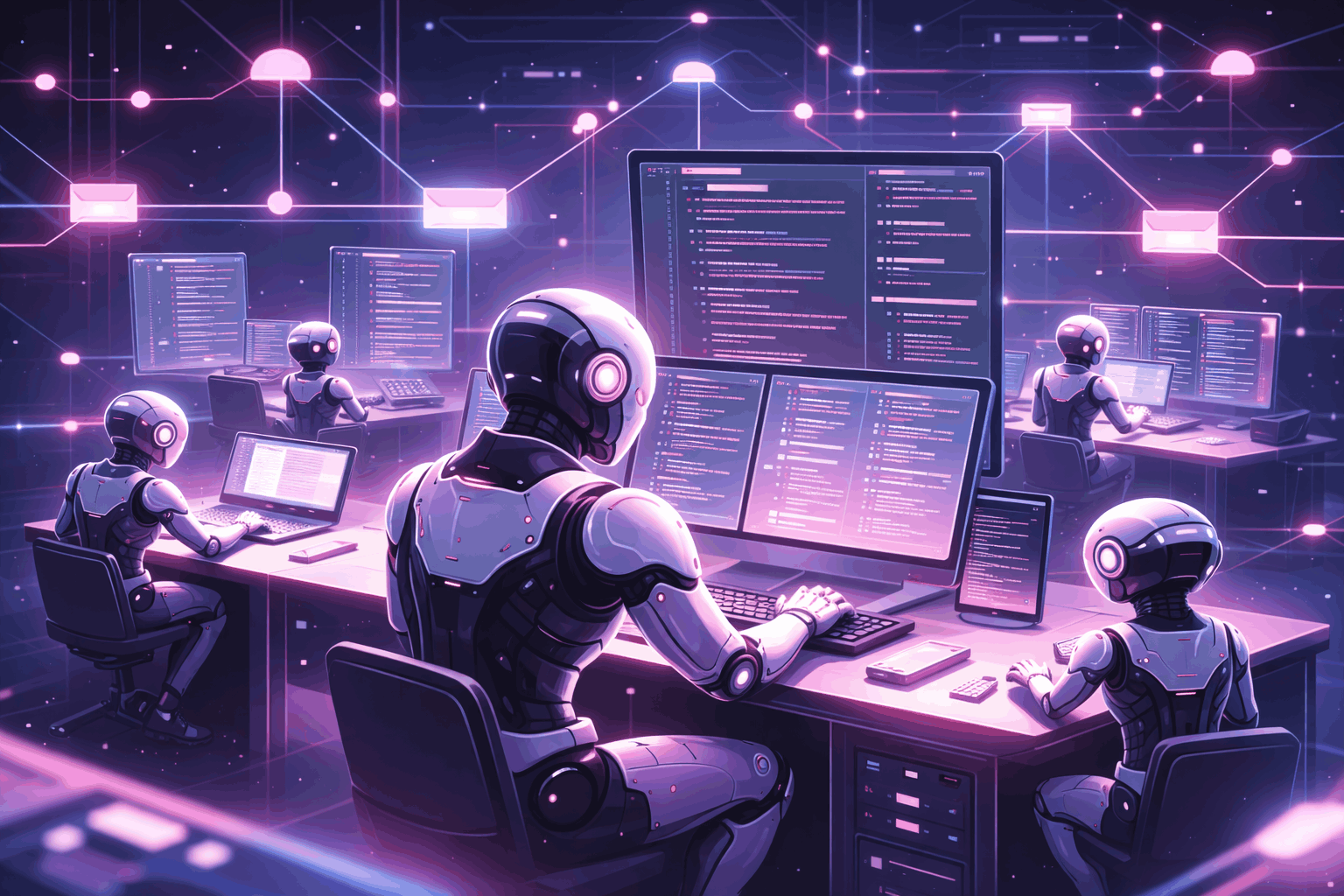
Cosine: The Rise of Fully Agentic Software Engineers
In an era where software development is being reshaped by artificial intelligence, a new generation of tools is emerging—tools that aim not just to assist developers, but to fundamentally redefine how engineering work gets done. Among these innovators stands Cosine, a London-based startup founded in 2022 and part of the Winter 2023 batch, with a bold vision: to create a fully agentic software engineer capable of working across tasks, environments, and teams simultaneously.
Cosine introduces a paradigm shift in how development workflows operate. Rather than relying on isolated AI assistants that handle small, discrete tasks, Cosine positions itself as a unified, persistent agent—one that can operate across multiple threads of work, maintain context over time, and integrate seamlessly into the tools developers already use.
At its core, Cosine is not just another coding assistant. It is an attempt to build a system that behaves more like a real engineer—capable of managing complexity, maintaining continuity, and scaling effort across an entire codebase.
Who Are the Founders Behind Cosine?
Behind Cosine are two founders whose combined experience spans engineering, entrepreneurship, and scaling global technology platforms.
Alistair Pullen, a full-stack software engineer with over 15 years of experience, brings deep expertise in large language models (LLMs) and embeddings. His background includes building and exiting a previous startup, Fancy (YC S20), which was acquired by GoPuff. His technical depth and hands-on understanding of modern AI systems form the backbone of Cosine’s product vision.
Complementing him is Yang Li, an entrepreneur with a remarkable track record in scaling high-growth companies. With one IPO, two acquisitions, and three unicorns under his belt, Yang has played key roles in companies like Luno, Ziglu (acquired by Robinhood), and Mobike, which grew to 220 million monthly active users before its $55 billion IPO. His inclusion in the 2021 Forbes 30 Under 30 cohort highlights his influence in the global tech ecosystem.
Together, they represent a rare combination: deep technical execution paired with proven business scaling expertise.
What Problem Is Cosine Trying to Solve?
Modern developers are no strangers to AI-powered coding tools. Platforms like code assistants embedded in IDEs or terminal-based agents have already demonstrated their ability to accelerate development workflows. However, these tools tend to excel only in narrow contexts—quick fixes, small features, or isolated tasks.
The real challenge begins when the scope expands.
As development work becomes more complex, involving multiple tickets, long-running tasks, and team collaboration, existing tools often break down. Developers lose track of what the agent is doing, context is fragmented across environments, and the resulting code may require significant cleanup.
Cosine was built specifically to address this gap.
The team identified a critical pain point: developers need tools that can scale with the complexity of real-world engineering work. This includes handling multiple threads simultaneously, maintaining context over time, and producing code that remains understandable and maintainable for teams.
In short, Cosine is designed for the moment when AI coding tools stop being helpful—and start becoming a liability.
How Does Cosine Redefine the Concept of a Coding Agent?
Cosine’s core innovation lies in its approach to agency. Instead of treating AI as a reactive assistant, it introduces the concept of a fully agentic software engineer—a system capable of initiating, managing, and completing tasks across different environments.
This agent is not confined to a single interface. It operates across:
- Command-line interfaces (CLI)
- Integrated development environments like VS Code
- Desktop applications
- Cloud-based environments
This multi-surface presence allows developers to start a task in one environment and seamlessly continue it in another, without losing context.
More importantly, Cosine enables parallelism. Developers can run multiple agents simultaneously, each working on different tasks or tickets. This transforms the traditional linear workflow into a distributed system of execution, where multiple streams of work can progress independently.
The result is a significant increase in productivity—not just through speed, but through the ability to manage complexity more effectively.
What Makes Cosine 3.0 a Breakthrough?
The release of Cosine 3.0 marks a major milestone for the company. Positioned as “one coding agent across every surface your team uses,” this version encapsulates the startup’s vision of unified, agent-driven development.
One of the most notable features is its compatibility with existing subscriptions to AI models such as those provided by OpenAI and other major providers. This means teams can integrate Cosine into their workflows without replacing their current tools.
But the real breakthrough lies in its focus on long-running, multi-threaded work.
Unlike traditional tools that struggle beyond short tasks, Cosine 3.0 is built to handle:
- Extended development processes
- Multiple concurrent tasks
- Cross-environment workflows
- Team-based code collaboration
It also introduces enhanced visibility and control. Developers can inspect changes, track the agent’s actions, and undo operations cleanly. This level of transparency is crucial for maintaining trust in AI-generated code—especially in production environments.
How Does Cosine Improve Developer Control and Visibility?
One of the most common criticisms of AI coding tools is their lack of transparency. Developers often struggle to understand what the agent has done, why certain decisions were made, and how to safely modify or revert changes.
Cosine addresses this issue head-on.
The platform is designed with observability in mind. Every action taken by the agent can be inspected, allowing developers to follow the evolution of the codebase in real time. This includes:
- Reviewing code changes before they are finalized
- Understanding the sequence of actions performed by the agent
- Reverting changes without disrupting the workflow
This level of control ensures that developers remain in charge, even as they delegate more work to AI.
In essence, Cosine does not replace developers—it augments them, providing tools that enhance their ability to manage complex systems.
Why Is Parallel Work a Game-Changer for Engineering Teams?
Traditional development workflows are inherently sequential. Even with modern tools, most tasks are handled one at a time, creating bottlenecks as projects scale.
Cosine introduces a fundamentally different approach.
By enabling multiple agents to work in parallel, it allows teams to tackle several tasks simultaneously. This is particularly valuable in environments where multiple tickets, bug fixes, and feature developments need to be addressed at once.
Parallelism not only accelerates development but also reduces context-switching—a major source of inefficiency for developers. Instead of juggling tasks manually, engineers can delegate work to multiple agents and focus on higher-level decision-making.
This shift has the potential to redefine team productivity, turning development into a more scalable and efficient process.
How Does Cosine Ensure Code Quality and Maintainability?
Speed is only valuable if it does not come at the expense of quality. One of the key challenges with AI-generated code is ensuring that it remains maintainable over time.
Cosine tackles this issue by emphasizing clarity and traceability.
By allowing developers to inspect and understand every change, it ensures that the resulting codebase remains accessible to the entire team. This is particularly important in collaborative environments, where multiple engineers need to work on the same code.
Additionally, the platform’s ability to maintain context across tasks helps produce more coherent and consistent code. Instead of generating isolated snippets, Cosine builds solutions that align with the broader structure of the project.
The result is code that is not only functional but also sustainable.
What Role Does Cosine Play in the Future of AI Development Tools?
As AI continues to evolve, the role of coding tools is likely to expand beyond simple assistance. The industry is moving toward systems that can act autonomously, manage workflows, and collaborate with human developers.
Cosine is at the forefront of this transition.
By focusing on agency, parallelism, and cross-environment integration, it represents a new category of development tools—one that bridges the gap between human engineers and AI systems.
This shift has broader implications for the industry. It suggests a future where:
- Development workflows are distributed across multiple agents
- Engineers focus more on strategy and architecture
- AI handles execution at scale
While this vision is still unfolding, Cosine provides a glimpse of what it might look like in practice.
Can Cosine Truly Replace Traditional Development Workflows?
The question of whether AI can replace human developers is often debated, but Cosine takes a more nuanced approach.
Rather than aiming to replace engineers, it seeks to redefine their role.
By automating repetitive and time-consuming tasks, Cosine allows developers to focus on higher-value work—designing systems, solving complex problems, and making strategic decisions.
At the same time, its emphasis on control and transparency ensures that humans remain at the center of the process.
In this sense, Cosine is less about replacement and more about augmentation. It is a tool designed to amplify human capability, not eliminate it.
What Lies Ahead for Cosine?
With a strong founding team, a clear product vision, and a growing interest in agentic AI systems, Cosine is well-positioned to shape the future of software development.
As the platform continues to evolve, it is likely to expand its capabilities, integrate with more tools, and refine its approach to multi-agent workflows.
The broader market is also moving in this direction, with increasing demand for tools that can handle complex, real-world development scenarios.
In this context, Cosine’s focus on long-running tasks, parallel execution, and team collaboration gives it a distinct advantage.
Ultimately, the startup’s success will depend on its ability to deliver on its promise: a fully agentic software engineer that not only accelerates development but also enhances the quality and sustainability of the code.
If it succeeds, Cosine may well redefine what it means to build software in the age of AI.