
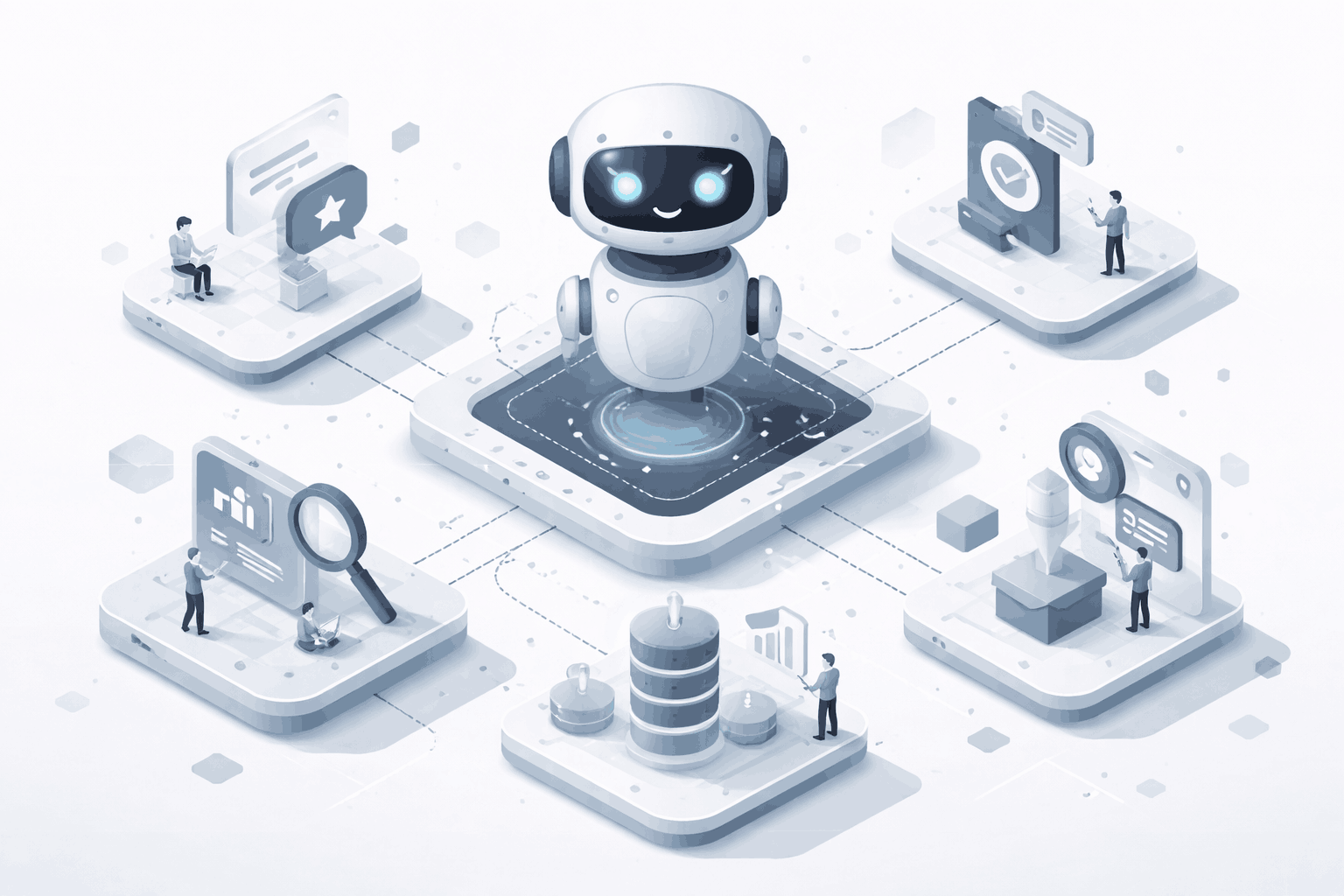
Cotera: The Fastest Way to Build AI Agents at Scale
Cotera is an AI agent platform built to remove the friction traditionally associated with deploying intelligent automation inside modern businesses. Founded in 2021 and backed by Y Combinator’s Winter 2022 batch, the New York–based startup set out to answer a deceptively simple question: why does building an AI agent still feel so complex when the underlying technology has become so powerful?
For many companies, the promise of AI agents has long been offset by painful realities—long implementation timelines, heavy engineering involvement, brittle integrations, and agents that struggle to work with real, production data. Cotera was created as a response to that gap. Its founders envisioned a platform where AI agents could be built quickly, connected directly to company data, and deployed reliably without writing code.
At its core, Cotera positions itself as the fastest way to build an AI agent. But speed is only part of the story. The platform is designed to give teams control, visibility, and confidence that their agents can take real actions across systems, rather than simply generating text in isolation.
How Does Cotera Make Building AI Agents Faster?
Cotera’s defining promise is that anyone can build an AI agent in minutes. This speed comes from a combination of thoughtful product design and a deep understanding of how non-technical teams actually work.
Instead of requiring users to piece together APIs, prompts, and infrastructure manually, Cotera provides built-in tools and a visual workflow editor that abstracts away much of the complexity. Building an agent feels less like programming and more like writing a structured document that explains what the agent should do, what data it should use, and how it should act.
The platform connects directly to data warehouses and APIs, allowing agents to operate on live, trusted data rather than static exports. This eliminates a major bottleneck in traditional AI workflows, where data must be cleaned, transformed, and manually fed into models before any value can be realized.
By combining these elements, Cotera reduces the time from idea to production dramatically. Teams can experiment, iterate, and deploy without waiting for engineering resources or long approval cycles.
What Does It Mean for AI Agents to “Take Action”?
One of Cotera’s most important differentiators is its focus on action. Many AI tools stop at analysis or insight generation, leaving humans to execute the next steps manually. Cotera is designed to go further.
Agents built on the platform can take actions across connected systems. This might include updating records in a CRM, routing support tickets, triggering outbound messages, or flagging at-risk customers for follow-up. The agent does not merely observe data—it participates in workflows.
This action-oriented design is particularly powerful for operational and go-to-market teams, where speed and consistency matter. Instead of reviewing dashboards or reading reports, teams can rely on agents to continuously monitor signals and act according to predefined logic.
Importantly, Cotera provides fine-grained control over these actions. Teams decide what an agent is allowed to do, under what conditions, and with what level of autonomy. This balance between automation and oversight is critical for building trust in AI systems.
How Does Cotera Connect to Company Data?
Data access is central to Cotera’s architecture. The platform connects directly to data warehouses and APIs, enabling agents to work on top of the same data that teams already rely on for decision-making.
With the launch of Cotera’s datasets feature, this capability has expanded even further. Datasets allow agents to operate across everything from small CSV files to massive tables containing millions of customer conversations. Rather than treating data as a one-time input, Cotera enables continuous interaction with evolving datasets.
This approach ensures that agents remain context-aware and up to date. Whether analyzing recent support tickets, monitoring customer health metrics, or researching competitors across public sources, agents can pull from the most relevant data sources without manual intervention.
By removing the need for custom data pipelines or one-off integrations, Cotera lowers the barrier to entry for teams that want to use AI meaningfully but lack deep technical expertise.
Who Is Cotera Designed For?
Cotera is built primarily for go-to-market and operations teams—groups that are often overwhelmed by repetitive, data-heavy tasks but lack the engineering bandwidth to automate them fully.
Sales operations teams can use agents to analyze pipeline health, automate outbound campaigns, or enrich leads with external research. Customer success teams can deploy agents to monitor customer sentiment, detect early signs of churn, and trigger proactive outreach. Support teams can rely on agents to analyze tickets, identify patterns, and route issues intelligently.
What unites these use cases is a need for reliability and speed. Cotera does not require users to write code, making it accessible to non-technical roles. At the same time, it offers enough control and scalability to meet the demands of growing organizations.
By focusing on practical business users rather than AI researchers or platform engineers, Cotera positions itself as a tool for everyday automation rather than experimental innovation.
What Can Teams Build with Cotera?
The range of applications enabled by Cotera is intentionally broad. The platform is designed to be flexible, allowing teams to adapt agents to their specific workflows and goals.
Some common examples include chatbots that analyze support tickets and take action based on sentiment or urgency, automated outbound campaigns that interact directly with CRM systems, and research agents that monitor competitors across LinkedIn, Reddit, and other public channels.
However, these examples only scratch the surface. Because agents can connect to virtually any data source or API, teams can create highly customized workflows that reflect their unique processes. An agent might monitor customer usage patterns and alert account managers when engagement drops, or it might aggregate feedback from multiple channels to produce a real-time voice-of-customer summary.
Cotera’s philosophy is that the sky is the limit—but only if the platform remains simple enough to encourage experimentation. By lowering the cost of trying new ideas, Cotera enables teams to discover high-impact use cases organically.
Why Is No-Code Agent Building Important?
The decision to make Cotera a no-code platform is both strategic and philosophical. In many organizations, the demand for automation far outstrips the supply of engineering resources. As a result, valuable ideas often stall before they can be tested.
By removing the requirement to write code, Cotera empowers domain experts to build their own solutions. The people who understand customer pain points, operational bottlenecks, and business priorities best are often the least equipped to implement technical systems. Cotera bridges that gap.
This democratization of AI agent creation also accelerates learning. Teams can iterate quickly, refining agent behavior based on real-world feedback rather than theoretical assumptions. Over time, this leads to more effective automation and greater organizational confidence in AI.
Importantly, no-code does not mean no control. Cotera combines ease of use with fine-grained configuration, ensuring that simplicity does not come at the expense of governance.
How Is Cotera Being Adopted in the Market?
Cotera’s customer base reflects its appeal to both large brands and smaller teams. Well-known companies such as Bilt, Peloton, Skims, Omni, OpenSea, Coterie, and Shippo use the platform to power various operational workflows.
These organizations span industries from fintech and ecommerce to consumer goods and logistics, demonstrating the versatility of Cotera’s approach. At the same time, the company works with many smaller teams that value speed and flexibility over heavyweight infrastructure.
This mix of customers suggests that Cotera’s value proposition scales effectively. Whether supporting a fast-growing startup or an established brand, the platform adapts to different data volumes, workflows, and organizational structures.
What Does General Availability Mean for Cotera’s Future?
Cotera’s transition to general availability marks an important milestone in its evolution. With no waitlist and no credit card required to get started, the platform lowers the friction for new users to explore AI agents firsthand.
The launch of the datasets feature further strengthens Cotera’s positioning as a serious production platform rather than a prototype tool. By enabling agents to work across large-scale, real-world data, Cotera signals its readiness to support mission-critical workflows.
Looking ahead, general availability opens the door to broader adoption and community feedback. As more teams build and deploy agents, Cotera gains insight into emerging use cases and patterns, informing future product development.
Why Does Cotera Matter in the Broader AI Landscape?
Cotera occupies a unique space in the AI ecosystem. While many companies focus on building better models or more powerful infrastructure, Cotera focuses on usability, integration, and action.
Its emphasis on speed, no-code workflows, and direct data access addresses some of the most persistent barriers to AI adoption. Rather than asking businesses to change how they work to accommodate AI, Cotera adapts AI to existing workflows.
In doing so, the platform helps shift AI from a novelty to a practical tool. Agents become collaborators that handle busy work, surface insights, and take action autonomously. For teams drowning in operational overhead, this shift can be transformative.
Ultimately, Cotera’s significance lies not just in how quickly it enables AI agents to be built, but in how effectively those agents can operate in the real world. By making AI accessible, actionable, and scalable, Cotera contributes to a future where intelligent automation is not the exception, but the norm.