
Crow: Let Users Control Apps Through Conversation
Crow is a San Francisco–based startup founded in 2026 that is quietly redefining how users interact with software. Instead of forcing people to learn complex interfaces, nested menus, and multi-step workflows, Crow enables users to control applications through simple chat conversations. Users type what they want, and the product does the rest.
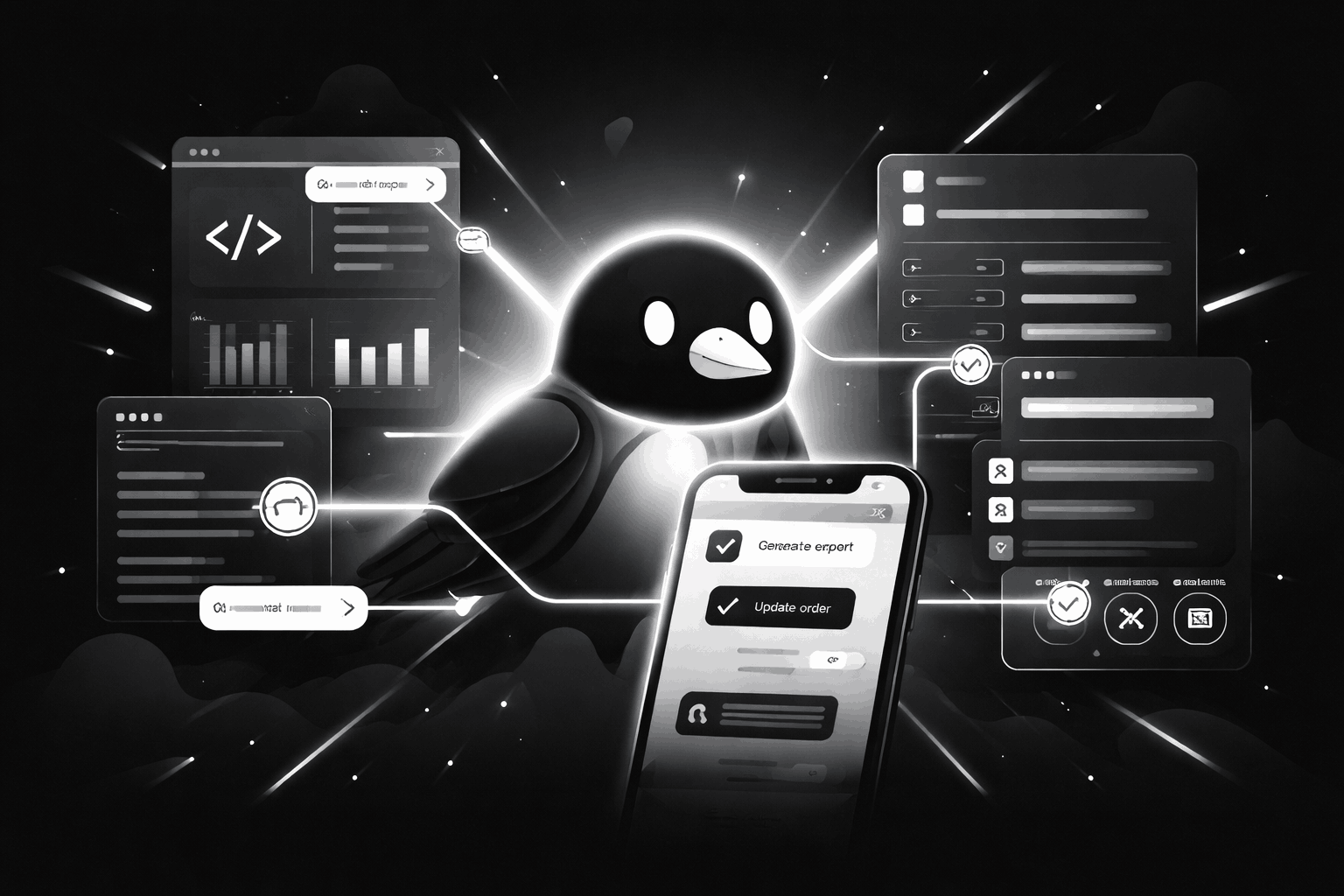
At its core, Crow allows companies to connect an AI agent directly to their existing product. Once connected, that agent can understand user intent, navigate the interface, call backend APIs, and execute real actions—without requiring the user to click through the UI. This shift moves software away from traditional navigation paradigms and toward something far more intuitive: conversation.
Crow isn’t positioning chat as an add-on feature or a novelty. It treats chat as a new primary interface layer—one that aligns with how users have already learned to interact with technology in the age of AI assistants.
Why Is Software Undergoing a Blockbuster-Level Shift?
The rise of conversational interfaces mirrors one of the most famous transitions in modern tech history. Blockbuster believed customers would always drive to stores to rent movies. Netflix proved that convenience reshapes behavior faster than loyalty ever could.
The same dynamic is now unfolding in software.
Users have been trained by tools like ChatGPT, Claude, and other AI assistants to expect outcomes—not instructions. They no longer want to figure out how a system works internally. They want to state an intention and see it fulfilled. Write an email. Find an answer. Generate code. All through conversation.
That expectation doesn’t stop when users leave general-purpose AI tools. It follows them into every product they use. When enterprise software, SaaS platforms, or internal tools fail to meet that expectation, friction appears—and adoption drops.
Crow exists because this shift is no longer theoretical. It is already reshaping user behavior, and products that fail to adapt risk becoming the next Blockbuster.
Why Are Traditional User Interfaces Failing Modern Users?
Modern software is powerful, but that power often comes at the cost of usability. Over time, products accumulate features, dashboards expand, and workflows grow more complex. What starts as a clean interface slowly becomes overwhelming.
Users get lost in multi-step flows buried inside nested menus. They stare at dashboards filled with dozens of buttons they don’t understand. Entire features go unused simply because users never discover them. Even experienced users waste time navigating interfaces instead of accomplishing goals.
The problem isn’t that these products lack functionality. It’s that functionality is locked behind interaction models that no longer match how users think.
Crow recognizes that the issue isn’t feature depth—it’s cognitive load. Chat reduces that load by letting users express intent directly, without translating it into clicks.
Why Isn’t Building an AI Assistant In-House a Realistic Option?
Most product teams already know they need an AI assistant. Users are asking for it. Competitors are shipping them. The pressure is obvious.
The challenge appears once teams attempt to build one themselves.
A production-ready AI assistant is far more than a chat interface. It requires deep integration with backend APIs, access to multiple data sources, robust context handling, strict guardrails to prevent destructive actions, observability for debugging failures, and enterprise-grade security.
Teams often estimate six months or more to build something reliable—and even then, maintenance never stops. Every new feature, API change, or workflow update requires revisiting the AI layer. What starts as innovation quickly turns into operational drag.
Crow exists because most teams don’t need to reinvent AI infrastructure. They need a faster, safer way to ship conversational control without derailing their roadmap.
How Is Crow Different From Traditional Chatbots?
Crow is not a chatbot that sits on top of a product and answers FAQs. That distinction is critical.
Traditional chatbots respond with text. Crow responds with actions.
Instead of simply explaining how to do something, Crow does it. It calls backend endpoints, navigates the UI, triggers workflows, and updates real data. It behaves less like a support agent and more like a skilled operator embedded inside the product.
This action-first approach allows Crow to replace entire interaction flows—not just assist with them. Users don’t ask where to click. They ask for outcomes, and Crow executes them.
How Does Crow Actually Connect to a Product?
Crow is designed as AI infrastructure that plugs directly into existing systems. It doesn’t require rebuilding the product or redesigning the interface from scratch.
Teams begin by connecting Crow to their data sources. These can include internal documents, files, websites, or custom integrations. Once ingested, Crow understands the product’s domain and context.
Next, product functionality is wired in through OpenAPI specifications or MCP servers. This gives Crow direct access to backend capabilities and client-side actions.
From there, teams define journeys—structured workflows that guide how Crow should behave in specific scenarios. These journeys allow companies to encode business logic, compliance requirements, and product strategy directly into the conversational layer.
Finally, everything is tracked. Every conversation, tool call, and executed action is logged, giving teams full visibility into how users interact with the AI and where improvements are needed.
Why Are Guardrails and Observability Central to Crow’s Design?
Giving an AI the power to execute real actions introduces obvious risks. Crow addresses this head-on by making control and transparency first-class features.
Teams define strict guardrails that determine what Crow can and cannot do. Sensitive actions can require confirmation, follow predefined paths, or be restricted entirely. This ensures that conversational freedom never compromises product integrity.
Observability is equally important. Crow tracks every interaction, allowing teams to see exactly how users phrase requests, which tools are called, and where failures occur. Instead of guessing why an AI assistant behaved incorrectly, teams can trace the entire chain of events.
This level of visibility turns AI from a black box into an auditable system—one that can be trusted in production environments.
How Can Crow Be Deployed So Quickly?
One of Crow’s most compelling advantages is speed.
Instead of months of custom development, Crow can be deployed in under a week. Integration requires minimal changes to the existing codebase—often as simple as adding a script tag and wiring APIs.
Because Crow is built as infrastructure rather than a bespoke feature, it scales with the product instead of fighting against it. Updates to the core product don’t require rebuilding the AI layer from scratch, dramatically reducing long-term maintenance costs.
For teams under pressure to ship AI capabilities quickly, this time-to-value is often the deciding factor.
Who Is Building Crow and Why Does Their Background Matter?
Crow was founded by Jai Bhatia and Aryan Vij, both of whom bring deep technical and operational experience to the company.
Jai Bhatia, Crow’s CTO, studied computer science at UC Berkeley and previously worked as a software engineer across multiple startups. His focus on turning products “AI-native” reflects a belief that AI should be woven into the core of software—not bolted on as an afterthought.
Aryan Vij, Crow’s CEO, also studied EECS at UC Berkeley and previously worked in engineering roles at Qualcomm, Shasta Health, and Frontdesk. His background includes leadership experience as a military officer in the Singapore Armed Forces, shaping Crow’s emphasis on reliability, structure, and execution.
Together, they are building Crow with the assumption that conversational control will soon be a baseline expectation, not a differentiator.
What Does Crow Signal About the Future of Software?
Crow represents more than a single product—it signals a broader transformation in how software is designed.
As AI becomes more capable, interfaces will shift away from rigid navigation and toward intent-based interaction. Products that fail to adapt will feel increasingly outdated, no matter how powerful they are underneath.
Crow’s approach suggests a future where users don’t learn software—they converse with it. Where onboarding friction disappears. Where features are discovered naturally through dialogue rather than documentation.
In that future, the winners won’t be the products with the most buttons, but the ones that understand users best. Crow is building the infrastructure to make that future possible—one conversation at a time.