
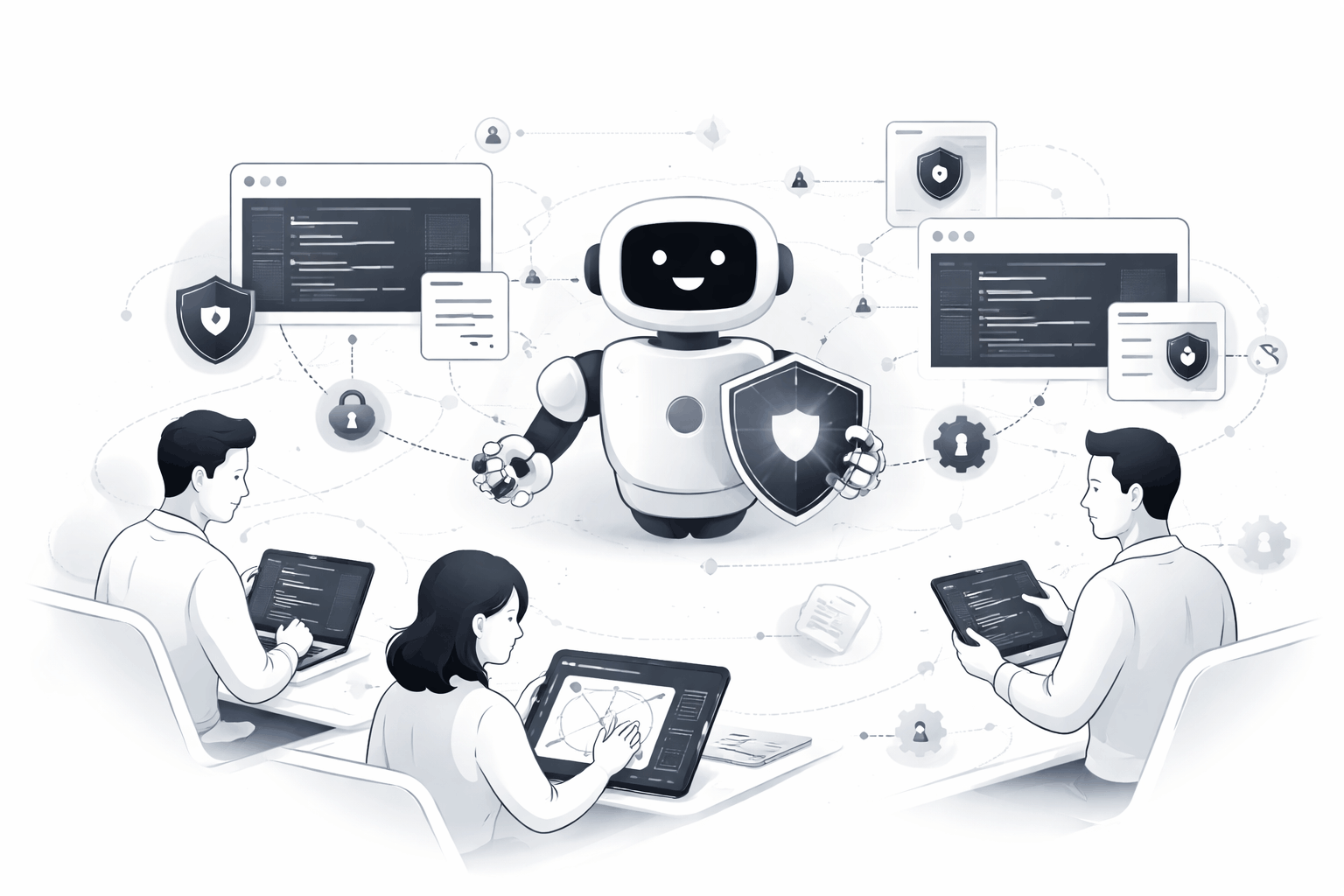
Runtime: Safe Scaling of AI Coding Agents
In 2026, as artificial intelligence continues to reshape how software is built, a new category of tooling has emerged around coding agents—AI systems capable of writing, editing, and deploying code. Among the startups defining this space is Runtime, a San Francisco-based company focused on enabling safe, scalable collaboration between humans and coding agents.
Runtime positions itself not as another coding assistant, but as the infrastructure layer that makes AI-powered development usable across entire organizations. Its mission is simple but ambitious: allow anyone on a team—not just engineers—to safely ship production-grade code using AI agents.
This matters because the rise of coding agents has created both opportunity and chaos. While early adopters have demonstrated massive productivity gains, scaling this capability across teams has proven difficult. Runtime aims to solve precisely that problem by introducing structure, control, and visibility into AI-assisted development workflows.
What Problem Are Teams Facing With Coding Agents?
The adoption of coding agents often begins with excitement and ends with friction. Engineering leaders quickly realize that while individual developers can benefit from tools like GitHub Copilot or OpenAI Codex, scaling their usage across an organization introduces serious risks.
At the core of the issue is a lack of infrastructure.
When coding agents are introduced into a team, several challenges emerge almost immediately. First, there is no standardized way to create safe environments where agents can operate. Without isolated sandboxes, any mistake made by an agent—or a non-technical user—can directly impact production systems.
Second, teams lack control mechanisms. There are no clear boundaries defining what agents can access, modify, or deploy. This absence of guardrails creates both security risks and operational instability.
Third, visibility becomes a major concern. Engineering leaders often have no way to track what agents are doing, which changes are being made, or why something broke. This lack of observability makes debugging and accountability significantly harder.
Finally, many teams fall into vendor lock-in. By relying heavily on a single provider’s ecosystem, they expose themselves to fluctuations in reliability, pricing, or model performance. When a provider underperforms, the entire team slows down.
These challenges create a paradox: coding agents promise speed, but without proper infrastructure, they introduce risk and inefficiency.
How Did Runtime’s Founders Experience This Problem Firsthand?
The idea behind Runtime did not emerge in a vacuum. It was shaped by direct experience.
Founder Gus Trigos previously led the rollout of coding agents at his former company after its acquisition. During that period, he personally shipped multiple full-stack products in just a few months using AI-powered tools. Encouraged by these results, he began enabling other team members to do the same.
However, scaling this approach quickly exposed limitations.
Teams struggled to replicate working environments. Agents lacked the necessary context to contribute reliably. There were no systems in place to monitor activity or enforce consistency. As adoption grew, so did the chaos.
The situation worsened when the team became dependent on a single provider. Any drop in reliability or performance affected the entire workflow, creating bottlenecks and delays.
This firsthand experience revealed a clear gap in the market: while coding agents were powerful, there was no infrastructure layer to manage them effectively at scale. Runtime was built to fill that gap.
What Exactly Does Runtime Provide?
Runtime introduces a new layer between teams and the coding agents they use. Instead of interacting with agents directly, organizations use Runtime as a control and orchestration platform.
The system is designed to be flexible and compatible with a wide range of tools, including Claude Code, Gemini, and other emerging AI development platforms. This multi-provider approach eliminates vendor lock-in and allows teams to switch or combine models as needed.
At its core, Runtime offers four key capabilities: environment management, sandboxing, guardrails, and observability.
Environment templates allow teams to replicate their production setup with minimal effort. By importing a repository, Runtime automatically configures a working environment that mirrors real-world conditions. This is particularly valuable for complex architectures such as monorepos or microservices.
Sandboxed environments ensure safety. Any team member can spin up an isolated workspace in seconds, make changes using a coding agent, and test them without affecting production systems.
Guardrails provide control. Teams can define system instructions, restrict access to sensitive data, manage secrets securely, and implement role-based permissions. These controls apply to both human users and AI agents.
Observability delivers transparency. Runtime tracks every interaction, from high-level actions to granular tool calls. This allows teams to understand exactly what is happening at any given moment.
Together, these features transform coding agents from experimental tools into reliable components of a production workflow.
How Does Runtime Enable Non-Engineers to Ship Code?
One of Runtime’s most distinctive features is its ability to extend software development capabilities beyond engineering teams.
Traditionally, shipping code has required deep technical expertise. Even minor changes often depend on engineers, creating bottlenecks and slowing down iteration cycles.
Runtime challenges this model by making coding agents accessible to non-engineers in a controlled environment.
Product managers, designers, marketers, and operations specialists can use familiar tools like Slack, Linear, or Jira to trigger workflows. Through Runtime, they can spin up environments, make changes using AI agents, and propose updates via pull requests.
The key difference is safety. Every action occurs within a sandbox, governed by predefined guardrails. This ensures that non-technical users can contribute without risking system stability.
In practice, this means a product manager could prototype a feature, a marketer could update landing page content, or a designer could tweak UI elements—all without waiting for engineering bandwidth.
This democratization of development has the potential to significantly accelerate innovation within organizations.
What Makes Runtime Different From Existing Tools?
While there are many tools in the AI development ecosystem, most focus on individual productivity rather than organizational scalability.
Tools like GitHub Copilot enhance a developer’s workflow but do not address broader concerns such as team-wide governance or cross-functional collaboration.
Runtime, on the other hand, is designed as infrastructure.
Its emphasis on control, visibility, and interoperability sets it apart. Instead of replacing coding agents, it integrates with them, providing a unified layer that standardizes how they are used across an organization.
Another key differentiator is its support for multiple providers. By working with various models and platforms, Runtime allows teams to avoid dependency on a single ecosystem. This flexibility is particularly valuable in a rapidly evolving AI landscape.
Additionally, Runtime’s ability to be fully self-hosted gives organizations greater control over data and security, addressing concerns that are especially relevant for enterprise environments.
How Does Runtime Handle Deployment and Reliability?
Deployment is often one of the most critical—and risky—stages of the development process. Runtime introduces automation and safeguards to reduce these risks.
From a sandboxed environment, users can deploy changes or create pull requests with a single click. Before deployment, coding agents automatically detect and fix build errors, ensuring that only stable updates move forward.
Runtime also verifies the health of deployments, providing an additional layer of assurance. If something goes wrong, teams can roll back changes or destroy deployments instantly.
This approach combines speed with reliability, allowing teams to move quickly without compromising stability.
What Is the Broader Impact of Runtime’s Approach?
Runtime represents a shift in how software is built and who gets to build it.
By enabling safe collaboration between humans and AI agents, it expands the pool of contributors within an organization. This has implications not only for productivity but also for creativity and innovation.
As more roles gain the ability to interact directly with code, the boundaries between technical and non-technical functions begin to blur. This could lead to more integrated workflows, faster iteration cycles, and a more dynamic approach to product development.
At the same time, Runtime addresses the risks associated with this shift. By introducing guardrails, observability, and structured environments, it ensures that increased access does not come at the expense of stability or security.
What Lies Ahead for Runtime?
As AI continues to evolve, the role of infrastructure platforms like Runtime is likely to become increasingly important.
The startup is already working with fast-growing companies, particularly within the Y Combinator ecosystem, to enable team-wide adoption of coding agents. Its early traction suggests strong demand for solutions that bridge the gap between experimentation and production.
Looking ahead, Runtime may expand its capabilities to include deeper integrations, more advanced analytics, and enhanced automation features. As the ecosystem of coding agents grows, its role as a unifying layer could become even more critical.
Ultimately, Runtime is not just building a tool—it is shaping a new paradigm for software development. By making coding agents safe, accessible, and scalable, it is helping organizations unlock the full potential of AI-driven engineering.