
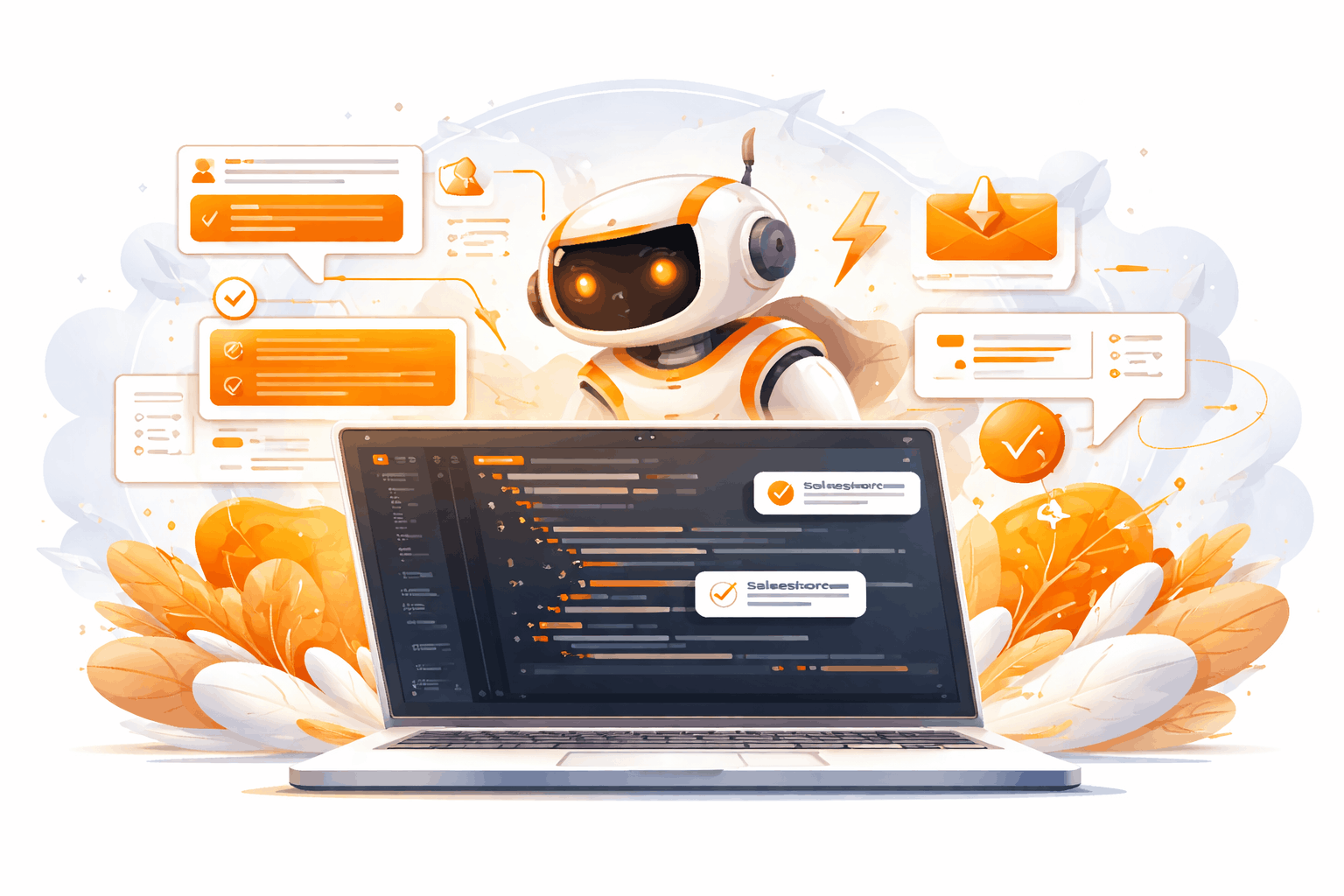
Sennu AI: Reinventing Code Reviews for Salesforce
Sennu AI is a young but sharply focused startup addressing a long-standing bottleneck in the Salesforce ecosystem: slow, error-prone, and inconsistent code reviews. Founded in 2025 and based in San Francisco, Sennu AI is building an AI-powered code review system purpose-built for Salesforce development teams.
Unlike generic code review tools that treat Salesforce as “just another codebase,” Sennu AI is designed to think like a senior Salesforce architect. The product reviews every pull request with full awareness of the customer’s Salesforce org, metadata, and architectural constraints. The result is faster merges, fewer Salesforce-specific bugs, and less cognitive load on senior engineers.
At a time when Salesforce remains mission-critical infrastructure for thousands of enterprises—but its development workflows lag behind modern software practices—Sennu AI positions itself as essential infrastructure rather than a nice-to-have productivity tool.
Why Are Salesforce Code Reviews So Painful Today?
Salesforce development comes with a unique set of challenges that traditional software tooling often fails to address. Apex, Lightning Web Components, declarative metadata, and deeply interconnected org configurations create a development environment where small changes can have unexpected downstream effects.
Code reviews in Salesforce teams often take days, not because reviewers are slow, but because the work is cognitively demanding. Reviewers must consider governor limits, sharing rules, bulkification patterns, trigger frameworks, deployment constraints, and org-specific conventions. Even experienced developers can miss subtle issues that only surface later in production.
As teams scale, these reviews typically fall on a small number of senior engineers or architects, creating bottlenecks and burnout. Junior and mid-level developers wait for feedback, releases slow down, and bugs slip through—not due to negligence, but due to sheer complexity.
How Does Sennu AI Reimagine the Code Review Process?
Sennu AI approaches code review not as a static checklist, but as a contextual reasoning problem. The platform automatically reviews every pull request using Salesforce best practices while also understanding the unique structure of the customer’s Salesforce org.
Rather than providing vague lint-style warnings, Sennu AI leaves actionable, inline feedback directly on pull requests. It highlights issues the way a senior Salesforce architect would—flagging architectural risks, performance concerns, and Salesforce-specific anti-patterns that generic tools often overlook.
This approach turns code review into a continuous, automated process that runs alongside development, instead of a manual gate that slows it down. Developers receive immediate feedback, learn best practices organically, and can iterate faster without waiting days for human review.
What Makes Salesforce Code Review Different From Traditional Code Review?
Most AI code review tools are trained on general-purpose programming languages and frameworks. Salesforce, however, operates under a unique set of constraints that fundamentally change how code should be evaluated.
Governor limits, bulk data handling, asynchronous execution models, and metadata-driven behavior mean that “working code” is often not “safe code” in Salesforce. A change that looks correct in isolation can cause failures under real-world data volumes.
Sennu AI is built with these realities in mind. It doesn’t just analyze syntax—it evaluates behavior in context. By understanding Salesforce-specific patterns and org-level dependencies, the system surfaces risks that would otherwise require years of experience to spot consistently.
How Does Sennu AI Use Context to Review Pull Requests?
Context is the defining feature of Sennu AI. The platform reviews code with full awareness of the existing Salesforce codebase, including custom objects, triggers, flows, and architectural conventions.
This allows Sennu AI to assess whether a change aligns with how the org actually works—not how Salesforce works in theory. For example, it can recognize when a pull request introduces logic that conflicts with existing triggers or violates internal patterns adopted by the team.
By reasoning about code in its real operational environment, Sennu AI avoids the false positives and shallow feedback that often plague automated tools. The feedback developers receive is relevant, precise, and immediately actionable.
Who Are the Founders Behind Sennu AI?
Sennu AI was founded by Sriman Gaddam and Sukhjit Singh, two longtime collaborators who have been building together since high school.
Both founders are Salesforce-certified developers who grew up around Salesforce consulting. Their careers exposed them to the real-world pain of writing, reviewing, and maintaining Salesforce code across complex enterprise environments.
Before Sennu AI, Sriman worked at Confluent, while Sukhjit gained experience at Brex. These roles gave them exposure to high-scale engineering cultures and modern developer tooling—experience they now apply to one of the most underserved developer ecosystems in enterprise software.
Why Does Their Background Matter for Building This Product?
Many tools in the Salesforce ecosystem are built either by consultants optimizing for billable efficiency or by generic tooling companies with limited Salesforce depth. Sennu AI sits at a different intersection.
The founders combine deep Salesforce domain expertise with firsthand experience in modern product-driven engineering organizations. This allows them to build a tool that respects Salesforce’s constraints while still pushing its development workflows closer to contemporary software standards.
Their long-standing collaboration also shows in the product’s clarity of focus. Sennu AI is not trying to solve every developer problem—it is obsessively focused on doing one thing exceptionally well: Salesforce code review.
How Does Sennu AI Help Teams Ship Faster With Fewer Bugs?
By automating the most time-consuming and expertise-heavy parts of code review, Sennu AI removes friction from the development lifecycle. Pull requests no longer sit idle waiting for the “one architect” who has time to review them.
Developers receive immediate feedback, can fix issues earlier, and gain confidence that their changes align with Salesforce best practices. This shortens feedback loops, reduces rework, and leads to cleaner releases.
Over time, teams also benefit from knowledge distribution. Best practices are reinforced consistently by the tool, helping less experienced developers level up without constant manual mentoring.
Why Is Sennu AI Especially Relevant as Salesforce Teams Scale?
As Salesforce teams grow, informal review processes break down. What worked for a team of three developers becomes unsustainable at ten or twenty. Architectural knowledge becomes siloed, and quality becomes harder to enforce consistently.
Sennu AI acts as a force multiplier for senior engineers, embedding their judgment into every pull request. This allows teams to scale without sacrificing quality—or overloading their most experienced contributors.
For organizations where Salesforce is core revenue infrastructure, this reliability is not optional. Faster development means little if it comes at the cost of production stability. Sennu AI aims to deliver both speed and confidence.
What Does Being a Winter 2025 Company Signal About Sennu AI?
Sennu AI is part of the Winter 2025 batch, placing it among a new wave of startups focused on applying AI to deeply vertical, high-impact problems rather than generic horizontal tooling.
This positioning reflects a broader shift in the AI startup landscape: success increasingly comes from domain mastery, not just model sophistication. Sennu AI exemplifies this trend by embedding AI into one of the most complex and lucrative enterprise ecosystems in the world.
With a small, focused team and a clearly defined problem, the company is optimized for fast iteration and deep customer alignment rather than premature expansion.
How Could Sennu AI Shape the Future of Salesforce Development?
If successful, Sennu AI could redefine what “standard” Salesforce development looks like. Code reviews that once depended on scarce human expertise could become automatic, consistent, and immediate.
This shift would free senior engineers to focus on system design and innovation rather than repetitive review tasks. It would also lower the barrier for new developers to contribute safely to complex orgs.
In a broader sense, Sennu AI represents the future of AI-augmented development: tools that don’t replace engineers, but encode and scale their judgment. For Salesforce teams navigating increasing complexity and pressure to deliver faster, that future can’t arrive soon enough.
Why Is Sennu AI a Startup to Watch in the Salesforce Ecosystem?
Salesforce remains one of the largest enterprise software platforms in the world, yet its developer tooling has lagged behind modern expectations for years. Sennu AI targets this gap with precision.
By focusing on real-world Salesforce pain points, grounding its product in deep domain expertise, and leveraging AI where it genuinely adds value, Sennu AI stands out in a crowded AI landscape.
For Salesforce teams, architects, and enterprises that depend on reliable, scalable customization, Sennu AI is not just another AI tool—it is a potential shift in how Salesforce software is built, reviewed, and shipped.