
Ballerine: AI-Native Merchant Risk Management Platform
In financial services, risk management has become more complex than ever. Financial institutions, payment providers, acquirers, and fintech companies are expected to onboard merchants quickly, detect fraud early, stay aligned with card scheme requirements, and maintain strong compliance standards across multiple regions and business models.
At the same time, the tools many risk teams rely on are often slow, fragmented, and difficult to adapt. Merchant data can be spread across websites, registries, documents, sanctions lists, transaction signals, partner systems, and internal workflows. Risk professionals are left spending too much time collecting information and not enough time making informed decisions.
Ballerine was created to address this challenge. Today, the company positions itself as an AI-native risk and compliance platform for financial institutions, payment providers, and fintechs that need to underwrite, onboard, and monitor merchants with speed and confidence.
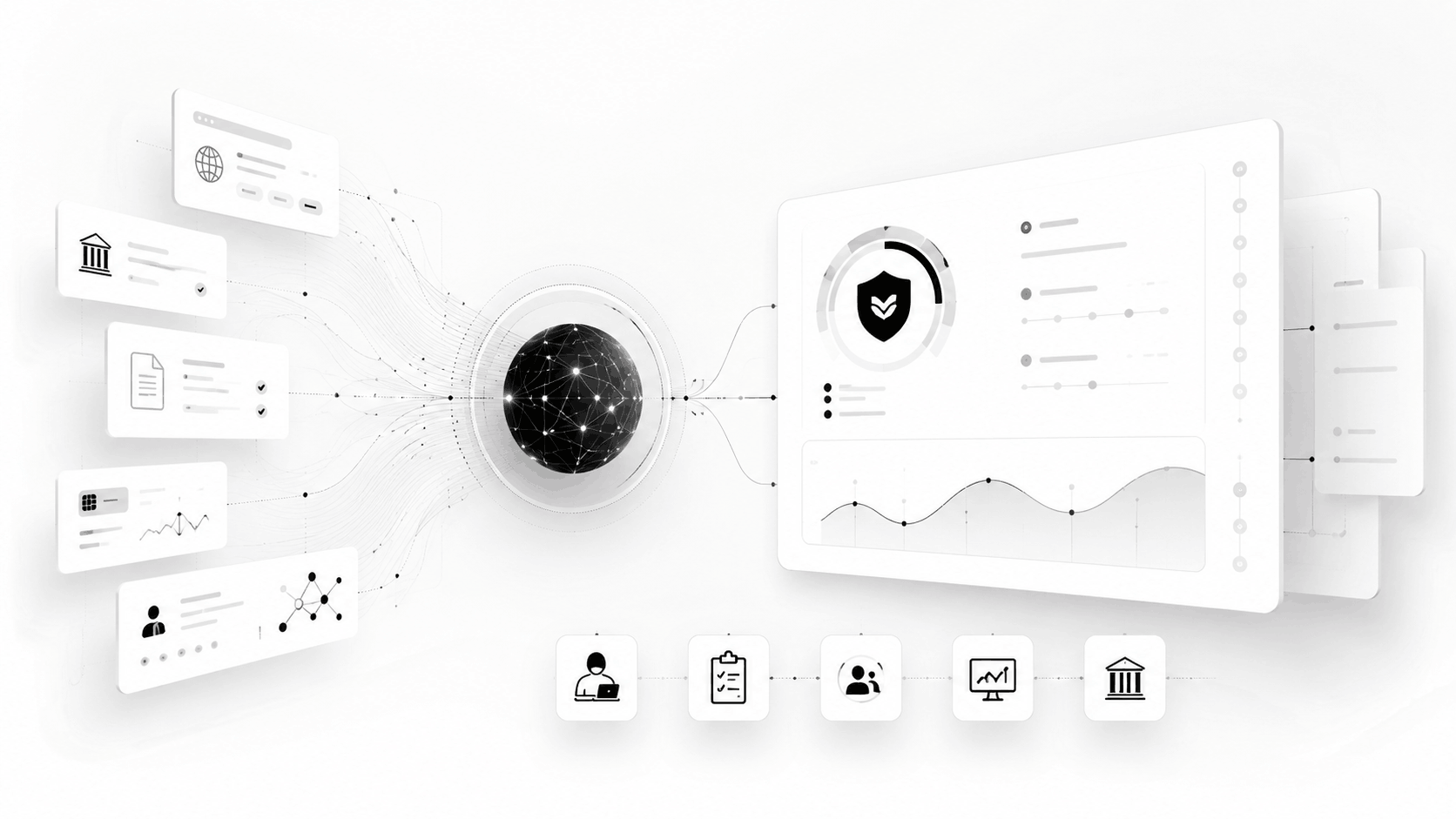
The platform uses trained AI agents to turn fragmented merchant data into a single, dynamic risk profile. By analyzing digital footprints, documents, transaction signals, behavioral patterns, registries, and other relevant sources, Ballerine helps risk teams uncover hidden risks, reduce manual work, and make explainable decisions faster.
What Problem Does Ballerine Solve?
Merchant risk management is no longer a simple checklist process. A merchant may appear legitimate at the time of onboarding but later show signs of fraud, policy violations, reputational risk, transaction laundering, or non-compliance with card scheme requirements. For payment providers and financial institutions, missing these signals can lead to financial losses, regulatory pressure, and damage to trust.
The problem is that many risk teams still work with fragmented systems. One tool may handle document collection. Another may support manual reviews. Another may provide sanctions screening or transaction monitoring. Important context may be hidden across web searches, registries, merchant websites, partner records, or internal case notes.
This fragmentation slows down the entire process. It also creates blind spots. Underwriters and risk professionals may spend a significant part of their time collecting, organizing, and cross-checking data before they can even begin to make a decision.
Ballerine aims to change that by bringing fragmented merchant information into one risk profile and using AI agents to analyze it in context. Instead of making teams manually connect the dots, the platform helps surface the signals that matter and present them in a way that supports faster, more confident decision-making.
How Does Ballerine Use AI Agents in Risk Management?
Ballerine’s AI agents are designed to support risk and compliance teams across the merchant lifecycle. They analyze different types of merchant data and transform them into structured, explainable assessments.
These agents can review a merchant’s digital footprint, website, documents, transaction signals, behavioral patterns, registry information, third-party data, and other relevant indicators. The goal is not only to collect data, but to interpret it in context.
For example, a risk team may need to understand whether a merchant’s website matches its declared business activity, whether documents are consistent, whether there are reputational concerns, or whether transaction patterns suggest potential issues. Ballerine’s AI-driven analysis helps teams identify these signals faster and with more clarity.
A key part of the platform’s value is explainability. Risk professionals do not simply receive a score without context. They receive analysis that can include reasoning, relevant data points, and cited sources. This is especially important in regulated environments, where decisions need to be reviewed, audited, and justified.
What Does Ballerine Offer for Merchant Underwriting?
Merchant underwriting is one of the core areas where Ballerine supports risk teams. Before approving a merchant, financial institutions and payment providers need to evaluate whether the business is legitimate, whether it fits their risk appetite, and whether it may create compliance or fraud exposure.
This process often requires reviewing merchant-provided data, websites, documents, registries, transaction signals, and other sources. When done manually, underwriting can become slow and inconsistent.
Ballerine helps underwriters by transforming fragmented data into clearer risk profiles. Its AI agents can analyze relevant information and highlight potential concerns, making it easier for teams to assess merchant risk without spending excessive time on manual research.
This helps underwriters move from data collection to decision-making. Instead of spending most of their time gathering information, they can focus on evaluating higher-value cases, applying their expertise, and making final decisions with better context.
How Does Ballerine Support Merchant Onboarding?
Fast onboarding is critical for financial institutions, payment providers, and fintechs. If onboarding takes too long, legitimate merchants may lose patience or choose another provider. However, moving too quickly without proper risk controls can expose a company to fraud, compliance issues, or card scheme violations.
Ballerine helps balance speed and control by supporting a more automated and data-driven onboarding process. The platform brings together merchant information, risk signals, and workflow logic, helping teams assess merchants faster while maintaining oversight.
According to Ballerine’s current positioning, its platform can help teams achieve faster merchant onboarding by using dynamic risk profiling and AI-driven analysis. This means legitimate merchants can move through the process more efficiently, while higher-risk cases can be identified for deeper review.
The platform also gives teams control over workflows, thresholds, scoring logic, and risk policies. This matters because every institution has its own risk appetite. Ballerine is designed to support that flexibility rather than forcing all organizations into a single decision model.
Why Is Ongoing Merchant Monitoring Important?
Merchant risk does not end after onboarding. A merchant’s behavior, website, product offering, transaction patterns, or compliance status can change over time. A business that was acceptable at the start may later become risky due to policy violations, fraud patterns, reputational concerns, or changes in activity.
This is why ongoing monitoring is a critical part of merchant risk management. Financial institutions and payment providers need visibility into how merchants evolve after approval.
Ballerine supports merchant monitoring by helping risk teams detect changes and uncover potential issues before they escalate. Its AI agents can analyze evolving merchant data and identify signs that may require attention.
This ongoing visibility helps organizations move from reactive reviews to more proactive risk management. Instead of waiting for a problem to become visible through losses, complaints, or external pressure, teams can identify warning signs earlier and respond more effectively.
How Does Ballerine Help with Partner Oversight?
Many payment providers and financial institutions work with partners that onboard merchants on their behalf. While this can help companies scale, it also creates additional risk. If partner-onboarded merchants are not monitored properly, the organization may face blind spots across its portfolio.
Ballerine addresses this by supporting partner oversight. The platform helps organizations gain visibility into merchants onboarded through partners, uncover hidden risks, and maintain compliance at scale.
This is especially valuable for companies that operate across multiple regions, merchant categories, or partner networks. As portfolios grow, manual oversight becomes increasingly difficult. Ballerine helps risk teams maintain a clearer view of merchant activity and risk exposure across different channels.
How Does Ballerine Reduce Manual Work for Risk Teams?
One of the main challenges in risk and compliance operations is the amount of manual work involved. Teams often need to search across multiple systems, review documents, check websites, compare data points, and prepare internal reports.
This manual workload can slow down onboarding, increase operational costs, and prevent experienced professionals from focusing on the cases that truly require judgment.
Ballerine’s AI agents are designed to reduce this burden. By automatically analyzing merchant data and creating structured risk profiles, the platform helps teams spend less time on repetitive research and more time on decision-making.
According to Ballerine’s current messaging, merchant risk teams can significantly reduce manual work by using AI-driven analysis and automation. This allows teams to focus their expertise where it matters most: reviewing complex cases, refining risk policies, and making informed decisions.
How Does Ballerine Help Reduce False Positives?
False positives are a major pain point in financial crime and compliance operations. When too many legitimate merchants are flagged as risky, teams spend time reviewing cases that may not require deep investigation. This creates delays, increases workload, and can negatively affect the merchant experience.
Ballerine approaches this problem through contextual AI analysis. Instead of relying only on rigid rules or isolated data points, the platform evaluates a broader picture of merchant activity and risk indicators.
This context can help teams better distinguish between merchants that require attention and those that may have been flagged by overly narrow or outdated systems.
Reducing false positives is important because it improves efficiency without weakening control. Risk teams can concentrate on meaningful cases while allowing lower-risk merchants to move through the process more smoothly.
How Does Ballerine Adapt to Each Institution’s Risk Appetite?
Risk management is not the same for every organization. A payment provider focused on one region or merchant category may have a very different risk appetite from a global financial institution or acquirer operating across multiple markets.
Ballerine is designed to adapt to each organization’s policies and decision logic. The platform allows teams to configure thresholds, scoring logic, workflows, and review processes according to their own requirements.
This flexibility is important because risk teams need both automation and control. AI-driven analysis can speed up reviews and surface insights, but the institution must still define what level of risk is acceptable and how different cases should be handled.
Ballerine’s approach gives teams the ability to scale their operations while keeping control over how decisions are made.
Why Is Explainability Important in Merchant Risk Decisions?
In risk and compliance, a decision is only useful if the team can understand and defend it. A black-box recommendation may be fast, but it is not enough for teams that need to operate in regulated environments or respond to audits, internal reviews, partner questions, or card scheme requirements.
Ballerine emphasizes explainable decisions. Its platform is designed to provide context around risk assessments, including the data points and reasoning that support them.
This helps risk professionals understand why a merchant was flagged, what signals contributed to the assessment, and whether further investigation is needed. It also supports auditability, because teams can review the reasoning behind decisions rather than relying on unclear outputs.
Explainability is especially important as financial institutions adopt more AI-driven tools. To trust AI in risk management, teams need transparency, control, and the ability to validate results.
What Makes Ballerine Relevant for Financial Institutions and Fintechs Today?
Ballerine is relevant because financial crime management is becoming more complex, while pressure to move faster continues to increase. Payment providers and fintechs need to onboard merchants efficiently, but they also need to reduce fraud, comply with evolving requirements, and manage risk across the full merchant lifecycle.
Traditional tools often struggle to support this balance. They may be too rigid, too fragmented, or too slow for modern merchant portfolios.
Ballerine’s current positioning is focused on AI-native merchant risk management. The platform helps financial institutions, payment providers, and fintechs manage risk across underwriting, onboarding, monitoring, and partner oversight.
By unifying fragmented merchant data, applying AI-driven analysis, and giving teams configurable control over decision logic, Ballerine helps risk professionals work faster and with greater confidence.
What Is Ballerine’s Vision?
Ballerine’s vision is to help financial institutions expand safely and serve more businesses with confidence. The company believes that risk management should not only be seen as a constraint. When supported by the right tools, it can become a catalyst for growth, trust, and financial inclusion.
This vision reflects a broader shift in financial services. Risk teams need systems that can keep pace with the speed of digital business, the complexity of fraud, and the scale of modern merchant portfolios.
Ballerine aims to support that shift by turning fragmented merchant data into clear, real-time risk profiles. Its AI agents help underwriters and risk professionals make decisions faster while maintaining control, explainability, and compliance awareness.
Why Does Ballerine Stand Out?
Ballerine stands out because it focuses on one of the most important operational problems in financial services: how to manage merchant risk at scale without slowing down growth.
Its platform supports the full merchant lifecycle, from pre-onboarding checks to ongoing monitoring. It helps teams assess merchant risk, detect evolving issues, oversee partner-onboarded merchants, and reduce the manual work that often slows down risk operations.
For financial institutions, payment providers, acquirers, and fintech companies, this can mean faster onboarding, fewer false positives, better visibility, and stronger control over merchant portfolios.
As fraud and compliance challenges continue to evolve, Ballerine reflects the direction risk management is moving toward: more intelligent, more contextual, and more scalable. Its AI-native approach helps risk teams transform fragmented information into decisions they can understand, review, and act on with confidence.