
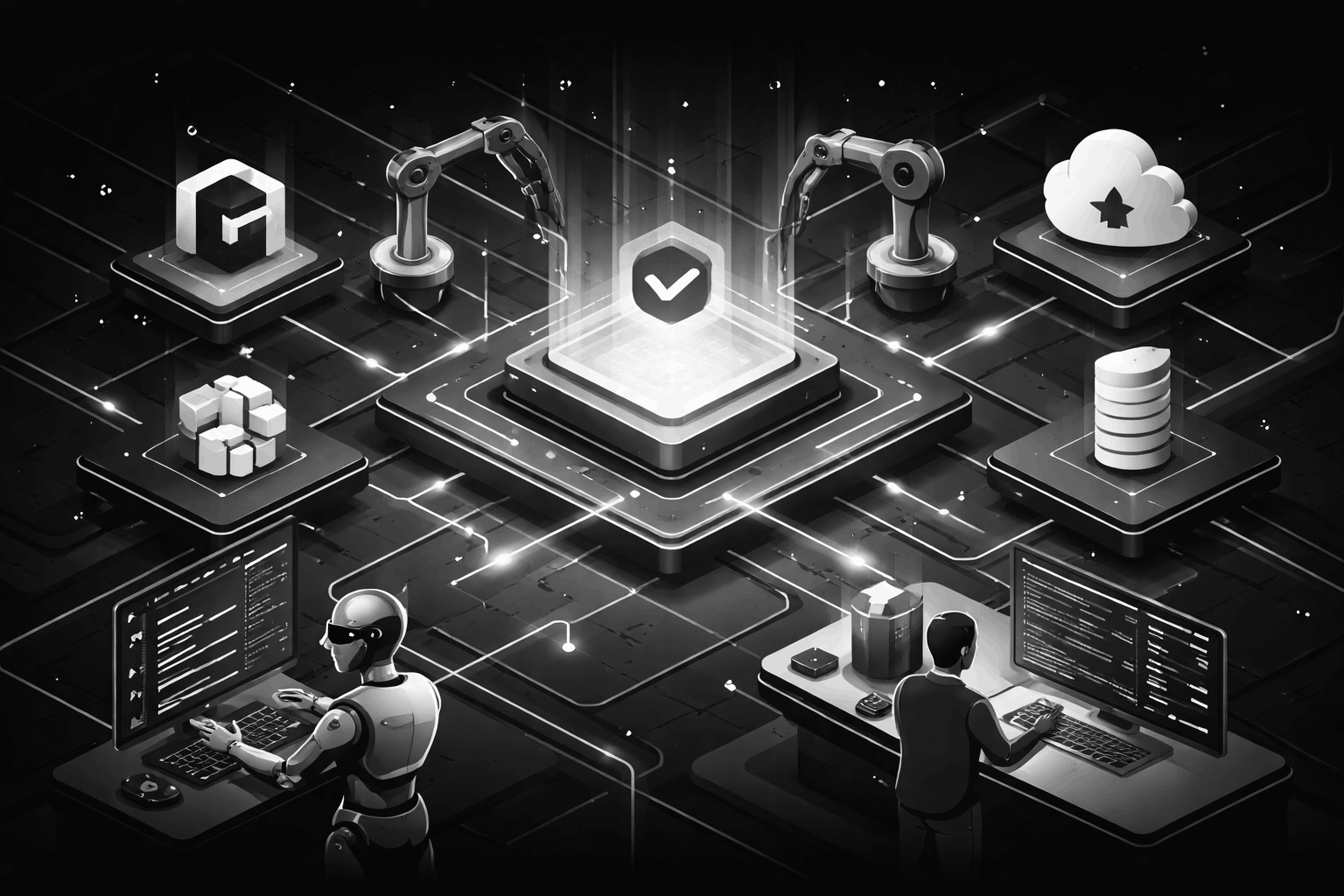
Arga Labs: Testing Infrastructure for AI Agents
In a world where software development is accelerating at an unprecedented pace, the emergence of AI agents capable of writing, testing, and deploying code has introduced both opportunity and complexity. Arga Labs, a San Francisco–based startup founded in 2025, is positioning itself at the center of this transformation by building what it calls validation infrastructure for AI agents.
At its core, Arga Labs is solving a deceptively simple but deeply impactful problem: how to test software changes reliably before they reach production. While traditional development workflows rely heavily on staging environments, mocks, and manual testing, these approaches often fail to reflect real-world conditions accurately. As a result, bugs slip through, integrations break, and engineering teams spend countless hours firefighting issues that could have been prevented.
Arga Labs introduces a fundamentally different approach. Instead of relying on static staging environments or brittle mocks, it enables developers—and increasingly AI agents—to test code changes in dynamic, production-like environments that mirror real systems with remarkable fidelity. This shift is not just incremental; it represents a rethinking of how validation should work in an era where software is increasingly built and maintained by autonomous systems.
What Problem Is Arga Labs Solving?
Modern engineering teams face a paradox. On one hand, tools and frameworks have made developers more productive than ever. On the other hand, the complexity of modern systems—especially those relying on multiple SaaS integrations—has made testing more fragile and less reliable.
Traditional staging environments often fall short for several reasons:
- They differ from production environments in subtle but critical ways
- They require significant configuration and maintenance
- They struggle to handle concurrent changes across teams
- They rely on mocks that fail to capture real-world edge cases
Even when teams attempt to test against real services, they encounter limitations such as API rate limits, persistent state issues, and the inability to simulate failure scenarios at scale.
For AI agents, the situation is even more challenging. While these agents can generate code rapidly, they lack robust mechanisms to validate their outputs in realistic environments. This results in a bottleneck: developers may be 100x more productive in writing code, but they remain “1x testers” when it comes to validating it.
Arga Labs identifies this gap as a critical bottleneck in the evolution of software development—and sets out to eliminate it.
How Does Arga Labs Redefine Staging Environments?
Arga Labs introduces the concept of on-demand staging environments per pull request (PR). Instead of relying on a shared staging environment, the platform dynamically creates a temporary, isolated environment every time a developer—or an AI agent—opens a PR.
This environment is not a rough approximation of production. Instead, it is a carefully constructed replica that combines real production dependencies with safe, isolated components:
- Only the services affected by the change are redeployed
- All other services are routed directly to production
- Dependencies such as databases or caches are replicated as in-memory sidecars
- Production data remains untouched and safe
This hybrid approach allows teams to test changes in a context that is both realistic and secure. Developers can read from production data while ensuring that any write operations are safely contained within isolated environments.
The result is a testing environment that behaves like production without the risks typically associated with it.
What Are “Twins” and Why Are They a Game-Changer?
One of Arga Labs’ most innovative features is its use of “twins”—fully functional replicas of external SaaS services such as Stripe, Slack, Google Drive, and others.
Unlike traditional mocks, which simulate limited aspects of an API, these twins are designed to be:
- Fully compatible with existing SDKs
- Identical in API structure and behavior
- Capable of handling webhooks and asynchronous events
- Configurable using natural language
This means developers can interact with these services as if they were real, without worrying about rate limits, billing costs, or persistent state issues.
More importantly, twins allow teams to test scenarios that are difficult or impossible to reproduce with real services. For example:
- Simulating rare edge cases
- Testing failure modes and degraded performance
- Running large-scale parallel tests without constraints
By enabling this level of flexibility, Arga Labs transforms testing from a reactive process into a proactive and exploratory one.
How Does Arga Empower AI Agents?
Arga Labs is not just a tool for human developers—it is explicitly designed to work alongside AI agents.
Through integrations such as APIs, CLI tools, and emerging standards like MCP (Model Context Protocol), AI agents can interact directly with Arga’s platform to:
- Generate tests automatically for a given PR
- Execute those tests in production-like environments
- Analyze logs and identify failure points
- Iterate on code until all tests pass
This creates a feedback loop where AI agents are not just generating code but actively validating and improving it. Instead of handing off incomplete or untested code to human developers, agents can deliver fully tested, production-ready changes.
In essence, Arga Labs enables a new paradigm where AI agents become autonomous contributors to the development lifecycle—capable of both creation and validation.
Why Is This Important for Modern Engineering Teams?
The implications of Arga Labs’ approach extend far beyond incremental productivity gains. By redefining how testing works, the platform addresses several fundamental challenges faced by modern engineering teams:
Increased Development Velocity
With automated, on-demand testing environments, teams can move faster without sacrificing quality. Developers no longer need to wait for shared staging environments or coordinate testing schedules.
Improved Reliability
By testing against production-like environments and realistic integrations, teams can catch issues earlier and reduce the likelihood of production incidents.
Better Collaboration
Isolated environments per PR eliminate conflicts between concurrent changes, making it easier for large teams to collaborate effectively.
Scalable Testing for AI Systems
As AI agents become more prevalent in software development, the need for scalable validation infrastructure becomes critical. Arga Labs provides the foundation for this future.
Who Are the Founders Behind Arga Labs?
Arga Labs was founded by Phillip Li (CEO) and Akira Tong (CTO), two individuals with complementary backgrounds and a shared vision for improving developer workflows.
Phillip Li brings experience from Amazon, where he built internal developer tools that significantly improved engineering efficiency. His work reportedly saved over ten weeks of engineering time annually and prevented critical issues from escalating within the organization.
Akira Tong, on the other hand, has a background as a software development engineer at Stripe and as a quantitative analyst at Goldman Sachs. His experience working with complex systems and high-stakes environments gave him firsthand insight into the limitations of existing testing infrastructures.
The two met during their first year studying calculus at the University of British Columbia—a detail that highlights both their early technical curiosity and their long-standing collaboration. Their shared experiences ultimately led them to identify a common problem: the lack of high-fidelity staging environments in modern software development.
How Did Their Background Shape the Product Vision?
The founders’ prior experiences played a critical role in shaping Arga Labs’ approach.
Phillip’s work at Amazon exposed him to the inefficiencies of large-scale engineering workflows, particularly the time lost to debugging and manual testing. This experience reinforced the importance of automation and reliable validation mechanisms.
Akira’s time at Stripe highlighted the challenges of working with external integrations and the limitations of existing testing tools. He recognized that even companies with strong engineering cultures struggled to maintain staging environments that truly mirrored production.
Together, these insights led to a key realization: high-fidelity staging is not a luxury—it is a necessity for modern software development.
Arga Labs is the embodiment of this belief.
What Does the Future Look Like for Arga Labs?
As AI continues to reshape the software development landscape, the need for robust validation infrastructure will only grow. Arga Labs is well-positioned to become a foundational layer in this ecosystem.
In the near term, the company is likely to focus on expanding its library of SaaS twins, improving integration capabilities, and refining its developer experience. As adoption grows, Arga could become a standard component of CI/CD pipelines, particularly for teams heavily reliant on AI-driven workflows.
In the longer term, the implications are even more profound. If AI agents become primary contributors to codebases, platforms like Arga Labs will be essential in ensuring that their outputs are reliable, secure, and production-ready.
Why Could Arga Labs Become Essential Infrastructure?
The evolution of software development has always been driven by tools that reduce friction and increase reliability. From version control systems to cloud platforms, each innovation has enabled teams to build more complex systems with greater confidence.
Arga Labs represents the next step in this evolution. By providing dynamic, production-like testing environments and enabling autonomous validation by AI agents, it addresses one of the most persistent challenges in software engineering.
In doing so, it transforms testing from a bottleneck into a competitive advantage.
For companies looking to scale their engineering efforts—whether through human teams, AI agents, or a combination of both—Arga Labs offers a compelling vision of what the future of validation could look like: fast, reliable, and deeply integrated into the development process.