
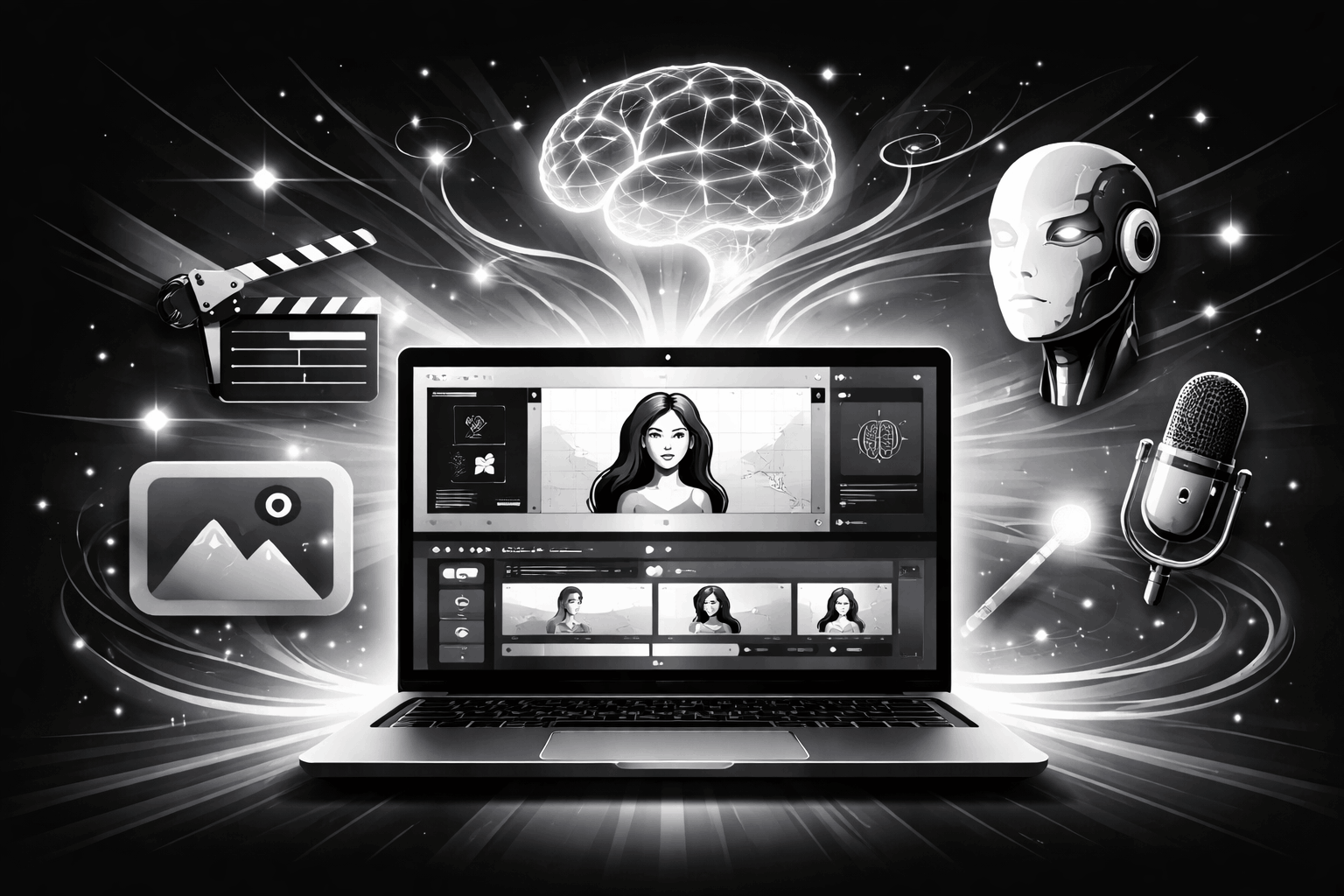
Prism: AI Powering the Next Generation of Media
Prism is an AI-powered platform built for one of the most dominant forces in today’s digital landscape: short-form video. Founded in 2025 and based in San Francisco, Prism positions itself as “AI for the next generation of media,” a bold statement that reflects both its ambition and its timing. As platforms like TikTok, Instagram Reels, YouTube Shorts, and LinkedIn video continue to shape how content is discovered and consumed, the demand for fast, scalable, and visually consistent video creation tools has never been higher.
Prism addresses this demand by offering a unified environment for creating short-form videos with AI. Instead of relying on a patchwork of tools—each responsible for a single step in the creative process—Prism brings the entire workflow into one cohesive platform. From concept and storyboard to animation, voiceover, and final edits, Prism aims to simplify what has become an increasingly fragmented creative process.
Backed by Y Combinator’s Spring 2025 batch and led by a compact but experienced founding team, Prism enters the market at a moment when creators and marketers alike are searching for tools that reduce friction without limiting creativity.
Who Are the Founders Behind Prism and What Experience Do They Bring?
Prism was founded by a trio of builders with deep experience across startups, enterprise engineering, and consumer technology. The founding team consists of Rajit Khanna, Alex Liu, and Land Tantichot, each bringing a distinct perspective to the company’s vision.
Rajit Khanna, Founder at Prism, previously worked at Greptile (YC W24), Skydio, Stripe (YC S09), and Blissway (YC S20). His background spans both high-growth startups and established technology companies, giving him firsthand exposure to product iteration, scale, and platform thinking. This experience is reflected in Prism’s focus on usability, speed, and creator-centric workflows.
Alex Liu, Founder and CTO, brings a strong engineering pedigree to the team. With prior experience at Palantir and AWS and an academic background from Georgia Tech, Liu contributes deep technical expertise in building scalable, robust systems. His role is central to Prism’s ability to unify multiple AI-driven processes—image generation, animation, lipsync, and editing—into a single seamless pipeline.
Land Tantichot, Co-founder at Prism, completes the founding team. While less publicly detailed, his presence underscores Prism’s collaborative, multi-founder approach to tackling a complex creative and technical challenge.
Together, the team represents a blend of startup agility, enterprise-grade engineering, and product sensibility—qualities essential for building infrastructure for modern media creation.
What Problem Is Prism Solving in AI Video Creation Today?
Despite rapid advancements in generative AI, creating AI-powered video content remains surprisingly cumbersome. Today’s creators often rely on a fragmented toolchain that forces them to jump between multiple platforms, each responsible for a single task.
A typical AI video workflow may involve an image generator for concept art, an upscaler to improve resolution, an image-to-video tool to animate stills, a lipsync engine to align dialogue, a voiceover generator for narration, and finally a video editor to stitch everything together. Each step requires exporting assets, importing them elsewhere, and often re-describing the same scenes repeatedly just to maintain some sense of consistency.
This fragmentation introduces several problems. Characters may subtly change appearance across scenes. Visual styles can drift over time. Assets become scattered across browser tabs and local folders. Creative momentum slows as creators spend more time managing tools than telling stories.
Prism identifies this complexity as the core obstacle holding back the next generation of AI-driven media. The company’s thesis is simple: AI video creation should feel like building a project, not assembling a puzzle from disconnected parts.
How Does Prism Reimagine the Video Creation Pipeline?
Prism approaches video creation as a single, continuous process rather than a sequence of isolated steps. At the heart of the platform is the idea of a “project,” where creators define their style once and build their video scene by scene within a shared context.
Instead of exporting assets between tools, users generate images, upscale them, animate them, add voiceovers, and apply lipsync all in one place. Each scene inherits the same visual and stylistic rules, ensuring that characters remain consistent and the overall aesthetic stays coherent throughout the video.
This unified pipeline eliminates the need for repetitive prompting and manual coordination. Settings carry over automatically, assets stay attached to the project, and every creative decision builds on the last. The result is a smoother, faster workflow that allows creators to focus on storytelling rather than tool management.
By consolidating the entire process, Prism positions itself not just as an AI video generator, but as a full creative workspace for short-form content.
Who Is Prism Built For in the Modern Creator Economy?
Prism is designed for anyone who ships short-form content regularly, regardless of whether they identify as a creator, marketer, or founder. Its target audience reflects the broadening definition of who creates media today.
For creators, Prism supports a wide range of formats: memes, skits, explainer videos, ASMR clips, short films, and experimental content. These users often need to produce content quickly while maintaining a recognizable style or character across multiple posts.
Marketers and agencies represent another core audience. Prism caters to teams producing paid ads, launch videos, and user-generated content at scale. For these users, consistency and speed are critical, especially when testing multiple variations of creative assets.
Prism also explicitly targets founders and operators who use short-form video as a growth lever. Whether it’s “aura farming” on LinkedIn through product announcements or growth-hacking on TikTok, these users often create content out of necessity rather than passion. Prism aims to reduce the time and effort required, allowing them to focus on building their core products.
Why Is Consistency Such a Critical Challenge in AI-Generated Video?
One of the most persistent issues in AI-generated video is consistency. When creators rely on multiple tools, each system interprets prompts slightly differently. Over time, characters may change facial features, proportions, or clothing. Color palettes drift. Visual motifs lose cohesion.
For short-form content—where brand recognition, character identity, and stylistic clarity are essential—these inconsistencies can undermine the impact of a video. Audiences quickly notice when something feels “off,” even if they can’t articulate why.
Prism addresses this problem by anchoring every creative decision to a single project context. Characters, styles, and settings persist across scenes. Instead of starting from scratch with every tool, creators build on a shared foundation.
This approach not only improves visual quality but also enhances creative confidence. When creators trust that their tools will maintain consistency, they can experiment more freely without fear of breaking the look and feel of their content.
How Does Prism Support Scene-by-Scene Storytelling?
Short-form video often relies on tight pacing and clear narrative beats. Prism embraces this reality by structuring video creation around scenes rather than isolated assets.
Creators can build storyboards scene by scene, generating and refining each moment within the same interface. This structure encourages intentional storytelling, even in formats as brief as 15 or 30 seconds.
By keeping all scenes connected within a single project, Prism ensures that transitions feel natural and that each clip contributes to a cohesive whole. This is particularly valuable for explainer videos, skits, and narrative-driven content, where clarity and flow are essential.
The scene-based approach also makes iteration easier. Creators can tweak individual moments without disrupting the entire project, enabling faster experimentation and refinement.
What Role Does AI Play in Prism’s Creative Workflow?
AI is deeply embedded in every layer of Prism’s platform, but it is positioned as an enabler rather than a replacement for creative intent. Prism uses AI to generate assets, animate images, synchronize audio, and streamline editing, all while preserving user control over style and structure.
Instead of forcing creators to adapt to rigid AI outputs, Prism allows them to guide the process through project-level decisions and scene-level adjustments. This balance between automation and control is central to Prism’s philosophy.
By integrating AI across the workflow, Prism reduces manual overhead while amplifying creative output. The platform does not just accelerate production—it reshapes how creators think about building video content from the ground up.
What Does Prism Reveal About the Future of Media Creation?
Prism reflects a broader shift in how media is created and consumed. As short-form video continues to dominate attention, tools that prioritize speed, consistency, and accessibility will shape the next generation of creators.
The platform suggests a future where video creation is less about mastering complex software and more about expressing ideas quickly and clearly. In this future, AI serves as creative infrastructure, quietly handling technical complexity while creators focus on narrative, tone, and impact.
Prism’s emphasis on unified workflows hints at where the industry is headed: away from fragmented toolchains and toward integrated creative environments that support end-to-end production.
Why Is Prism Well Positioned as an Early-Stage Startup?
As an active startup from Y Combinator’s Spring 2025 batch, Prism benefits from both early momentum and strategic restraint. With a small team of three, the company remains agile, focused, and closely aligned with its users.
Its positioning is clear, its problem well-defined, and its solution grounded in real creator pain points. By targeting short-form video—a fast-growing and highly competitive space—Prism enters a market with massive upside and constant demand for innovation.
Rather than attempting to be everything to everyone, Prism focuses on doing one thing well: making AI-powered short-form video creation coherent, consistent, and accessible.
What Makes Prism a Startup to Watch in AI and Media?
Prism stands at the intersection of AI, creativity, and modern distribution. It recognizes that the future of media is not just about better models or higher fidelity outputs, but about better workflows.
By unifying the entire video creation pipeline into a single platform, Prism removes friction that has long plagued AI-driven content creation. Its approach empowers creators, marketers, and founders to move faster without sacrificing quality or consistency.
As short-form video continues to shape how ideas spread online, tools like Prism will play an increasingly important role in defining who gets to create—and how easily they can do it. In that sense, Prism is not just building software; it is helping shape the next generation of media itself.