
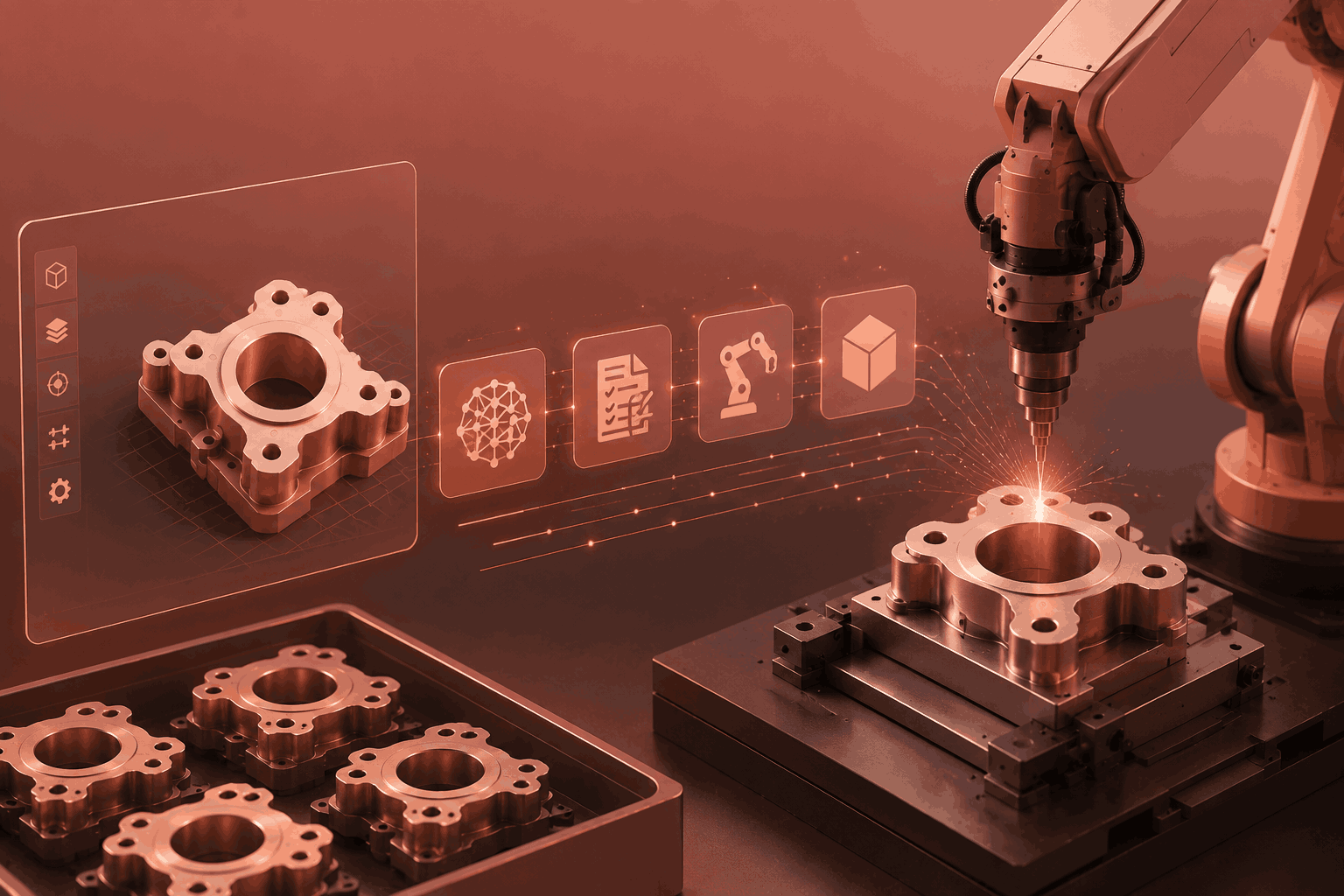
AI-Powered Manufacturing by Prototyping.io
In recent years, artificial intelligence has transformed industries ranging from software development to healthcare and finance. Yet one of the world’s largest and most important sectors — manufacturing — still relies heavily on manual workflows, fragmented communication, and time-consuming processes. While factories have become more advanced over the decades, much of the journey between a digital design and a finished mechanical part remains surprisingly inefficient.
Prototyping.io is a startup that wants to change that reality entirely. Founded in 2026 and backed through the Spring 2026 batch, the company is developing an AI-driven manufacturing system capable of turning CAD designs into real mechanical parts with unprecedented speed and efficiency. Based in Sunnyvale, California, the startup is positioning itself at the intersection of artificial intelligence, industrial automation, and next-generation manufacturing infrastructure.
Led by founders Revanth Bodepudi and Prerit Oberai, the company aims to rebuild the entire design-to-manufacturing pipeline from the ground up. Their vision is ambitious: create autonomous manufacturing systems that can intelligently analyze designs, automate production decisions, and eventually execute manufacturing workflows with minimal human intervention.
As industries such as robotics, defense, automotive, energy, and AI infrastructure continue to grow rapidly, demand for faster hardware iteration cycles is increasing. Prototyping.io believes the future of manufacturing depends not only on better machines, but on intelligent systems capable of orchestrating the entire production process autonomously.
Why Is Mechanical Part Manufacturing Still So Inefficient?
Mechanical part manufacturing represents a market worth more than one trillion dollars annually. Despite its enormous scale, many parts of the industry still operate through outdated workflows that involve extensive manual coordination, repetitive engineering tasks, and disconnected systems.
When a company designs a new mechanical component, the process of turning that digital concept into a physical product is rarely straightforward. Engineers typically create CAD models, after which manufacturing experts perform design-for-manufacturability analysis, identify suppliers, prepare tooling strategies, generate machine programs, organize setups, and coordinate production schedules.
This workflow often involves multiple vendors, lengthy email chains, spreadsheets, and significant human oversight. Even small mistakes in communication or setup planning can introduce delays, increase costs, or compromise quality.
For hardware startups and engineering teams, these delays can be devastating. Product development cycles depend heavily on iteration speed. If each prototype takes weeks to manufacture, innovation slows dramatically. Teams are forced to wait longer to validate designs, fix issues, and test new ideas.
The economics of local manufacturing also remain challenging. Machine utilization rates are frequently low, workflows are fragmented, and production capacity is often underused. Many companies attempt to reduce costs by manufacturing overseas, but this introduces new complications involving shipping delays, tariffs, geopolitical instability, and supply chain disruptions.
As industries become increasingly competitive, businesses are searching for ways to manufacture faster without sacrificing quality or dramatically increasing costs. This growing demand is creating an opportunity for startups like Prototyping.io to rethink the manufacturing process entirely.
How Does Prototyping.io Transform CAD Designs Into Real Parts?
At the core of Prototyping.io’s vision is the idea that manufacturing workflows should function more like intelligent software systems than fragmented industrial processes.
The startup’s platform analyzes CAD designs using AI-driven manufacturing intelligence to determine how parts should be produced. Instead of relying on multiple disconnected teams and manual reviews, the system automates critical stages of the manufacturing pipeline.
Traditionally, the workflow looks something like this:
CAD → DFM → Planning → Sourcing → Programming → Setups → Manufacturing Execution
Each stage introduces potential delays, communication gaps, and operational inefficiencies. Prototyping.io is rebuilding this workflow with AI-native systems designed to automate decision-making and optimize execution.
The company’s technology focuses heavily on manufacturability analysis. Before production begins, the system evaluates whether a design can be manufactured efficiently and identifies potential issues that could create problems during production. This process, often referred to as DFM (Design for Manufacturability), traditionally requires experienced engineers spending hours or days reviewing designs manually.
By automating DFM analysis, Prototyping.io can significantly reduce lead times while improving consistency and reducing engineering overhead.
Beyond manufacturability analysis, the platform also automates production planning and workflow coordination. The long-term goal is not simply to recommend manufacturing decisions, but to execute them autonomously through advanced production systems, industrial robotics, and physical AI models.
This approach positions the company as more than just a software provider. Prototyping.io is building infrastructure for autonomous manufacturing itself.
Why Is AI Becoming So Important in Manufacturing?
Artificial intelligence has already transformed knowledge work by automating repetitive cognitive tasks. Manufacturing, however, presents a far more complex challenge because it involves both digital intelligence and physical execution.
Factories generate enormous amounts of operational data, yet much of that data remains underutilized. Human operators still make countless decisions manually, from setup planning to machine scheduling and production optimization.
AI changes this equation by enabling systems to analyze designs, predict manufacturing outcomes, optimize workflows, and coordinate production dynamically.
For example, an AI-native manufacturing platform can identify inefficient geometries in a design, suggest modifications to reduce machining time, recommend better tooling strategies, or optimize production scheduling based on available machine capacity.
Over time, these systems can continuously learn from production outcomes and improve operational efficiency automatically.
Prototyping.io’s approach reflects a broader trend toward autonomous industrial systems. Instead of simply digitizing old processes, startups in this space are redesigning manufacturing workflows around AI-first principles.
This shift is particularly important because modern industries increasingly demand shorter development cycles. Sectors such as robotics and AI infrastructure evolve extremely quickly. Companies operating in these markets cannot afford to wait weeks for critical components.
By reducing manufacturing timelines from weeks to days, AI-driven systems could fundamentally accelerate hardware innovation across multiple industries.
Which Industries Could Benefit Most From Autonomous Manufacturing?
The demand for faster manufacturing is growing across many sectors, but some industries stand to benefit more than others.
Robotics companies, for example, rely heavily on rapid prototyping. Engineers constantly iterate on mechanical designs while improving hardware performance, testing new configurations, and refining products. Faster manufacturing enables these teams to experiment more aggressively and bring products to market sooner.
The AI infrastructure sector also depends heavily on custom hardware. As demand for data centers, cooling systems, and specialized computing infrastructure increases, manufacturers need faster ways to produce mechanical components reliably and at scale.
Defense and aerospace industries present another major opportunity. These sectors often require highly specialized parts with strict quality standards and complex production requirements. Long procurement timelines can slow critical projects significantly.
Energy companies also benefit from accelerated manufacturing workflows, particularly in areas involving advanced infrastructure, renewable energy systems, and industrial equipment.
Automotive manufacturers face similar pressures as electric vehicles, autonomous systems, and next-generation mobility technologies continue evolving rapidly.
Prototyping.io is already working with customers ranging from early-stage startups to large enterprises worth billions of dollars. According to the company, its systems are helping reduce hardware iteration cycles from weeks to days while delivering high-quality parts for prototyping and early production.
This ability to accelerate product development may become increasingly valuable as competition intensifies across advanced manufacturing industries.
What Makes Prototyping.io Different From Traditional Manufacturing Services?
Many traditional manufacturing providers focus primarily on machining capacity or production volume. Their role often begins only after engineering teams complete designs and submit production requests.
Prototyping.io approaches manufacturing differently by integrating intelligence directly into the workflow itself.
Instead of treating manufacturing as a sequence of disconnected tasks handled by separate departments, the company views it as a unified system that can be orchestrated autonomously.
This distinction is important because inefficiencies in manufacturing rarely originate from machining alone. Delays often emerge from quoting, planning, communication, sourcing, setup preparation, and coordination between multiple stakeholders.
By automating these layers simultaneously, Prototyping.io aims to eliminate bottlenecks across the entire production lifecycle.
The startup also emphasizes AI-native architecture rather than adding AI tools on top of legacy workflows. This enables the platform to operate more dynamically and adaptively from the beginning.
Its long-term vision involving robotics and autonomous execution further differentiates the company from conventional software providers. Many manufacturing platforms focus solely on workflow management or analytics. Prototyping.io appears focused on controlling the full pipeline from digital design to physical production.
If successful, this model could reshape how companies think about manufacturing capacity itself.
Could Autonomous Manufacturing Change Global Supply Chains?
Global supply chains have faced enormous disruptions in recent years. Shipping delays, geopolitical tensions, tariffs, and factory shutdowns exposed the fragility of heavily outsourced production systems.
Many companies now want faster, more localized manufacturing capabilities without dramatically increasing costs.
Autonomous manufacturing could make this possible.
By increasing machine utilization, automating production workflows, and reducing labor-intensive coordination, AI-driven systems may lower the cost of local manufacturing substantially. This would allow companies to produce parts closer to where products are designed and assembled.
Localized manufacturing also improves iteration speed. Engineering teams can test prototypes faster, implement changes more quickly, and reduce dependency on long-distance shipping.
In the long term, autonomous manufacturing systems could create highly flexible production networks capable of adapting dynamically to demand changes, supply chain disruptions, and shifting market conditions.
Instead of relying on centralized factories operating through rigid workflows, manufacturers could use distributed AI-coordinated systems that optimize production continuously.
Prototyping.io’s vision aligns closely with this future. By combining AI-driven intelligence, workflow automation, and eventually robotics, the startup is contributing to a broader transformation in how industrial production may operate over the next decade.
What Could the Future Look Like for AI-Driven Manufacturing?
Manufacturing is entering a new era where software intelligence may become just as important as physical machinery.
For decades, industrial innovation focused primarily on improving hardware capabilities. The next transformation may come from intelligent orchestration systems capable of managing production autonomously at massive scale.
Prototyping.io represents part of this emerging movement. The company is attempting to compress manufacturing timelines, reduce inefficiencies, improve quality consistency, and make hardware development dramatically faster.
Its approach reflects a growing realization that future manufacturing competitiveness will depend not only on factories themselves, but on the intelligence coordinating them.
As industries continue demanding faster innovation cycles, AI-native manufacturing systems may become essential infrastructure rather than optional tools.
Whether Prototyping.io ultimately becomes a major industrial platform remains to be seen, but its mission highlights an important shift already underway: the convergence of artificial intelligence and physical production.
If successful, autonomous manufacturing could fundamentally redefine how the world designs, builds, and scales physical products in the decades ahead.